Representative End User Clients







Representative Automation Clients







Representative Software Clients








Global geopolitical conflicts are reshaping the operating environment for India’s manufacturing sector. The Russia–Ukraine war and the escalating West Asia (Iran) crisis have triggered supply chain disruptions, energy shortages, and rising input costs, all of which are directly affecting factory output and profitability. This stress is visible in India’s manufacturing Purchasing Managers’ Index (PMI), which dropped to a 45‑month low of 53.9 in March 2026, signaling slower growth as cost pressures and uncertainty intensify.
The slowdown in manufacturing activity is driven by a combination of rising input costs, supply chain instability, and weakening demand. Manufacturers are facing increased expenses for fuel, metals, and chemicals, while disruptions in global logistics are delaying the availability of critical inputs. At the same time, geopolitical uncertainty is affecting both domestic and export demand, leading to slower growth in new orders. Cost burdens have climbed to some of the highest levels seen since 2022, putting sustained pressure on margins.
Energy disruption has emerged as the most immediate challenge for manufacturing plants. Conflicts in West Asia have disrupted oil and LNG supplies flowing through critical routes such as the Strait of Hormuz, increasing both costs and volatility.
India’s heavy dependence on imported energy amplifies this vulnerability. LPG and LNG shortages have forced manufacturers in sectors such as fertilizers, chemicals, and food processing to curtail or halt operations. Fertilizer plants reliant on LNG imports are facing shutdown risks, while small and mid-sized units dependent on commercial LPG are struggling to maintain consistent production.
Global wars are constricting key industrial supplies, pushing up costs across manufacturing. The Russia–Ukraine conflict has disrupted metals such as steel and aluminum, while Middle East tensions have tightened petrochemical inputs for plastics and packaging.
Manufacturers are paying more for polymers, chemicals, and other essentials, lifting production costs—especially in raw-material-intensive sectors. Shortages and price swings are prompting firms to diversify sourcing and either absorb or pass on the increase.
Global conflicts are affecting most industries, but sectors reliant on imported inputs and energy are taking the hardest hit.
Steel faces coking coal supply risks; ceramic and glass hubs such as Morbi are grappling with propane shortages. Auto and electronics makers report tighter supplies of aluminum, copper, and petrochemical derivatives, while pharma is seeing higher costs from logistics and input disruptions.
Together, shortages and cost inflation are eroding efficiency and raising operational uncertainty.
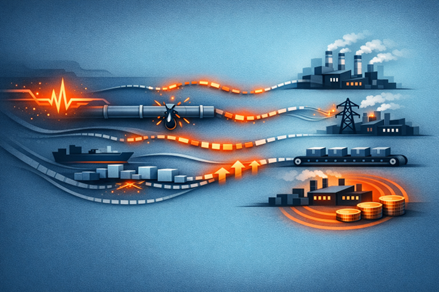
Ongoing conflicts are disrupting manufacturing through logistics rather than direct damage. Rerouted shipping to avoid conflict zones is lengthening transit times and raising freight costs.
Higher insurance premiums and port congestion add delays for inputs and finished goods, making supply chains less predictable, stretching production cycles, and increasing working capital needs. Exporters are hit hardest, with shipments to Europe and the Gulf facing longer lead times and higher costs. Micro, small, and medium enterprises (MSMEs) are the most vulnerable to these disruptions. With limited financial buffers and heavy dependence on imported fuels, they are struggling to absorb rising costs and supply uncertainty.
Demand pressures are compounding supply disruptions. Global uncertainty is weakening key export markets, while higher logistics costs and war-risk surcharges are making shipments costlier and less predictable.
New orders are growing more slowly as customers turn cautious, reducing capacity utilization. Export delays and cancellations are deepening the slowdown, especially for internationally exposed sectors.
The crisis is accelerating strategic shifts in manufacturing. Companies are building resilience by reducing import dependence, diversifying suppliers, and expanding localization to limit geopolitical risk.
Manufacturers are also using digital tools to improve supply chain visibility and responsiveness, signaling a move from efficiency-first to resilience-first operations. As the “China+1” shift accelerates, India could attract investment, scale capacity, and expand exports as an alternative hub.
Global wars are hitting India’s manufacturers through energy shortages, tighter raw materials, logistics bottlenecks, and volatile demand—slowing output and squeezing margins.
Yet the disruption is also speeding a reset: firms are redesigning supply chains, localizing more, and investing in resilience. Near-term risks remain, but these shifts could strengthen India’s manufacturing competitiveness over time.