Representative End User Clients







Representative Automation Clients







Representative Software Clients








India’s pharmaceutical growth story is also a patent story. For decades, India has used patent law not just to protect innovation, but to shape access to medicines. That approach helped build one of the world’s largest generic drug industries and positioned India as a major supplier of affordable medicines to global markets. The real story is not simply about manufacturing scale. It is about how India designed its patent system to balance innovation, competition, and public health.
Why do patents matter so much in pharmaceuticals? A drug patent can give its holder exclusive rights for about 20 years, which affects who can manufacture the medicine and at what price. In most markets, strong product patents can delay generic competition and keep prices high. India took a different route for much of its post-independence history. That choice changed the economics of medicines for India and for many lower-income countries that relied on affordable supply.
The Patents Act, 1970 allowed patents on manufacturing processes for medicines, but not on the medicine product itself. In simple terms, if a company discovered a new drug, another manufacturer in India could legally produce the same end product by developing a different manufacturing process. This framework encouraged reverse engineering, expanded domestic capability, and helped create a strong base for low-cost generic medicines. It also laid the foundation for India’s later role as the “pharmacy of the world.”
When India joined the global trade system under the WTO, it had to align with the TRIPS (Trade-Related Aspects of Intellectual Property Rights) agreement and reintroduce product patents for pharmaceuticals by 2005. That change could have ended India’s low-cost drug model. Instead, India revised its patent law in a way that complied with international obligations while preserving public health protections. The most important of these was Section 3(d), one of the most closely watched patent provisions in the world.
Section 3(d) was designed to prevent “evergreening,” a practice in which patent holders seek new patents on minor changes to existing medicines, such as a new form, dosage, or formulation, without delivering meaningful therapeutic benefit. Under this provision, a new form of a known substance is not patentable unless it shows enhanced therapeutic efficacy. That raised the bar for secondary pharmaceutical patents in India and made the country’s patent regime distinct from many Western systems.
The best-known test of Section 3(d) came in a landmark Supreme Court ruling in 2013 involving a modified form of a cancer drug. The applicant argued that the updated version had better properties such as improved stability and bioavailability. The Court held that those improvements were not enough on their own. What mattered was improved therapeutic efficacy for patients. Because that standard was not met, the patent was denied. The ruling reinforced India’s position that incremental pharmaceutical changes do not deserve fresh monopoly protection unless they produce real clinical value.
India’s patent framework also includes compulsory licensing under Section 84. This allows a third party to seek permission to manufacture a patented product without the patent holder’s consent under specific conditions, such as when public demand is not being met, the medicine is not reasonably affordable, or the invention is not being adequately worked in India. In practice, compulsory licensing is a public-interest safety valve built into the patent system.
India’s first major pharmaceutical compulsory license involved a patented cancer medicine priced at about ₹2.8 lakh per month. Authorities found that the drug was unaffordable for most patients, insufficiently available, and not adequately manufactured in India. A domestic manufacturer was allowed to produce a lower-cost version, reducing the monthly price to roughly ₹8,800. The case established that patent rights in India are not absolute when public health needs are unmet.
The long-term effect of this patent strategy has been enormous. India is now the world’s largest supplier of generic medicines by volume share, contributes around 20 percent of global generic supply, and remains a major vaccine producer. It ranks among the top pharmaceutical producers globally by volume, exports medicines to more than 200 countries, and plays a critical role in supplying affordable drugs to regulated and emerging markets alike. These outcomes are tied not only to manufacturing scale, but also to decades of legal and policy choices around patentability and market access.
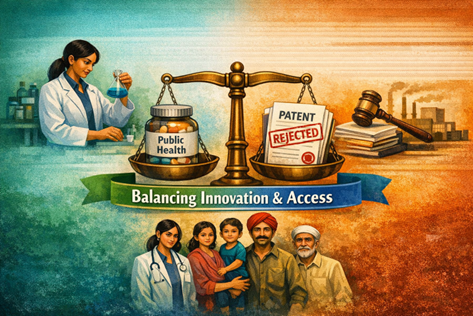
India’s pharma patent model matters because it answers a difficult question: how should a country reward innovation without blocking access to essential medicines? Its answer has been to allow strong patent protection for genuine inventions, while resisting weak follow-on claims and preserving legal tools for public health emergencies. That balance has made India a global force in affordable medicines and a reference point in debates over pharmaceutical patent reform. For anyone trying to understand the future of drug access, competition, and IP policy, India remains one of the most important case studies in the world.