Representative End User Clients







Representative Automation Clients







Representative Software Clients









The 2026 World Artificial Intelligence Conference and Global AI Governance High-Level Meeting (WAIC 2026) took place in Shanghai. During the opening ceremony, President Xi delivered a keynote speech titled “Working Together to Build a Fair and Rational Global AI Governance System” and announced the launch of the World Artificial Intelligence Cooperation Organization (WAICO). This intergovernmental body was co-initiated by multiple countries that signed relevant agreements one day before the opening, with its permanent headquarters based in Shanghai. Co-hosted by nine national ministries and the Shanghai Municipal People’s Government, the conference adopted the theme “Intelligent Partners, Co-Creating the Future.” Centering on technological innovation, industrial application, and industry governance, it outlined three core development threads: embodied intelligence, industrial empowerment, and sound governance. A clear industry turning point emerged from the event: artificial intelligence has stepped out of virtual dialog boxes and been fully integrated into real production and daily life within the physical world.
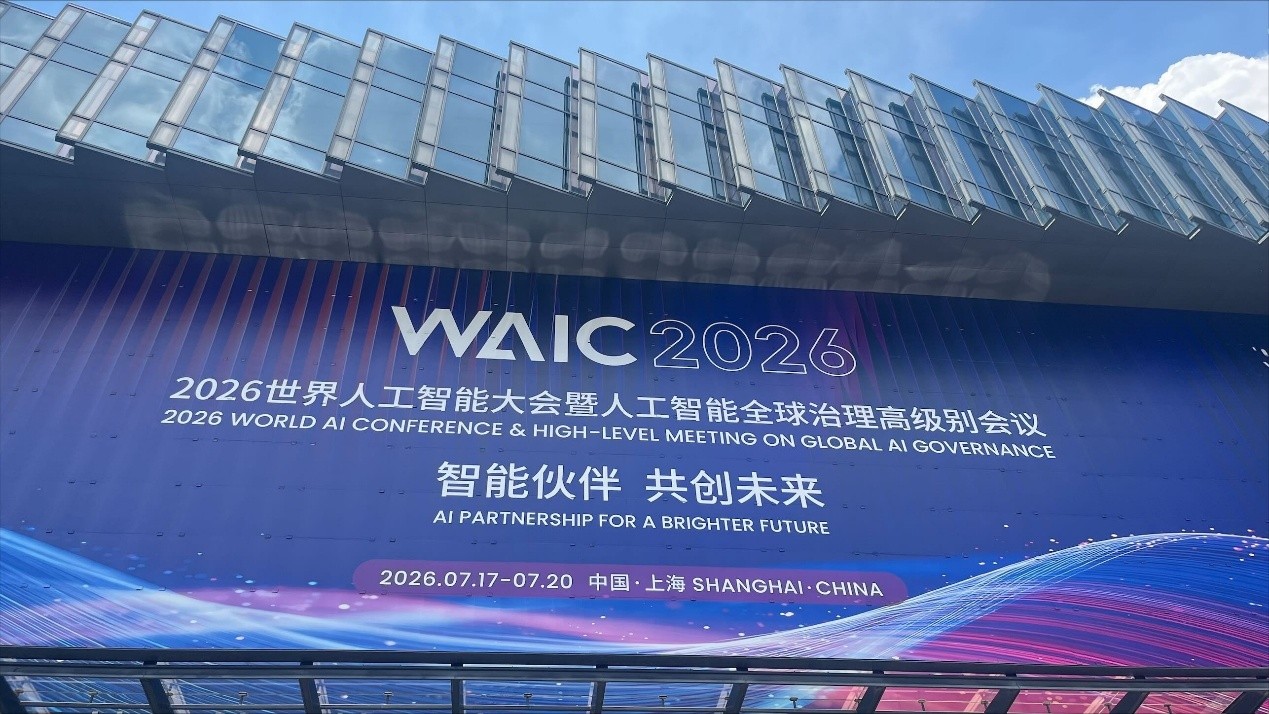
Looking back on the evolution of WAIC over the years, the development path of AI sectors is clear. The industry once competed merely on the parameter performance of large models, then shifted to exploring agent frameworks and prototype development, and this year, it has fully focused on real-world deployment. All technologies exhibited are designed to adapt to practical scenarios and resolve tangible industrial challenges. The core pursuit of the industry has undergone a fundamental shift—from “chasing conversational capabilities” to “delivering practical value”—with a focus on leveraging AI to address pain points across all industries.
As the fundamental backbone of the AI industry, computing power has embraced a brand-new competitive landscape at this year’s conference. Competition has expanded beyond comparing the performance of individual chips to evaluating the systematic capabilities of servers, supernodes, and supercomputing clusters. Instead of fixating on stacking model parameters, the industry now prioritizes lowering the cost of intelligent computing and enabling universal access to computing resources, laying a solid foundation for large-scale AI adoption.
The conference gathered leading domestic computing enterprises, which showcased a full lineup of core computing products and cluster solutions. A complete industrial chain covering chips, equipment, and supercomputing clusters has taken shape. Leading corporations continue to invest in large-scale computing cluster ecosystems, while emerging players concentrate on architectural innovation. A fully self-reliant computing power supply chain is taking shape, underpinning the rollout of diverse AI technologies in manufacturing and livelihood sectors.
Built upon mature computing infrastructure, embodied intelligence stands out as the most intuitive industrial barometer at WAIC, emerging as a core track on par with intelligent computing. Unlike in previous years, when robots were displayed only for performances, all embodied intelligence terminals this year are deployed in genuine working environments rather than executing preset movements. Competition centers on the environmental adaptability, operational stability, and cross-scenario generalization capabilities of devices.
Multiple real-world operational scenarios were reproduced at the exhibition venue, including automotive production lines and offline pharmacies. Various heterogeneous robots can independently complete full workflows, such as handling, assembly, inspection, and drug sorting, according to dynamic environmental changes, without manually setting scripts in advance. Many mature solutions have moved beyond exhibition halls and been deployed for real-world commercial use, marking a pivotal leap for embodied intelligence from technical showcases to regular commercial operation.
If embodied intelligence demonstrates AI’s mobility in physical space, the industrial automation track illustrates its core value in generating tangible industrial benefits. WAIC 2026 brought together leading international and domestic industrial automation enterprises, including Siemens, Schneider Electric, ABB, HollySys, and SUPCON, all of which presented AI solutions tailored to real production lines. Their exhibits vividly reflect the shift of industrial AI from conceptual exploration to large-scale industrial deployment, serving as a microcosm of intelligent upgrading in the real economy.
Siemens hosted a special press conference at the Red Hall of the Expo Center in Shanghai, unveiling Eigen, the world’s first AI agent engineered for industrial automation engineering, which was officially launched for the Chinese market. Unlike most AI auxiliary tools that generate only reference suggestions, Eigen can independently complete end-to-end industrial automation engineering tasks: interpreting project requirements, developing control software, configuring systems, and conducting continuous iterative optimization throughout the process. The product has been deployed at hundreds of enterprises across multiple countries worldwide and won the WAIC 2026 SAIL Star Award for its innovative value.
Xiao Song, Executive Vice President of Siemens AG and Chairman, President & CEO of Siemens China, clarified the essence of industrial AI at the launch event: “The core value of industrial AI lies not in novel concepts, but in its ability to penetrate R&D, production, operation and other key procedures, solve visible problems in real scenarios and deliver quantifiable returns.”
Under the theme “Domain Intelligence Shaping the Future,” Schneider Electric presented end-to-end AI-enabled solutions covering the full life cycle of energy and industry. It exhibited high-density data center computing solutions and a native power management agent that connects equipment access, data collection, knowledge accumulation, intelligent diagnosis, and execution. The agent empowers manufacturers to shift from passive fault response to proactive diagnosis and maintenance.
ABB Robotics focused on the industrial application of physical AI and co-released an industry white paper with NVIDIA, establishing a complete methodology for rapid physical AI deployment. Through digital twins, synthetic data training, and pre-AI verification, equipment risk assessment is moved forward to the digital engineering phase. Virtual-real closed-loop technology bridges simulation and reality, facilitating intelligent upgrading in high-precision manufacturing scenarios.
SUPCON Technology, a pioneer in process industry automation, continues its deep engagement with industrial AI. Its self-developed time-series large model has been verified in numerous industries and is capable of optimizing industrial operating conditions, boosting equipment stability, and reducing equipment failures while supporting energy scheduling optimization to advance green and low-carbon industrial transformation. The autonomous operating plant system built on the large model forms a full-process intelligent closed loop, shifting factory operation and maintenance from passive response to active prevention.
HollySys, a domestic industrial automation leader, launched a brand-new intelligent system centered on industrial world models. It constructs a three-layer intelligent architecture consisting of a database, digital twins, and autonomous operation, supporting deduction, interaction, and continuous evolution in industrial scenarios. Multiple industry benchmark solutions have been applied in core segments, such as energy, chemical engineering, and metallurgy, enabling the deep integration of AI agents into industrial production workflows.
The concentrated presence of these benchmark enterprises has reshaped the evaluation criteria for industrial AI. The industry has moved away from superficial competition over technical parameters and empty conceptual innovation. Instead, it prioritizes real industrial demands, using technical implementation, productivity growth, energy consumption reduction, and efficiency improvement as core value benchmarks to drive the high-quality transformation of the manufacturing sector.
Beyond the in-depth empowerment of industries, AI technology has continuously extended to people’s livelihoods, fully penetrating two high-frequency daily sectors—healthcare and office work. Intelligent technology now serves both industries and the general public in a comprehensive manner.
Healthcare AI is experiencing accelerated iteration, breaking time and resource barriers in traditional medical services. As a flagship product, Afu, an AI health application developed by Ant Group, delivers a full-chain service system covering health consultation, report interpretation, online medical consultation, appointment registration, and medical insurance payments. It leverages authoritative medical experts to create digital AI avatars and adopts a professional service model combining AI responses and physician reviews. Integrated with smart hardware ecosystems, it enables integrated home health monitoring and intelligent management, expanding public access to high-quality medical resources. Many enterprises continue to explore segmented areas, including specialist diagnosis, early disease screening, and clinical assistance, continuously enriching the industrial ecosystem of healthcare AI.
The office AI track has undergone a core transformation, moving past superficial competition based on large model parameters to focus on deployable, operable intelligent agents. Office agents are no longer limited to basic conversational interaction but are embedded into complete workflows to independently break down demands, call tools, execute tasks, and deliver finished outputs. Baidu, Kingsoft Office, Tencent, NetEase Youdao, iFLYTEK, and other companies have launched exclusive office agents for individual users, enterprises, and industry-specific scenarios, covering general office work, corporate collaboration, legal affairs, procurement, data auditing, and other diverse use cases. These products restructure modern office models and greatly improve workplace productivity.
From the systematic upgrading of computing infrastructure and the real-world rollout of embodied intelligence to the comprehensive empowerment of manufacturing and livelihood sectors, WAIC 2026 clearly outlines a brand-new development landscape for the artificial intelligence industry. The conference marks the end of an era defined by conceptualized and entertainment-focused AI, ushering in a new industrialization stage centered on real-world deployment and tangible value creation.
Industrial AI deeply empowers the real economy and addresses pain points in manufacturing, production, operations, and upgrading. Livelihood AI optimizes daily experiences in healthcare, office work, and other scenarios. Dual breakthroughs in embodied intelligence and computing technology provide core support for comprehensive intelligent upgrading. Artificial intelligence is no longer merely a virtual tool confined to screens. Instead, it has become a core productive force capable of entering factories and daily life, performing practical operations, and generating real benefits, thereby kicking off a new cycle of large-scale industrial implementation.