Introduction
- Financial results during the calendar period from January 1 to March 31.
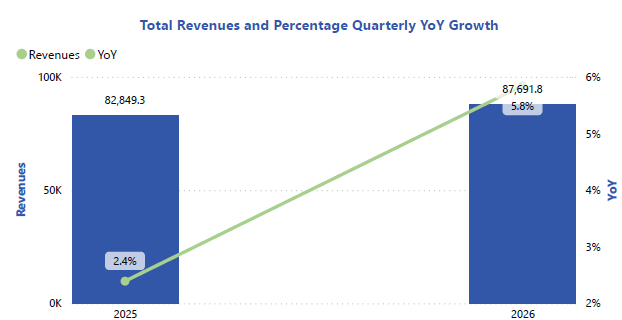
- In Q1 2026, the automation industry demonstrated steady growth compared to Q1 2025, supported by continued investments in industrial digitalization, AI-enabled automation, and modernization initiatives across manufacturing, energy, logistics, and infrastructure sectors.
- A major trend was the accelerated adoption of artificial intelligence (AI), machine learning (ML), and Industrial IoT technologies within automation platforms. These technologies enhanced operational efficiency, enabled predictive and prescriptive maintenance, and improved decision-making through real-time analytics.
- Collaborative robots (cobots) continued to gain momentum, particularly among small and mid-sized manufacturers seeking flexible, cost-effective automation solutions. Organizations increasingly favored modular and scalable automation architectures that could adapt quickly to changing production requirements.
- Smart manufacturing initiatives expanded further, with companies increasingly leveraging digital twins, connected operations, and remote monitoring technologies to optimize asset performance, improve productivity, and reduce unplanned downtime.
- Growing concerns around energy security, supply chain resilience, and sustainability continued to influence automation investments, driving deployment across power generation, utilities, transportation, logistics, and other critical infrastructure sectors.
- Organizations increased their focus on workforce development and digital skills enhancement, recognizing the need to equip employees with the capabilities required to operate, maintain, and optimize increasingly sophisticated automation systems.
- Edge computing adoption accelerated as manufacturers sought to process operational data closer to machines and production assets. This enabled lower latency, improved system responsiveness, and more effective real-time control and analytics.
- Digital twin technology matured beyond pilot projects and saw broader operational deployment, helping organizations simulate processes, evaluate changes before implementation, improve efficiency, and reduce operational risks.
- Demand for cloud-based automation and industrial software platforms continued to grow, enabling centralized visibility, remote management, scalable analytics, and improved integration across geographically distributed facilities.
- The use of autonomous systems, including automated guided vehicles (AGVs), autonomous mobile robots (AMRs), and intelligent material handling solutions, expanded significantly in manufacturing, warehousing, and logistics operations as companies sought greater operational efficiency and labor optimization.
- Cybersecurity remained a critical priority, with organizations increasing investments in secure-by-design automation architectures, OT cybersecurity frameworks, and enhanced monitoring capabilities to address growing cyber risks associated with connected industrial environments.
- Sustainability-driven automation initiatives gained further traction, focusing on energy optimization, emissions reduction, resource efficiency, waste minimization, and regulatory compliance. These initiatives supported both corporate sustainability goals and broader Industry 4.0 transformation strategies.
ARC Advisory Group clients can view the complete report at the ARC Client Portal.
Contact Us if you would like to speak with the author.
Obtain more ARC In-depth Research Market Analysis.