Representative End User Clients







Representative Automation Clients







Representative Software Clients








Industrial humanoid robots are moving from demonstrations toward real manufacturing, logistics, and heavy-industry deployments. ARC's MarketMap helps technology buyers distinguish emerging capabilities from production-ready solutions and evaluate suppliers against their operational requirements, technology strategies, and risk tolerance.
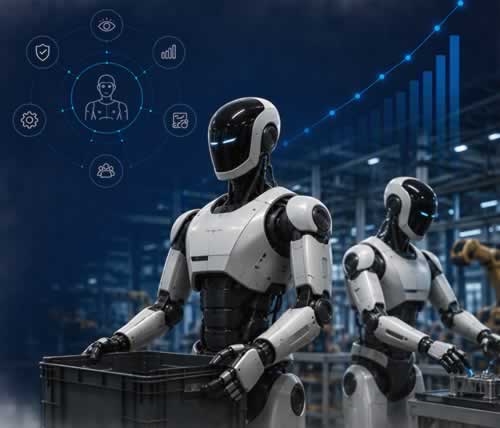
Industrial humanoids combine mobility, manipulation, artificial intelligence, perception, and increasingly advanced autonomy in platforms intended to work in environments originally designed for people. Their potential is particularly relevant to brownfield operations, where conventional automation may require significant changes to infrastructure or workflows.
But technology progress does not mean the market is mature. Industrial humanoids remain far from plug-and-play. Effective deployment can require collaboration among robot manufacturers, end users, AI and compute providers, industrial software companies, systems integrators, and manufacturing partners. Safety, cybersecurity, governance, manufacturing capacity, service support, and cost are also becoming decisive considerations.
For manufacturing, energy, logistics, and other asset-intensive organizations, the question is increasingly not whether humanoids are technically interesting, but where they can deliver measurable operational value and which suppliers are positioned to support production-scale adoption.
The market includes pure-play humanoid robotics startups alongside established robotics and industrial technology companies. Suppliers differ considerably in scale, commercial maturity, manufacturing strategy, and target applications.
Capabilities in locomotion, manipulation, embodied AI, autonomy, safety, reliability, fleet management, and enterprise integration are progressing at different rates. A successful demonstration does not necessarily establish production readiness.
China benefits from a deep robotics supply chain and policy support, the United States has significant AI capabilities and private investment, and Europe offers a substantial automotive manufacturing ecosystem and installed base of brownfield facilities. These differences affect cost, scale, technology availability, and commercialization strategies.
Competition is shifting from hardware performance toward integrated solutions incorporating physical AI, foundation models, simulation, industrial software, safety systems, data infrastructure, fleet management, and deployment services.
Some suppliers have progressed into industrial deployments while others remain primarily in pilots, R&D environments, or pre-commercial development. Buyers therefore need to distinguish roadmap claims from demonstrated capabilities and measurable operating results.

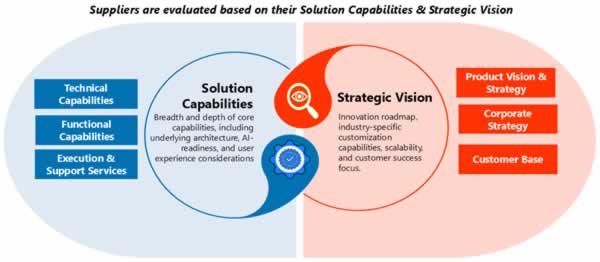
The ARC MarketMap provides a structured view of 15 industrial humanoid robot suppliers, ranging from emerging specialists to established robotics and technology companies. Rather than evaluating robots solely by specifications, the MarketMap considers suppliers across two broader dimensions:
The resulting visual landscape places suppliers according to their relative capabilities and strategic position, helping buyers understand how different providers compare and where important tradeoffs may exist. Individual supplier profiles add context around company positioning, solutions, differentiators, partnerships, geographic focus, target industries, evolution potential, and circumstances in which buyers should consider each provider.
The objective is not simply to identify a leading supplier. It is to help organizations develop a shortlist appropriate to their use case, operating environment, integration requirements, risk profile, and automation strategy.
The Industrial Humanoid Robots MarketMap evaluates the following suppliers:
ARC's analysis is designed for stakeholders across manufacturing, energy, life sciences, transportation, infrastructure, logistics, and related industries considering industrial humanoid technology.
ARC recommends beginning with a measurable operational business case, prioritizing appropriate brownfield workflows, establishing safety and cyber-physical risk requirements, scrutinizing evidence from real deployments, and treating humanoids as part of a broader physical AI architecture rather than as standalone automation assets.
Technology suppliers can license the ARC MarketMap to help:
The potential opportunity for industrial humanoids is substantial, but so are the technical, operational, commercial, and organizational uncertainties. The ARC MarketMap for Industrial Humanoid Robots gives decision makers an independent framework for comparing suppliers, identifying credible options, and determining where the technology fits within a broader automation and physical AI strategy.
Request access to the ARC MarketMap for Industrial Humanoid Robots or speak with Patrick Arnold, Research Analyst, about the supplier landscape and its implications for your organization.
To view a sample MarketMap, please complete the form below.