


ARC Advisory Group’s new research shows that demand for energy efficiency and sustainability are driving the growth of solar farms. Solar farms reduce environmental impact by not emitting greenhouse gases or air pollutants, which helps lower the carbon footprint and mitigate climate change. Additionally, solar farms support local energy production, reducing transmission and distribution losses, and improving energy security and efficiency. As businesses and consumers increasingly seek renewable energy sources for everything from powering industrial operations to fueling residential homes, the demand for expansive and advanced solar farms continues to rise. By contributing to energy diversification and resilience, solar farms play a key role in shaping a sustainable future.
"The future of solar farms looks promising, given our increasing dependence on renewable, clean energy sources. The push for renewable energy adoption and the ramped-up research and development in efficient and cost-effective solar technology hint at a brighter future for this field. Advancements in energy storage technologies like batteries and grid integration solutions are expected to address the intermittency challenge. Economies of scale drive the expansion of solar farms‘ capacity and size, resulting in more effectively generated electricity and a wider geographic spread of solar energy. Hybrid solar projects are increasing as they have improved reliability and grid stability by integrating solar with other renewable energy sources and storage solutions,” according to Santosh Kumar, Analyst and key author of ARC's Solar Farms Market Research.
Solar Farms Market Trends
The research addresses key market trends as follows:
- Agrivoltaics
- Integration with Other Energy Sources
- Growing Adoption of Floating Solar Panels
- Integration of AI and ML for Management
- Use of Bifacial Solar Panels
About the Solar Farms Research
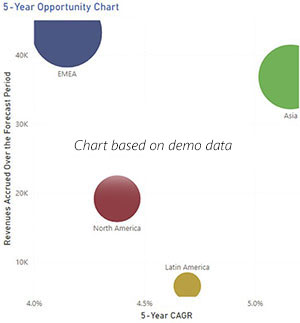 The Solar Farms research explores the current and future market performance and related technology and business trends and identifies leading technology suppliers. This new research is based on ARC’s industry-leading market research database, extensive primary and secondary research, and proprietary economic modelling techniques. The research includes competitive analysis, plus five-year market forecasts. The research segmentation includes World Region, Overall Scope, Utility Scale Solar Farm by Capacity, Solar Farm Types, Solar Farm by End User, Solar Farm by Technology, PV Types, PV Mount by Tracking, PV by Mount, Developer by Type, CSP by Types, CSP by Tracking.
This new research is available in a variety of formats to meet the specific research and budgetary requirements of a wide variety of organizations. ARC's Market Data Service (MDS) is an annual subscription service that provides a unique online environment to each customer, together with all the necessary user interface apps and datasets. MDS unlocks the full benefits of ARC’s time-tested market intelligence by leveraging the latest analytical tools and technologies to allow you to make more actionable, real-time business decisions. Interactive access to ARC’s qualitative analysis is displayed in context with up-to-date market data, allowing clients to develop customized views of the market to best suit their needs. ARC continues to offer our traditional static Market Reports as a PDF.
ARC provides several types of market data services. The most common are Market Growth Outlook and Competitive Analysis Services. These services provide detailed market analysis of a single or multiple products or software applications. Please visit Market Data Services page for more details on these services.