Representative End User Clients







Representative Automation Clients







Representative Software Clients








Yokogawa participated as a Platinum Sponsor at ARC Advisory Group’s 23rd India Forum titled Winning in the Industrial AI Era on July 10-11, 2025. At the Forum, which saw over 300 delegates, M. Harreish, Manager – Offshore Delivery Center, Yokogawa, emphasized the urgent need to modernize payment systems. His presentation focused on how digital tools are being used to transition from manual payment workflows to automated, intelligent systems.
In the era of Industry 4.0, manufacturing enterprises are rapidly embracing digital transformation—not just on the shop floor, but across all business functions. One area ripe for innovation is payment management, a traditionally manual and time-consuming process. With the integration of technologies like Robotic Process Automation (RPA), Artificial Intelligence (AI), chatbots, and analytics, manufacturers can now streamline financial operations, improve compliance, and enhance vendor relationships. Harreish’s presentation can be viewed on YouTube and here too:
Payment management is a critical function that directly impacts vendor relationships, financial forecasting, and compliance. During month-end or quarter-end cycles, the influx of invoices and payment requests can overwhelm teams, leading to delays, errors, and missed opportunities. A streamlined, automated system ensures timely payments, accurate data handling, and improved decision making.
Manual systems often rely on paper documents, spreadsheets, and email threads, making real-time tracking and centralized data access nearly impossible. Automation addresses these challenges by digitizing the entire workflow—from invoice receipt to ledger entry and stakeholder communication.
The traditional payment process involves multiple steps: receiving invoices, extracting data, verifying details, securing approvals, releasing payments, and updating ledgers. Each step is prone to delays and errors when handled manually. The graphic below shows how automation transforms this workflow.
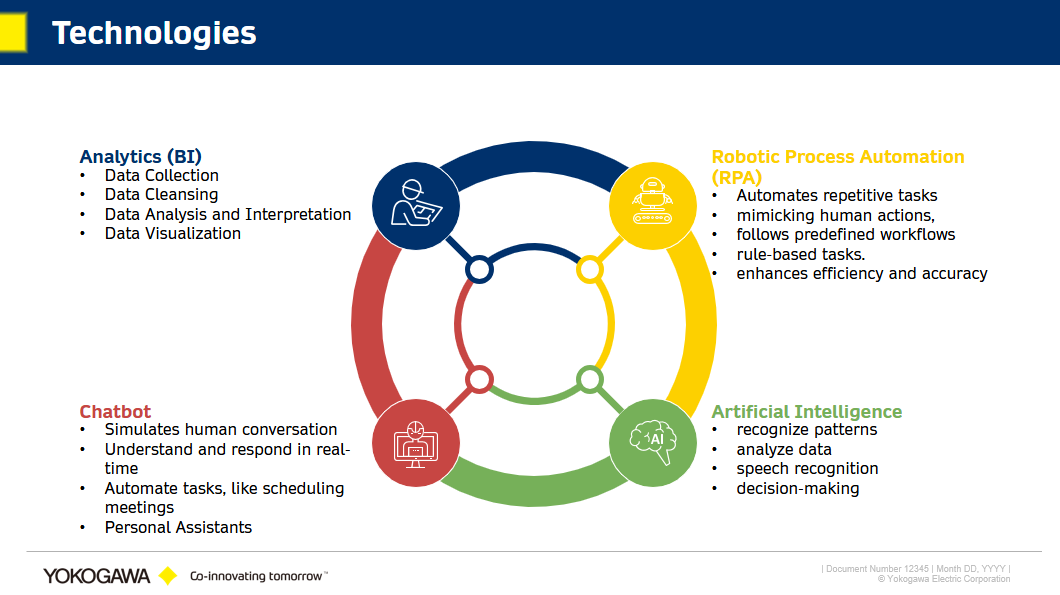
Each stage of the payment process benefits from specific technologies:
Invoice Receipt: RPA continuously monitors incoming invoices via email or portal uploads, ensuring no invoice is missed. Chatbots provide real-time tracking and vendor communication.
Data Extraction: AI extracts key details such as vendor names, PO numbers, and payment terms. Chatbots assist in validating low-quality or misdirected invoices.
Verification and Approval: AI cross-checks extracted data with existing records. RPA monitors approval workflows, while chatbots notify approvers and handle queries.
Payment Release: RPA triggers payment once approvals are complete and sends notifications to stakeholders. Chatbots support inquiry handling.
Ledger Entry and Communication: RPA updates financial systems in real time, ensuring accurate tracking. Final communications are sent to vendors and internal departments.
Reporting and Analytics: Business intelligence tools generate insights on vendor performance, cost efficiency, and compliance, enabling better financial planning.
Implementing smart technologies in payment management delivers measurable benefits:
On-Time Payments: Strengthens vendor relationships and boosts credibility.
Cost Savings: Reduces manual processing and operational overhead.
Improved Compliance: Ensures adherence to tax regulations and audit requirements.
Real-Time Insights: Enhances forecasting, budgeting, and fraud detection.
As manufacturers embrace digital transformation, automating payment management is a strategic move that aligns with the principles of Industry 4.0. By leveraging RPA, AI, chatbots, and analytics, companies can streamline financial operations, improve accuracy, and gain a competitive edge.
Implementing a new payment management system transforms employees' roles by automating repetitive tasks, allowing them to focus less on time-consuming manual work and more on personal growth and process improvement. This shift not only reduces overtime and work-related stress but also creates opportunities for career development and a healthier work-life balance.