Representative End User Clients







Representative Automation Clients







Representative Software Clients








Autonomous Exception Management (AEM) is emerging as a new approach to managing disruption across transportation, logistics, and fulfillment operations. Rather than stopping at visibility, alerts, or recommendations, AEM solutions increasingly combine artificial intelligence, optimization, workflow orchestration, and bounded autonomous execution to identify problems, determine the appropriate response, and take corrective action faster.
As AI becomes capable of handling a larger share of high-volume operational decisions, technology buyers need a clearer way to distinguish between solutions that detect exceptions, prioritize them, recommend actions, orchestrate responses, and increasingly execute those responses autonomously.
ARC's MarketMap for Autonomous Exception Management in Logistics Execution provides a structured framework for understanding this rapidly evolving market, comparing supplier approaches, and identifying solutions aligned with specific operational requirements.
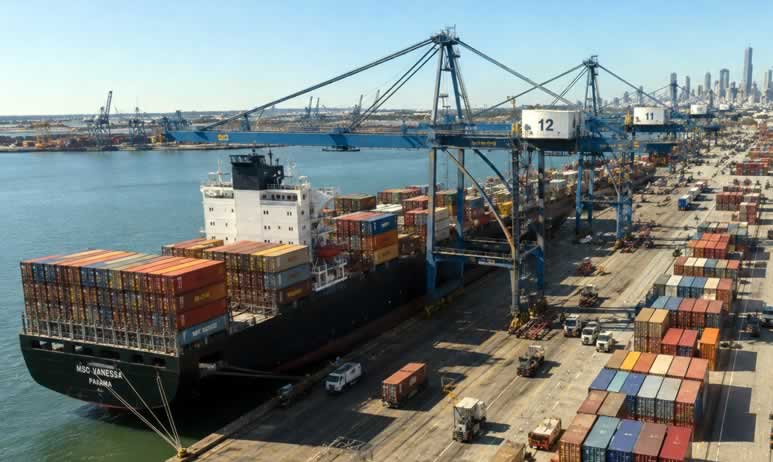
For decades, logistics technology investments focused on digitizing transactions, improving planning, and increasing operational visibility. Those capabilities remain essential, but visibility alone does not resolve disruption.
Today's logistics networks face persistent pressure from transportation volatility, labor constraints, weather events, geopolitical uncertainty, changing customer expectations, and increasingly complex fulfillment networks. When disruptions occur, the critical issue is often not whether an organization can detect the problem, but how quickly it can determine what should happen next and execute the appropriate response.
Traditional exception management frequently depends on planners, dispatchers, customer-service teams, and operations personnel manually reviewing alerts, evaluating alternatives, and initiating corrective actions. At scale, these processes create decision bottlenecks and increase operational latency.
AEM represents a shift from exception visibility toward exception resolution. The emerging capability model progresses through:
Detection → Prioritization → Decision Intelligence → Workflow Orchestration → Bounded Autonomous Execution
The objective is not necessarily to remove humans from logistics operations. It is to automate repetitive, high-volume decisions where appropriate while escalating ambiguous, high-impact, or policy-sensitive situations to human decision-makers.
The AEM market spans several established and emerging technology categories, including transportation management systems, supply chain visibility platforms, control towers, orchestration platforms, digital twins, optimization applications, and AI-native logistics solutions.
This creates several challenges for buyers:
For buyers, the central question is straightforward:
Where does a supplier sit on the path from identifying an exception to resolving it?
ARC's MarketMap provides a visual decision-support framework for evaluating suppliers participating in Autonomous Exception Management in Logistics Execution. Suppliers evaluated in the MarketMap include: 7bridges, Aera Technology, Auger, AutoScheduler, Blue Yonder, Controlant, Descartes, e2open, FarEye, FourKites, Google Cloud, Kinaxis, Manhattan Associates, Microsoft, o9 Solutions, OneRail, project44, Shipium, Shippeo, Shipsy.

The MarketMap examines how vendors support the exception-management lifecycle, including:
Technology buyers can use the MarketMap to:
The result is a practical framework for determining not simply which vendors can identify logistics exceptions, but which can help organizations resolve them faster and with progressively less manual intervention.
Technology suppliers can license ARC's MarketMap to help communicate their position within the emerging Autonomous Exception Management market. The MarketMap can help suppliers:
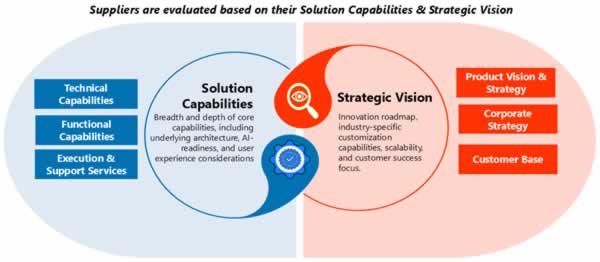
Autonomous Exception Management represents an important evolution in logistics technology: from knowing that something has gone wrong to determining and executing the appropriate response.
Organizations evaluating AEM technologies can use ARC's MarketMap to understand the emerging market, compare supplier capabilities, evaluate different levels of AI-enabled autonomy, and reduce technology-selection risk.
Request access to the ARC MarketMap for Autonomous Exception Management in Logistics Execution or speak with an ARC analyst about your logistics, fulfillment, and exception-management priorities.
To view a sample MarketMap, please complete the form below.