Representative End User Clients







Representative Automation Clients







Representative Software Clients








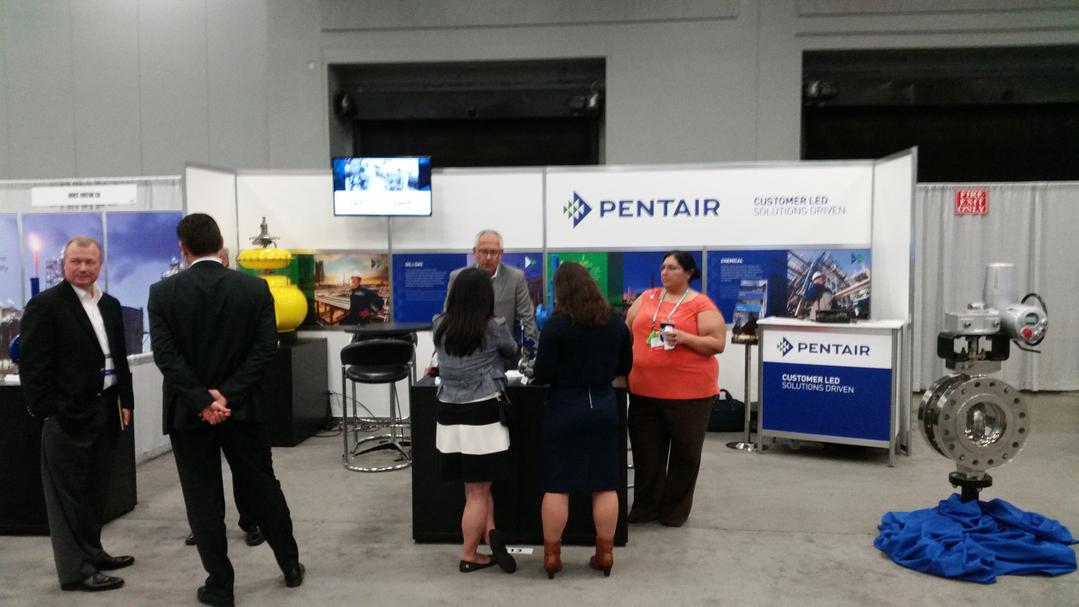
 Emerson has also made several acquisitions over the past year, most notably Pentair Valves and Controls. This gives them a huge presence in the on/off and pressure relief valve marketplace and provides a huge installed base and potential market for devices that can be connected to the Industrial Internet of Things. It didn't take long for IIoT to take center stage at the Exchange either. After a nice tribute to former Emerson Process president John Berra, Mike Train got down to business, first talking about the fundamentals that drive both Emerson's and their customers' businesses: safety, reliability, productivity, and emissions.
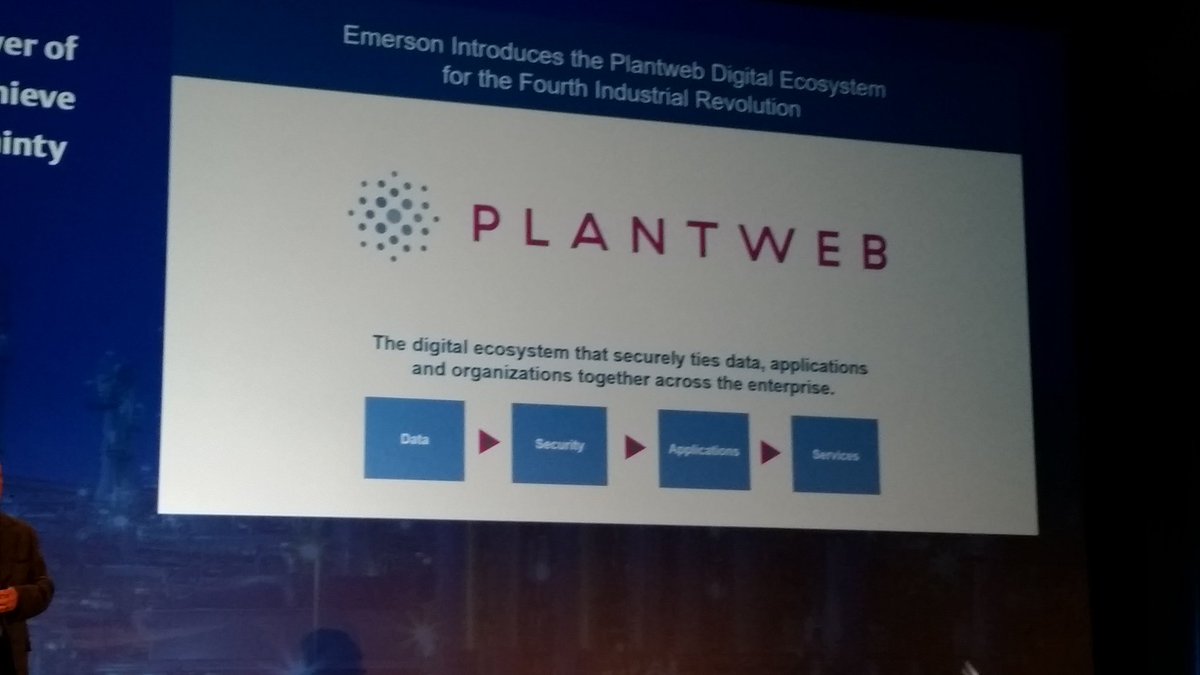
  Emerson has always been good about building a strong business value proposition behind the technologies it sells, and the IIoT is no exception. The company has been building a pervasive sensing strategy over the past several years, acquiring a multitude of specialized sensors (both wired and wireless) for everything from acoustic monitoring of steam traps to intelligent pressure relief valves; real-time, non-intrusive corrosion sensors; and more in addition to its already strong business in process field devices like pressure transmitters and Coriolis flowmeters. Pervasive sensing will be a big part of Emerson's story moving forward, but it's not an IIoT ecosystem in and of itself. Many in the media and analyst community were expecting that Emerson would announce their new IIoT approach at this meeting, and they didn't disappoint. Mike Train announced during his keynote that PlantWeb would be the new name for this ecosystem, resurrecting the name that was applied to the overall business philosophy behind the introduction of the DeltaV process automation system, where the system itself is just another node on a network along with intelligent field devices, control valves, and other applications and functions. Bringing back the PlantWeb name is a great idea. It's already familiar to most people in the industry and represents the open and contextual access to information that is part of the IIoT. Of course, the new PlantWeb encompasses much more than DCSs and devices. For starters, Emerson has decided to use the Microsoft Azure cloud platform, which the company has already used for some smaller scale applications involving remote services for monitoring the performance of steam traps and other devices (link goes to a very good case study with Denka Singapore).
  Train also announced that Emerson would partner with Cisco to create a new series of secure edge devices for PlantWeb. Emerson also showed off an increasingly wide range of mobile applications and remote services that will also be part of the new ecosystem. And of course, the Pervasive Sensing message is still strong. In our next installment, we'll go into more detail about the various aspects of PlantWeb and the related services that Emerson is offering. We will also provide more details on some of the new sensors, packaged solutions, and partners.