Representative End User Clients







Representative Automation Clients







Representative Software Clients








An effective industrial big data platform can help streamline digital transformation for manufacturing companies. For smart manufacturing, smart factory, Industrie 4.0 and similar initiatives; people, machinery, plants, logistics, and products need to communicate and cooperate easily. To connect these diverse data sources, a unified, flexible, high-performance system is needed to provide company-wide, real-time data and information flow. Based on BASF’s experience, it appears that globally networked solutions for manufacturing require both advanced manufacturing and deep IT know-how and that the quality of the outcomes of big data industrial applications strongly depends on the availability of data and their context.
Dr. Michael Krauss, Senior Automation Manager at BASF SE, recently discussed some early successes related to the digital transformation with ARC Advisory Group. These involve achieving global access to industrial data from many data sources to multiple applications in a secure and scalable way. This required developing a new unified industrial data platform and data model to replace the many point-to-point integrations previously in place. The solution implemented functions in a similar manner to the middleware often used to connect business applications with operations management applications.
At many chemical manufacturing companies, it’s often challenging to get the needed data from their various plants to the enterprise, much less aggregate, contextualize, and visualize the tremendous volumes of data generated at the individual plant level and stored in multiple, disparate data repositories.
As explained in more detail in a recent ARC Insight available to ARC’s Advisory Service clients, BASF now uses an industrial big data platform to connect information from different data sources, including legacy historians, spreadsheets, and new sensors. This platform enhances the company’s ability to analyze data and provide users with much-needed information.
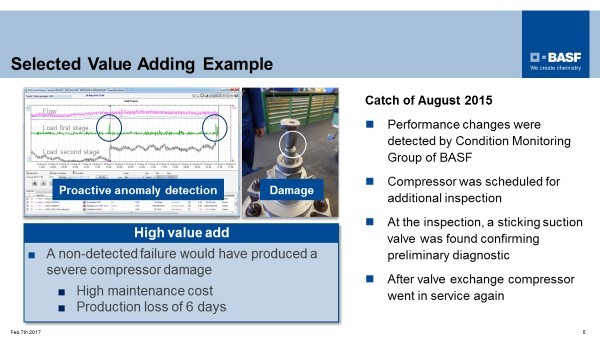
To date, the BASF use cases with the new platform include:
According to Dr. Kraus, the company is looking to roll out additional use cases in the coming months and years.
ARC recommends that industrial organizations considering using a data platform to make OT data available globally throughout the enterprise. Some of the capabilities users should look for include solutions that:
For additional recommendations, clients can view the complete report at ARC Client Portal on New Client Portal or Office 365 or Box.com on this website.