Representative End User Clients







Representative Automation Clients







Representative Software Clients








When most people picture a modern factory, they likely envision sleek robots, humming assembly lines, and tightly orchestrated processes. But behind the scenes, the reality of automation has often been far less agile: bounded by hardware, hampered by supply constraints, and burdened by complexity. That’s the part Audi and Siemens set out to change. This collaboration between Audi and Siemens is about more than efficiency, it’s about rethinking how automation is architected at its core.
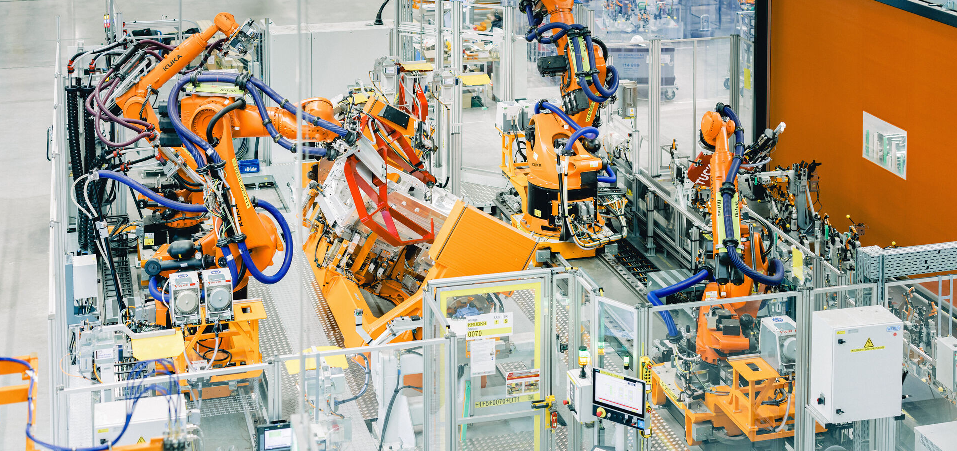
At Audi’s Böllinger Höfe factory in Neckarsulm, where the e-tron GT electric sports car is built, a quiet revolution is taking place. It's not in the cars themselves, but in the invisible infrastructure that controls how they come together. The factory now runs, in part, on software alone—specifically, on fully virtual PLCs.
From Hardware to Virtuals PLCs
Traditionally, programmable logic controllers (PLCs) have been the bedrock of factory automation. Rugged, reliable, and purpose-built, these hardware devices sit inside control cabinets, sending signals to machines and managing real-time processes with precision. But in recent years, a new idea has emerged: what if you could do all of that in software?
Enter the virtual PLC. Unlike its hardware counterpart, a virtual PLC is not tied to a physical box on the shop floor. Instead, it runs on general-purpose computing infrastructure—servers, edge platforms, or even cloud environments. The Siemens SIMATIC S7-1500V, now used by Audi, is one these system. It performs the same control tasks as a traditional PLC, but without the hardware footprint. And in this case, it’s doing it inside Audi’s Edge Cloud 4 Production platform.
Why Audi Went Virtual
The motivation behind this shift is rooted in a real-world challenge. Global supply chains have made it harder—and slower—to get automation hardware. Extended delivery times for PLCs had the potential to delay changes in production processes. Audi needed a faster, more flexible solution.
By moving to a virtualized setup, they could deploy new control applications in software, sidestepping hardware lead times altogether. Since January 2024, two virtual PLCs have been managing operations on the axle assembly line for the e-tron GT, proving that the concept works not just in theory, but in live production.
The benefits go well beyond availability. Centralized management through Siemens' Industrial Edge platform means updates and configurations can be handled remotely. Gone are the days of manual software loading on each PLC unit. The entire system is now part of a broader IT-managed ecosystem.
What Changes?
For shop floor employees, the transition to virtual PLCs has been largely invisible. Interfaces remain familiar. Tools like TIA Portal still work. From a usability standpoint, the move is seamless. But under the hood, things are radically different.
Physical control cabinets are no longer a bottleneck. Space savings are real. And cybersecurity improves, thanks to a uniform infrastructure and the removal of attack vectors traditionally associated with distributed hardware.
Perhaps most importantly, the system is inherently more adaptable. As production needs evolve, Audi can scale up or reconfigure without rewiring control panels. It’s a software problem now—not a mechanical one.
Trade-Offs and Complexity
None of this comes without challenges. Virtual PLCs, while powerful, are still bound by some limitations. Their cycle times and real-time performance are not yet on par with the most advanced hardware PLCs. Determinism—the ability to execute tasks with absolute predictability—is weaker. In high-speed or safety-critical applications, traditional hardware still holds the edge.
Security is also a double-edged sword. While a uniform platform can eliminate some risks, virtual environments can introduce others: misconfigurations, hypervisor vulnerabilities, and the complexities of monitoring dynamic systems.
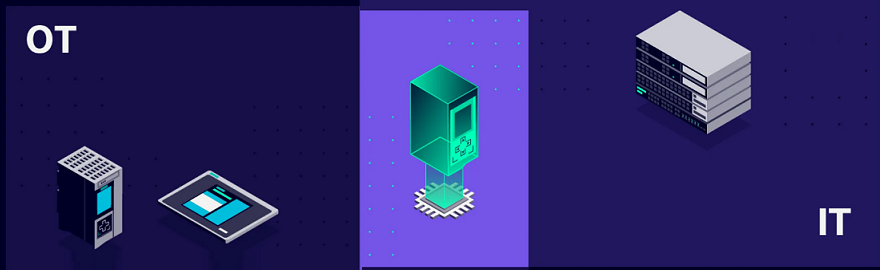
And then there’s the organizational learning curve. Moving to software-defined automation requires close cooperation between IT and OT teams. It’s not just a technology shift—it’s a cultural one.
New Chapter in Automation
What makes Audi’s approach particularly compelling is how grounded it is in pragmatism. This isn’t a futuristic prototype running in a lab. It’s a real, functioning system—born out of necessity, refined through partnership, and deployed at scale.
In doing so, Audi and Siemens haven’t just installed a new control system. They’ve demonstrated that virtual PLCs are not only viable but beneficial in today’s manufacturing environments. They’ve turned a factory problem into an IT opportunity—and redefined what it means to bring agility to the shop floor.
And that may be the most important takeaway of all: in an era where software is ruling the world, it’s now rewriting the rules of automation, too.