Representative End User Clients







Representative Automation Clients







Representative Software Clients








GE Vernova has launched its new F35g 170 kV SF₆-free gas-insulated switchgear (GIS), expanding its GRiDEA™ portfolio of technologies designed to help utilities reduce the carbon emissions associated with high-voltage electricity infrastructure.
The launch comes ten years after GE Vernova introduced its first product using g³ technology as an alternative to sulfur hexafluoride (SF₆). SF₆ has traditionally been widely used in high-voltage electrical equipment because of its insulating properties but is also a potent greenhouse gas.
GIS is used in substations to help safely control and protect the flow of high-voltage electricity. Its compact design makes it well suited to locations where space is limited, including urban substations and other constrained environments.
The new F35g 170 kV GIS is designed to provide the performance, reliability, and compact footprint associated with conventional high-voltage GIS without using SF₆. Its introduction completes GE Vernova’s SF₆-free GIS range for transmission grids, which now spans 72.5 kV, 145 kV, 170 kV, 245 kV, and 420 kV.
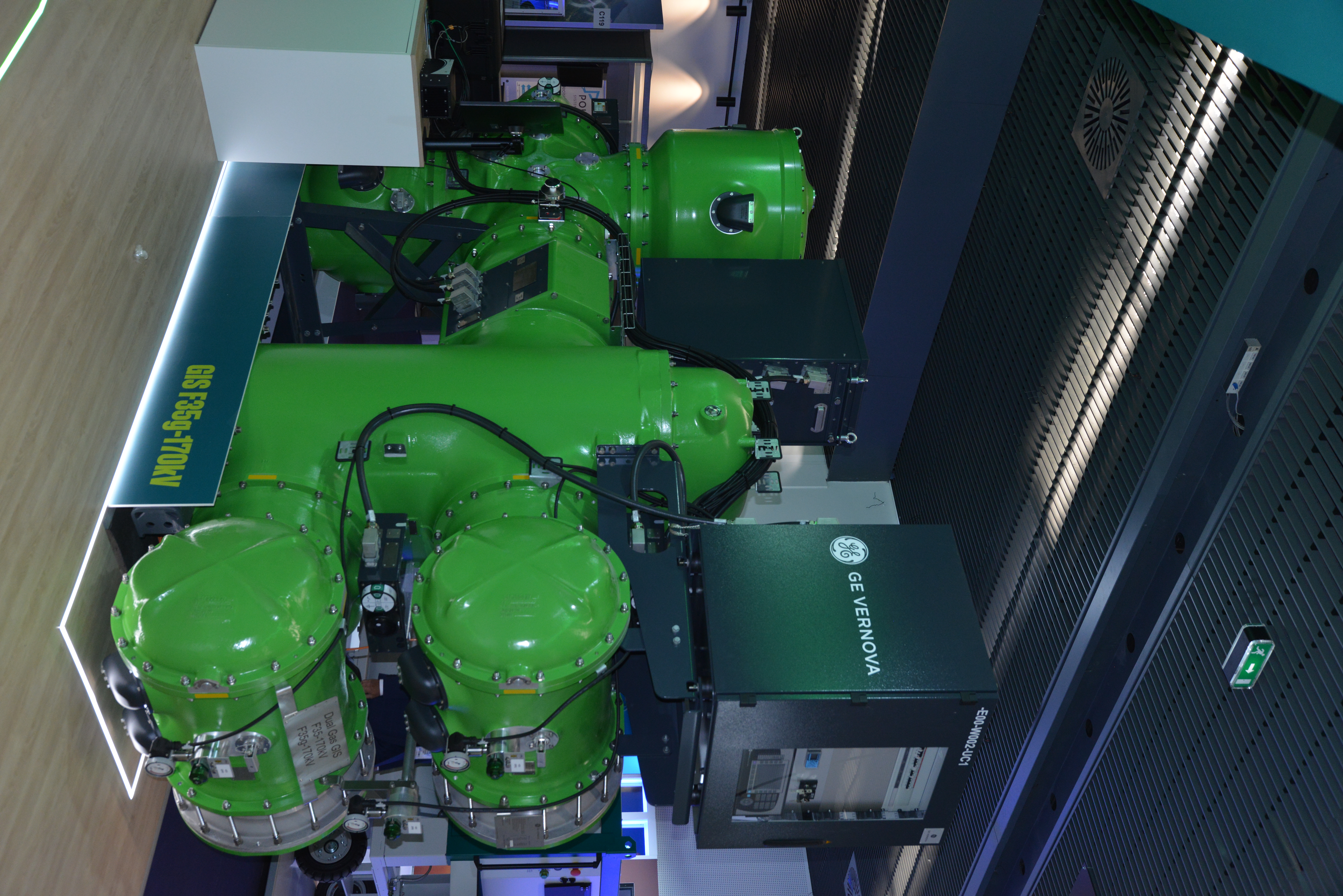
Since introducing its first g³ product in 2016, GE Vernova has progressively expanded the technology across its high-voltage portfolio. The F35g 170 kV extends that work into another widely used transmission voltage range, providing utilities with an additional option as they seek to reduce their reliance on fluorinated greenhouse gases.
The F35g 170 kV is also designed as a digital-native solution, integrating monitoring and digital capabilities that provide operators with greater visibility into equipment condition and performance. The product is designed to meet both IEC and IEEE requirements, supporting deployment across different electricity markets.
As part of its development process, GE Vernova uses life cycle assessments (LCAs) to evaluate carbon emissions across stages including raw material extraction, manufacturing, transportation, use, and end of life. This approach is intended to identify opportunities to reduce the overall global warming impact of high-voltage infrastructure beyond replacing the insulating gas itself.
Development of the F35g 170 kV GIS was partially supported through France 2030, operated by ADEME, as part of efforts to support the development and industrialization of technologies contributing to lower-carbon infrastructure.
The new GIS will be manufactured by GE Vernova in Europe and is available for order.
The F35g 170 kV forms part of GE Vernova’s GRiDEA™ portfolio, which brings together technologies focused on reducing the carbon footprint of electrical equipment while maintaining the reliability and performance required by critical grid infrastructure.
The introduction reflects a broader shift across the transmission sector as utilities evaluate alternatives to SF₆ while simultaneously modernizing aging grid infrastructure, expanding transmission capacity, and incorporating greater digital intelligence into substations.
As utilities modernize transmission networks, SF₆-free technologies are becoming part of a broader shift toward lower-carbon, digitally enabled grid infrastructure. The following ARC Insights explore related developments in switchgear, grid automation, transmission modernization, and sustainable electrical infrastructure.
GE Vernova Advances Transmission Grid Operations with GridOS® for Transmission
GE Vernova Expands Grid Automation Portfolio with GridBeats APS
These ARC Insights provide additional perspectives on the transition toward SF₆-free switchgear, transmission grid modernization, substation automation, and the growing role of digital technologies in future electricity infrastructure.