Representative End User Clients







Representative Automation Clients







Representative Software Clients








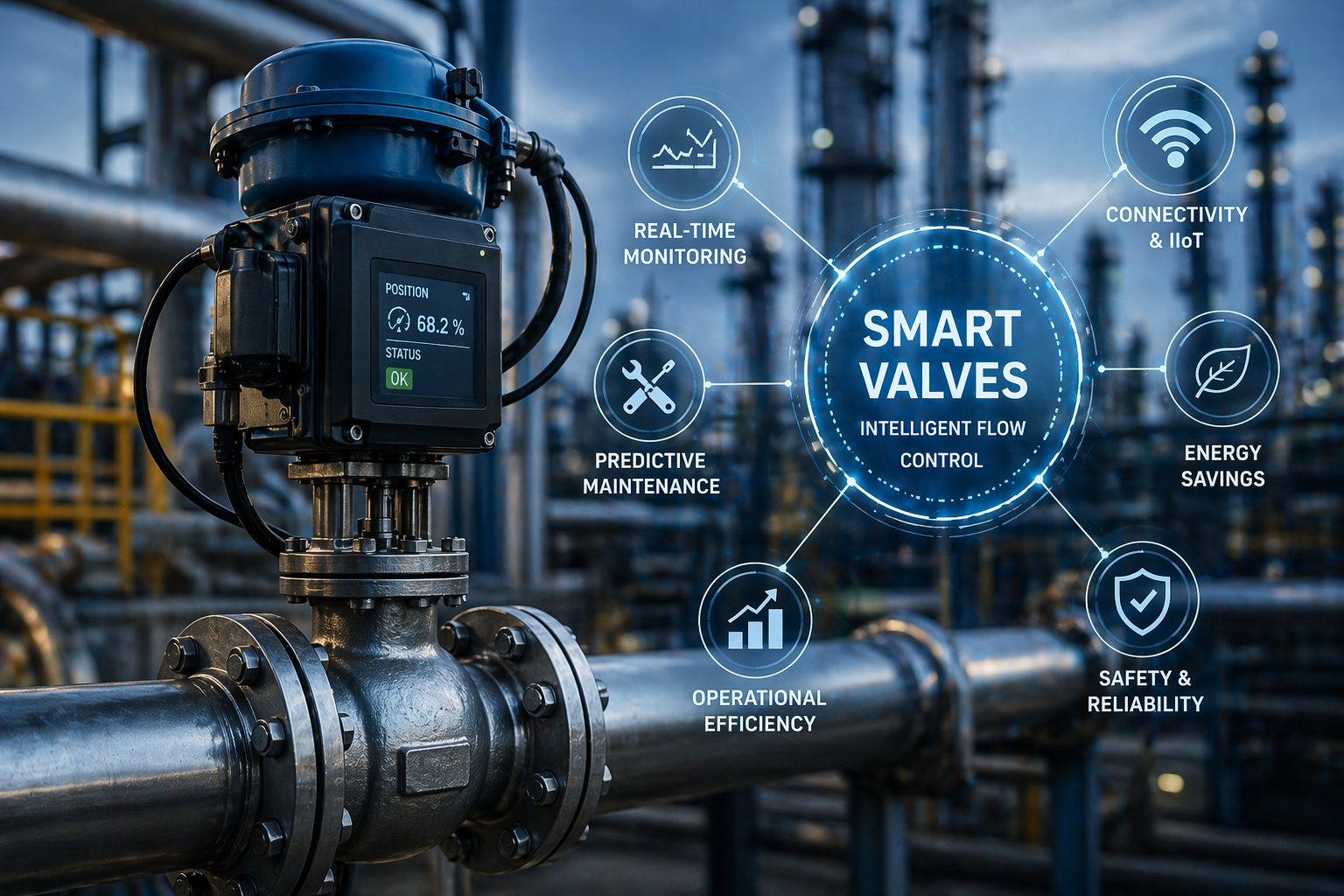
Walk into a modern industrial plant today, and you will notice something has changed: control systems are no longer simply reacting to problems; they are anticipating them. At the center of this shift are smart industrial valves, quietly evolving from basic mechanical components into intelligent assets that shape how entire operations perform.
The driver behind this transformation is the integration of sensors, data, and connectivity. Today’s smart valves continuously monitor parameters such as pressure, temperature, and flow rate. Rather than relying on operators to spot issues, the system itself highlights abnormalities in real time. In a large water treatment plant, for example, a slight pressure drop across a valve may signal early-stage clogging. With smart monitoring in place, the issue is identified immediately and addressed before it escalates into a wider process disruption.
One of the clearest benefits is predictive maintenance. Traditionally, valves were serviced on fixed schedules or only after failure—both costly and inefficient approaches. Smart valves change that dynamic by analyzing performance trends over time.
Consider an oil refinery where a control valve handles high-temperature fluids. Gradual seat degradation is inevitable, but with smart diagnostics, the system can detect subtle changes weeks in advance. Maintenance can then be planned during a scheduled outage, avoiding an emergency shutdown that could cost thousands per hour and disrupt production commitments.
Automation is another area where the impact is tangible. In power generation and chemical processing, maintaining precise flow conditions is critical to both efficiency and safety. Smart valves can automatically adjust in response to changing system demand.
Take a steam distribution network in a power plant. If demand rises sharply, smart valves respond instantly by adjusting flow to maintain pressure balance—something that would otherwise depend on manual intervention or delayed control responses. The result is smoother operation and reduced stress on downstream equipment.
Energy savings are often overlooked but significant. Inefficient flow control leads to wasted energy, especially in large industrial environments. Smart valves continuously optimize flow, reducing unnecessary load on pumps and compressors. Over time, even small improvements translate into substantial cost savings. For example, in a large HVAC system in a manufacturing facility, optimized valve control can reduce energy usage by a noticeable margin without compromising performance.
There is also a growing sustainability dimension. With increasing pressure to reduce emissions and conserve resources, smart valves help by minimizing leaks, tightening process control, and reducing energy waste. In water and wastewater operations, this can translate directly into reduced losses and better stewardship of scarce resources.
Adoption is not without challenges. Upfront costs are higher, integrating smart valves into legacy infrastructure requires planning, and connected systems bring added responsibilities around data management and cybersecurity. These are real considerations, not footnotes.
Still, the shift is clearly underway. Smart industrial valves are no longer a future concept—they are becoming the norm. By turning real-time data into actionable insight, they are helping organizations move from reactive operations to proactive, optimized performance.
In simple terms, valves are no longer just controlling flow—they are helping control the future of industrial operations.