As one of the longest running (37 years) and well attended industry events in the region, the
CommunicAsia show, which took place last week here in Singapore and attracted over 1,000 exhibitors, always provides a good opportunity to see and hear the latest in the world of information and communications technology (ICT).
While the broadband consumer internet and mobile phone revolutions drove much of the activity at CommunicAsia post-2000, more recently it’s the Internet of Things (along with cloud and analytics) that’s grown in prominence – in terms of the technology displayed down on the show floor and the topics discussed upstairs in the conference halls.
Indeed, CommunicAsia this year featured a dedicated Industrial IoT conference track for the very first time, featuring speakers from the likes of Bosch, Dell, GE Digital, SAP, the Industrial Internet Consortium, as well as AT&T and Verizon.
One of the communications sectors where IoT is clearly making an impact is satellite. In a briefing with ARC during CommunicAsia 2016, Steven Rutgers, Asia Pacific sales director for UK mobile satellite company
Inmarsat, revealed the growing number of Industrial IoT projects using Inmarsat’s satellite services for making the connection to and from the field. Applications tend to be those involving remote locations or extending over large land or sea areas, such as water level monitoring, oil and gas pipeline integrity, and tracking of mining trucks. Promising and target markets for Inmarsat in Asia Pacific include Australia, Indonesia, Philippines, China and Myanmar.
While connecting geographically dispersed assets is a natural fit for satellite, given the still considerable limitations of terrestrial network technologies in these environments, Rutgers says he’s increasingly getting inquires related to IIoT projects in urban environments, with the attractions of satellite being its availability (99.9% quoted by Inmarsat), reliability and security, plus the cost of satellite connectivity reducing significantly over the last few years.
Still, it’s not a zero sum game, or as Rutgers puts it, “There are perfect moments to use cellular, there are perfect moments to use satellite, and there are also perfect moments when they work beautifully together.”
Accordingly, the new EXPLORER 540 terminal (developed by
Cobham SATCOM) is approved not only for Inmarsat’s BGAN (Broadband Global Area Network) but also operates on LTE/3G/2G cellular networks. In use, the Explorer 540 transfers data over lower cost cellular but automatically switches over to satellite should the primary network drop out, thus ensuring constant yet cost effective connectivity for mission critical applications.
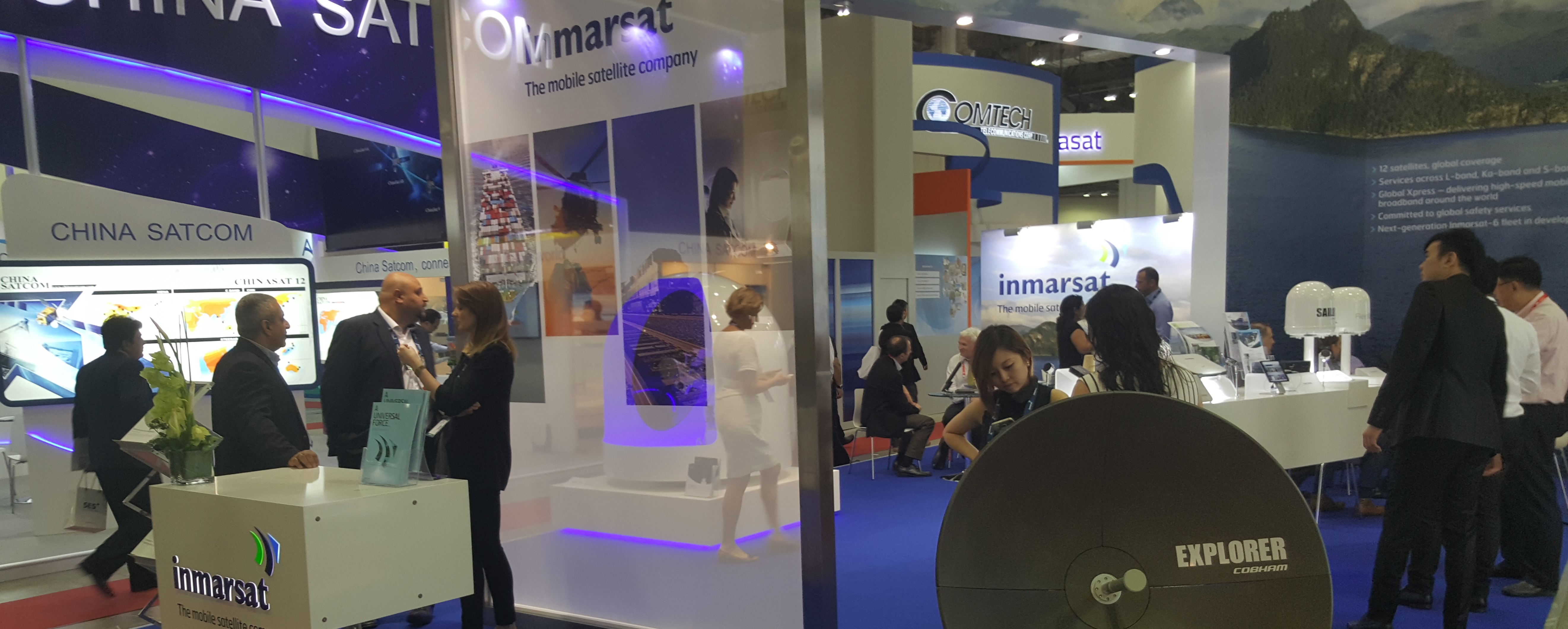
This move to integrate with other network technologies was also apparent in the February 2016 announcement of Inmarsat joining the
LoRa Alliance as its first satellite member. LoRa is the industry body formed in 2015 to standardize and promote the use of Low Power Wide Area Networks (LPWAN) for IoT applications.
For Inmarsat, the LoRa interest comes from the fact that in locations with terrestrial network constraints, users will look to satellite technology to provide the necessary IP backhaul to transfer data from LPWAN devices to applications on cloud platforms. Later in February, Inmarsat announced its partnership with Actility, a founding member of the LoRa Alliance and a provider of LPWAN technology in the form of its ThingPark IoT management platform.
Looking at evolving satellite technology development with respect to IIoT, Inmarsat and other service providers predominantly use the lower data rate L-Band (1-2 GHz) at the present time. But as Industrial IoT takes hold over the next few years, and with larger node counts and faster network speed requirements, higher bandwidth technology, notably Ka band (26.5-40 GHz), will enable a broader range of satellite IIoT applications. And overall, as with cellular, it'll be interesting to watch how the satellite companies navigate their way through and make their mark in the Industrial IoT landscape.




















