Representative End User Clients







Representative Automation Clients







Representative Software Clients









Global demand for new infrastructure, utilities, and industrial process plants has been increasing in line with the growth of regional economies. While the recent leveling off of economic growth in some global regions has reduced the number and scope of new capital projects; recently completed process, utility, and other industrial projects must still transition to the long-term operations and maintenance (O&M) phase.
 Typically, operating expense-related activities require a set of solutions and applications for maintaining and optimizing assets that will be in place for many years. Robust asset management solutions will be critical to owner-operators operating and maintaining expensive and complex assets. Moreover, operations, maintenance, and engineering staffs in process plants, utilities, and other asset-intensive facilities need access to both engineering information and real-time asset condition monitoring information. These “connected plants” will require a comprehensive and robust asset lifecycle information management (ALIM) environment, supported by smart connected assets, Big Data, and predictive analytics from the emerging Industrial Internet of Things (IIoT) ecosystem.
One of the single most significant issues associated with capital projects is the lack of accurate, complete, and timely project and engineering information. Not having access to the complete set of engineering and construction information can add substantial project and operational risk in terms of cost, time, and safety. Accurate engineering information must be also available and accessible during the much longer operating expense-related O&M phase. Engineering, procurement, and construction (EPC) contractors, project managers, and owner-operators all concur that access to information throughout all phases of capital projects is critical to meeting schedule, cost, and safety goals and maximizing asset availability and performance.
According to ARC research, information management and access is equally important to EPCs and owner-operators. EPCs need well-managed information to complete the project, and the owner-operators need accurate, up-to-date information turned over to them in a form that they can easily import into the asset management/maintenance management systems they use to operate and maintain the facility. In the past, engineering information management systems were considered to be the “system of record” for a facility. Increasingly, however, asset lifecycle information management (ALIM) systems are becoming the system of record to support and continually update operations and maintenance, IT, and ERP for accounting and financial systems.
A range of disruptive technologies are helping to transform how this information will be presented, accessed, and made available to EPCs, owner-operators, contractors, equipment suppliers, and service providers.
The ALIM system provides a framework to optimize the availability of and access to all information across both the CapEx and OpEx lifecycle phases of plant infrastructure and all its assets. The ALIM system must provide a continuous  flow of information to stakeholders from the early stages of design, through construction, handover, commissioning, and operational readiness, and also to support ongoing operations and maintenance activities. Rather than just reducing OpEx and CapEx, owner-operators are now looking to reduce their total operating expense (“TotEx”) over the entire asset lifecycle. This requires an information continuum in which the hand-over process ceases to be a single event or milestone in the overall project, but becomes a continuous flow of information throughout the project lifecycle. Having access to and being able to act on all of the information across the CapEx and OpEx lifecycle phases, i.e., engineering design, asset information, and operations and maintenance information, help reduce the total cost of the asset.
Businesses in the process, utility, and other heavy industrial sectors typically waste a significant amount of time and money attempting to retrieve and recreate data that, in many cases, already exists.
In the design phase of a project, engineers routinely spend time searching for existing design files, models, and other project information and as-designed and as-operated designs may conflict. On the operations side, accurate, up-to-date information is critical to help prevent planned and unplanned downtime and minimize production interruptions.
All stakeholders need access to asset information, whether it’s the EPC that needs access to multiple design application formats, or the owner-operator that needs access to equipment drawings and service bulletins as well as P&ID loops. Common challenges include asset information residing in multiple systems and design models and other engineering information maintained across a variety of applications (often in multiple formats), where lack of interoperability can present issues. This often results in inefficient information flow between people, systems, and applications.
Frequently, the existing project and operational information is either unreliable, inaccessible, or incompatible. All stakeholders throughout all project phases are often challenged by inadequate access to the right information, at the right time, and – ideally – in the right format.
In a typical plant environment, operational and asset information resides in multiple applications and systems, and comes in a variety of formats with multiple mappings between the systems. One of the fundamental concepts of  engineering design is reuse. An inefficient information flow between people, systems, and applications significantly obstructs efficient use and reuse of information in both the CapEx and OpEx lifecycle phases. A single system of record is needed. In the product lifecycle management (PLM) world, the modern product data management (PDM) platforms represents the single source for all product design, manufacture, and support information across the entire PLM lifecycle. A similar approach is now being applied to plant design, capital projects, operations, and asset management in the process, utilities, and infrastructure worlds.
Even in the current era of easy access to information, efficient information flow presents some very real challenges for EPCs and owner-operators alike. Fundamentally, the common challenge is disparate information systems for design models, engineering, and asset information. Poor interoperability between these disparate systems can result in the inefficient flow of information between people, systems, and applications; causing capital project cost overruns and delays.
As a project progresses across the plant/facility lifecycle, the number of stakeholders involved in the lifecycle process grows and the scope of the information needed by these stakeholders’ moves well beyond the initial requirements  phase. Once the project moves beyond the pre-work phase of requirements, functional specifications, and concept; to detail design, P&IDs, loop diagrams, isometrics, 3D models, and laser scans; information must become part of a collaborative digital environment shared by multiple organizations across the design, build, operate, and maintain lifecycle.
Project information should be regarded as a shared “digital asset” representing the plant infrastructure and all physical assets. As-designed project information, along with as-procured, as-constructed, as-tested, and as-commissioned, would comprise an engineering system of record that provides a baseline for the O&M phase of the plant’s lifecycle and represent a key component in the overall ALIM system. This would also include as-revised, as-updated, and as-maintained information. A fundamental characteristic of a good ALIM system is that it represents a single source of all information across the CapEx and OpEx lifecycle.
A plant or any piece of equipment within the plant becomes an operational asset when the owner-operator places it into service. Incorporating asset reliability requirements in the front end engineering design (FEED) stage of a project helps ensure operational readiness and can help save millions in maintenance costs over the life of a plant.
Understanding when, how and where to use the wide variety of available reliability engineering tools will help an organization achieve its reliability mission. This is becoming more and more important with the increasing complexity of systems and sophistication of the methods available for determining their reliability. With increasing complexity, a well-defined process for integrating reliability activities becomes necessary. Appropriate access to engineering information, which is often essential for assessing and maintaining assets, also enables more effective reliability processes.
Designing reliability best practices in this stage can not only save maintenance costs over the life of the facility, it will also make for a safer environment and help attain operational excellence. In addition, reliability becomes engrained in the organizational culture.
Applying emerging technologies such as 3D simulation, drones, and geospatial technology enables development of realistic simulations down to the asset level that can help users diagnose impending failures. Mobile solutions enable technical documentation to be delivered at the point of work where it is most needed.

To meet business objectives for production capacity, quality standards, safety, environmental performance, and profitability; operational personnel need access to asset and performance information on all aspects of plant operations. This includes everything from the physical infrastructure to all the equipment installed.
An emerging set of disruptive technologies is driving today’s digital transformation of industry and infrastructure. These technologies are having a significant impact on how plants and infrastructure are designed, built, maintained, and operated. New solutions, applications, and platforms that accommodate Big Data, analytics, cloud computing, the Industrial IoT, mobility, laser scanning, and virtual modeling are working together to converge the physical with the digital.
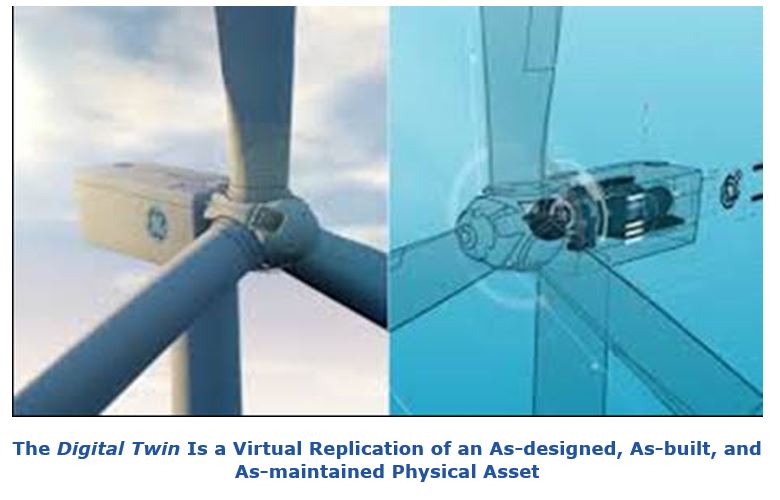
Design and construct activities for plants and infrastructure are undergoing this digital transformation. Today, companies have access to technology and solutions that allow for a completely connected digital enterprise encompassing an end-to-end virtual lifecycle of plant design, construction, operational processes, and asset maintenance. This instance of the digital enterprise, or “digital thread,” ties all aspects of the plant lifecycle together and enables all engineering design, construct, and operations/maintenance stakeholders work from a common repository of digital information. This digital thread connects the physical and virtual asset to enable information access provided by today’s next-generation ALIM platforms.
Increasingly, the digital and physical assets will be built concurrently. The digital asset can then be updated to reflect subsequent improvements to the physical asset. The new norm will be to deliver a complete asset registry with the  digital engineering model built in. Additionally, reliability and maintainability considered in the design phase can enable operational readiness and superior asset performance once commissioned.
Today, a growing number of owner-operators want to own the digital asset earlier in the lifecycle as the physical asset is being designed. There is also a movement to make the ALIM system the system of record for IT, operations and maintenance; and the ERP system the system of record for accounting and financial purposes.
An important aspect of the digital thread is the concept of the “digital twin,” in which the physical facility and equipment is connected with virtual design models. Real-time data from smart sensors that represent the state and condition of physical equipment and processes is accessed and analyzed to improve and optimize engineering design and operational processes. Additionally, data from smart connected equipment is used to drive predictive and prescriptive analytics to improve and optimize conditional maintenance of the facility and the equipment.

The digital twin can be implemented incrementally in staged knowledge-based improvements based on accumulated historical data; or continuously improved and optimized based on real-time data streams from specific assets and operational environments.
To improve asset management, owner-operators are employing virtual simulation technologies to assess the condition of existing assets in the field. Simulation models of the physical structure and equipment allow asset owners to determine damage caused by environmental conditions or accidents, as well as assess long-term deterioration over the lifecycle of the asset.
Today’s smart connected assets dramatically expand the amount of data available to owner-operators. Combined with advanced analytics and visualization, this provides actionable information; the lifeblood of today’s industrial organizations and infrastructure and an enabler for a new era of process optimization and improved asset performance.
Advanced analytics will help identify areas for both quantitative and qualitative process improvements and validate that the individual assets and facility as a whole are functioning and operating as designed and as built. This is where the digital twin comes into play, with the virtual design models integrally connected to the physical asset. In this environment, assets will have the connectivity and intelligence needed to enable them to follow an evolutionary path from predictive methods to prescriptive optimization, and ultimately to autonomous operations.
Connected smart plants, utilities, and infrastructure will lead to new business models that significantly benefit owner-operators in asset performance. New service models can be based on merging the physical and digital elements of assets to help power remote monitoring, analysis, support, and optimization to help extend asset operational life and optimize overall performance.
New business models for equipment providers might include one-time charges for purchasing smart connected equipment, followed by pay-for-results and pay-as-you-go subscription models. In a related scenario, equipment suppliers could generate incremental revenues by charging customers for connecting to the smart assets to support remote monitoring, analysis, and/or optimization services. Equipment OEMs are also examining new business models in which they retain ownership of capital equipment and offer a complete operational and maintenance service based on a digital twin approach and predictive and prescriptive analytics.
Perhaps one of the most significant benefits for the owner-operator of OEM-furnished equipment is direct support from maintenance technicians with the latest and most accurate information on the state and condition of the equipment. Data from smart, connected equipment that has been aggregated and analyzed and transformed into actionable information can enable maintenance staff to focus directly on issues at hand, rather than going through lengthy and time-consuming troubleshooting processes.
Augmented reality also holds promise for support and maintenance, along with new user interfaces and mobility devices. The digital user interface of the smart, connected equipment can be put into a tablet or smartphone application. This enables remote operation and inspection and can provide both operators and maintenance technicians with greater mobility. Augmented reality merges the real world with the virtual world by overlaying the digital model onto a photo or video image.
Engineering design tools (EDT) suppliers for plant design and infrastructure now offer applications and solutions that enable both EPCs and owner-operators to access and exchange the full range of total operating expense-related information. Moreover, by embracing emerging technologies into their solutions (cloud infrastructure, Big Data/predictive analytics, Internet of Things, smart and connected assets, mobility, virtual modeling, etc.) EDT providers can enable their customers to leverage the associated benefits. For more effective performance management, owner-operators of costly, complex, and mission-critical assets need to be able to leverage cutting-edge technology to maintain assets effectively and optimize operations.
Improving both asset reliability and performance remains the primary focus of most owner-operators. The emergence of predictive/prescriptive analytics solutions; connected, smart assets; and more expansive and comprehensive ALIM platforms should enable owner-operators to better address these challenges.
Owner-operators in many industries are experiencing very competitive markets and falling commodity prices. The latter can be bad for sectors like upstream oil & gas; but generally favorable for sectors like downstream oil & gas, chemical processing, and power generation. However, the common thread for all these industries in a time of volatile commodity markets and shrinking demand is to improve efficiency and optimize operations and maintenance on the OpEx side of the lifecycle. Access to all engineering design information across the design, procure, construct, operate, and maintain sectors of the plant lifecycle for all stakeholders involved is essential to efficiency and optimization. An inclusive, common, and accessible information platform based on ALIM structure and organization represents can help owner-operators reach this goal.
Today, EDT suppliers have recognized the need for ALIM platforms that go beyond the single event of the traditional handover of engineering information to the owner-operators. They also clearly understand the requirement for a continuous and accessible stream of information across the entire CapEx-to-OpEx lifecycle.
Clearly, all companies across the energy, process, utilities, and infrastructure sectors are focusing on methods, best practices, and emerging technologies to control costs and improve efficiencies both in capital projects and operations and maintenance. At the core of addressing these issues must be an information system that enables and maintains the continuous flow of engineering and asset information across the entire design, build, operate, and maintain lifecycle. Today’s ALIM systems are becoming the system of record for many operating companies.
Specific industries like oil & gas, particularly the upstream sector involved in exploration and production, are refocusing their attention on their capital projects to reduce time to value, optimize processes, and reduce overall costs. Given the  recent and persistent downturn in crude oil commodity prices, oil & gas companies are making it an imperative to control costs by closely monitoring capital projects for overruns in materials management and procurement, change orders, construction and work packages, and transition costs (commissioning, handover, and asset management).
Understanding when, how and where to use the wide variety of available reliability engineering tools will help industrial organizations achieve their respective reliability missions. This is becoming more and more important with the increasing complexity of systems and sophistication of the methods available for determining their reliability.
With increasing complexity in all aspects of asset performance management, a well-defined process for integrating reliability activities is needed. Without such a process, trying to implement the many different reliability activities involved in asset management can devolve into a chaotic situation in which reliability tools may be deployed too late, randomly, or not at all. This can result in the waste of time and resources as well as a situation in which the organization is constantly operating in a reactive mode.
These companies have recognized that achieving their goals of cost reduction and more efficient capital projects and asset management require implementing an effective ALIM framework and adopting the appropriate emerging technologies. ARC believes that this is where the plant design and infrastructure business is heading.
If you would like to buy this report or obtain information about how to become a client, please Contact Us