Representative End User Clients







Representative Automation Clients







Representative Software Clients








Many countries around the world are embracing Industrial IoT/Industrie 4.0 and smart manufacturing initiatives. China is no exception, and it wants to Standardize Smart Manufacturing The Chinese government, in particular, recognizes the need to drive  transformation faster to maintain and improve global manufacturing competitiveness and sustain economic growth. ARC Advisory Group believes manufacturing will feature more than ever in the public spotlight in the coming years; supported by new, forward-looking public programs aimed at education, innovation, and adoption.
The ambitious "Made in China 2025" initiative spelled out in China’s 13th Five-Year Plan (2016-2020) places a priority on smart manufacturing. The goal is to strengthen and grow the country’s manufacturing sector. While many resources are being allocated for the initiative, these efforts could be constrained by a lack of new technology standards and proven-in-use practices. Suppliers and industry organizations will need to develop and deliver more standardized, smart manufacturing solutions and services, and quickly. Clearly, this will require new approaches to develop these standards within the required timeframe.
"Made in China 2025" was proposed to upgrade China's manufacturing sector to be able to leverage emerging internet-based solutions and the trend towards digitization in industry and information-based manufacturing. With its Made in China 2025 initiative, it’s clear that China’s central government intends to play a key role in the transformation to smart manufacturing in the country, along with associated standardization efforts.
In February 2015, the government established the Working Group for Smart Manufacturing Standardization, led by the Department of Equipment Industry, Ministry of Industry and Information Technology (MIIT). The working Group has been tasked to consolidate reference architectures from different sources and quickly propose a Smart Manufacturing Standard System framework and guidance. The major members in the working group include:
A month later, MIIT announced several pilot demonstration projects for intelligent manufacturing. These will be used to help develop the necessary standards and promote and disseminate best practices for smart manufacturing in China.
Industrial Internet of Things (IIoT), intelligent plant floor systems, Big Data technologies and IT and OT convergence demand the development of complex new standards to drive adoption. From common plant floor data models, to compatible sensor networks, device-specific guidelines, network communication protocols, cybersecurity, or the architecture of Big Data repositories, a host of new technology areas urgently need standards attention. These new technology markets will stall without them.
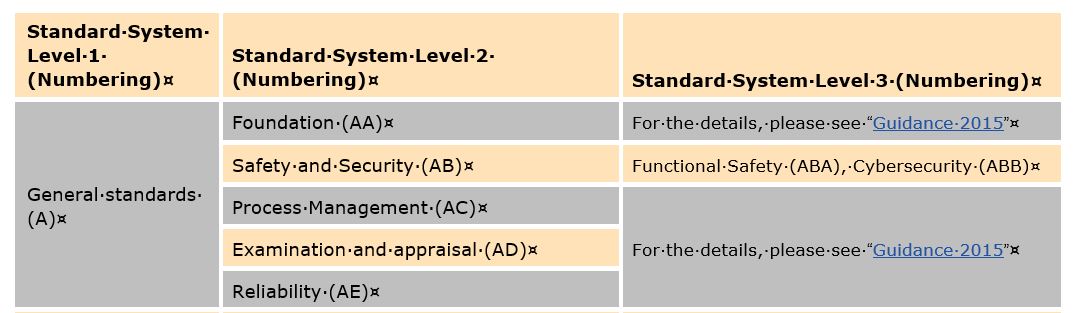
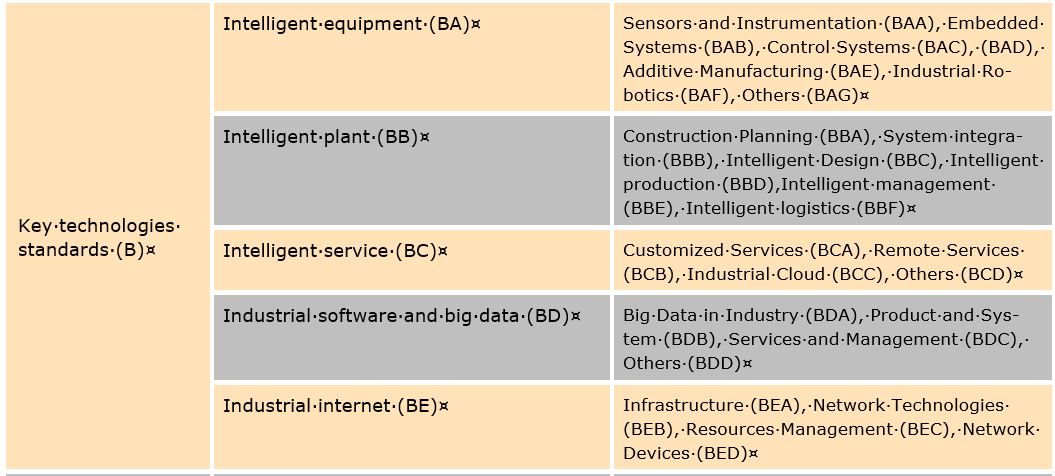

MIIT and the Standardization Administration of China (SAC) jointly published Guidance on National Intelligent Manufacturing Standard System Construction on December 29, 2015. The initial guidance (Chinese version) should help eliminate bottlenecks related to data integration and interconnection, boosting intelligent manufacturing. The guidance will be revised every two or three years. According to the “Guidance 2015,” a smart manufacturing system comprises integration standards within and across three manufacturing lifecycle dimensions: system layer, lifecycle, and intelligent functions. The document clarifies the overall requirements, construction ideas and content, and method of organization and implementation for building a national intelligent manufacturing standard system.
Currently, standards are available (or at least being drafted) to cover important issues in industrial automation and most manufacturing standards created in the last 30 years have already achieved a high degree of maturity. But new technologies and requirements drive the need for further standardization. Today, numerous national, regional, and international standards development organizations establish manufacturing industry standards. However, the tailored “Guidance 2015” was mainly developed to fit China’s manufacturing status quo.
According to the document, the national intelligent manufacturing standard system will include five basic standards covering foundation, safety and security, management, examination and appraisal, and reliability, respectively. It will also include key technological standards on intelligent equipment, intelligent factory, intelligent services, industrial software and Big Data, and industrial Internet. The table included in this report shows the Standard System Construction Framework.
Similar to the standardization efforts in the traditional automation domain that has helped improve interoperability between applications and reduce integration costs, the smart manufacturing domain will also require standardization for interoperability and scalability. To demonstrate the new manufacturing model, functions and new technologies, an ambitious pilot program was developed to support “Made in China 2025.” In 2015, China took special actions to consolidate the foundation of the industry; supported 118 demonstration projects; confirmed 75 national manufacturing enterprises as demo sites for technological innovation; identified 25 key laboratories under the MIIT; and launched special actions for smart manufacturing, confirming 46 pilot demo projects. Major pilot projects were showcased at the China International Industry Fair (CIIF) in November 2015.

On April 11, 2016, MIIT issued another action notice about a pilot demonstration of smart manufacturing along with a special action plan. Under this action plan, more than 60 pilot projects will be selected related to the five models: Discrete, Process, Internet-based Collaboration, Massively Customized Production, and Remote Operations and Maintenance.
The pilot program will focus on CNC and robotics, additive manufacturing, intelligent sensors and control equipment, and intelligent logistics and warehousing. The government anticipates that these pilots will demonstrate significant improvements within two to three years. These include:
Since many technologies and concepts evolve continuously, it can be challenging to develop a detailed understanding of each. The pilot program is intended to help generate inputs for new smart manufacturing standards and best practices. Standards are fundamental and valuable tools that can enable the adoption of technologies and innovations by business owners.
While it would be easy enough for an organization to become lost in the “jungle” of smart manufacturing concepts and initiatives, end users and suppliers alike should not become dissuaded. ARC suggests end users and suppliers carefully consider their own business challenges and objectives to choose the most suitable elements among the many options provided by different smart manufacturing initiatives.
China’s standards for smart manufacturing will be open and support participation by a wide range of organizations from SMEs to large multi-national corporations. Moreover, smart manufacturing technologies enabled by standards allow a wide range of manufacturers to participate, regardless of size or location.
ARC recommends that end users and suppliers in China should pro-actively take part in the country’s smart manufacturing pilot program. It provides a good platform for demonstrating smart manufacturing solutions and services. China’s government also encourages the local suppliers and end users to work together with global partners to build smart manufacturing innovation centers.
If you would like to buy this report or obtain information about how to become a client, please Contact Us
Keywords: China, Smart Manufacturing, Made in China 2025, Industrial IoT, Industrie 4.0, Intelligent Plant, ARC Advisory Group.