Representative End User Clients







Representative Automation Clients







Representative Software Clients








Recently, Ralph Rio, ARC Advisory Group, interviewed Manish Sharma, Business Head Americas for Energy & Resources, at Tata Consultancy Services to explore the business dynamics in the oil and gas industry - particularly considering the current pandemic. 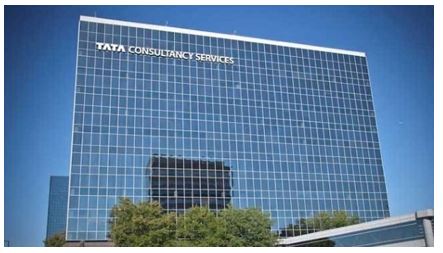 The podcast provides guidance for the transition out of the crisis and the post-COVID business environment.
Oil and Gas companies have evolved in our new digital era and now with the global pandemic are acting as a catalyst for digital transformation. The challenges for the oil and gas industry started before the global pandemic with the price war over crude oil and a global petroleum supply-demand imbalance. The pandemic added slowing economic growth that put added pressure on this industry.
Manish’s current role at TCS began after more than two decades with TCS working with many verticals, like Manufacturing, Life Sciences, Insurance, and of course Energy & Resources. He now looks after the Energy and Resources vertical for the Americas. Energy companies have evolved in the new digital era, and this global pandemic is acting as a catalyst to digital transformation. These companies are leading their way through innovation to discover the known unknowns of the industry.
First, the current situation did not emerge with the global pandemic. It was all under way much before the outbreak started and gave a significant headwind to the current crisis. The significant downturn in demand started in 2016 and evolved into a price war over crude oil that involved the global supply chain. This imbalance put added pressure on this industry.
While grappling with a slowdown scenario, this became a super accelerant for one of the industry’s most transformative periods. It has started the race for Energy Transition and Net Carbon Zero like never before. Shareholder activism on environmental health is making an impact as shown with recent announcements from BP, Shell, Total, Equinor and Repsol for huge carbon reduction targets.
The uncertainty around the duration of this pandemic is generating widespread confusion for understanding and addressing future plans. This will likely be very different from those imagined earlier. But despite the tough conditions, the skepticism, and the pressure, this industry is too important to fail. The question is only around creating a niche and value for the industry in this new normal.
Let’s start with the current response to the crisis. For the first level of response to the crisis, most of the industry has been successful running their operations with the technology in hand. End consumers have not had any energy crisis. They have electricity and fuel in the cars. We have a greater understanding of what is ‘Essential’ through this pandemic and that ‘virtual’ can run a majority of our businesses. TCS has partnered with most of its customers to help them adopt to the Secure Borderless Workspaces (SBWS) model so organizations can take full advantage of their talent ecosystem. This addresses a wide range of human functions, including infrastructure, talent management, employee engagement, processes, tools, governance mechanisms, and most importantly collaboration and engagement practices.
The second wave of response to the crisis involves adapting and reimagining three dimensions of the businesses: workforce, workplace, and the work itself. A strong driver of how companies are adapting themselves is the way they look at their core purpose. Organizations are looking beyond the products they make and sell, to the very purpose behind their existence. This in turn often defines the blueprint for their transformation journey. As the Industry redefines its purpose to provide cleaner and sustainable energy solutions, there is a great deal of focus on aligning employee, community, and the corporate purpose.
This pandemic has accelerated the drive to redefine that purpose and created a transition pathway for these organizations. In many cases, it is going to be a very painful choice as this industry is facing to an existential crisis. But this trend of organizing business around purpose is a very strong driver of transformation. TCS believes this will accelerate in the upcoming months as firms think about what is most critical for them. They have all learned what the word “essential” means, and the true sources of value. Firms will seek to get a higher order of productivity and growth by looking within their value stream to unearth and package consumable services that drive growth. Companies that have announced net carbon zero targets are packaging their products and services very differently than just selling oil.
Combining this purpose-driven approach with the characteristics that enterprises need to adapt to this ‘new normal’ produces a resilient organization. This resilience includes both the ability to withstand shocks to the system, as well as the adaptability, which is needed to quickly tweak business models, launch new offerings or target new markets, while continuing to provide superior customer experience. In turn, this calls for the industry to do a complete risk-based evaluation of the ecosystems that the industry is operating with. Suppliers, both internal and external, must possess a depth and breadth of services that align with the required flexibility. This whole ecosystem becomes organic like a living and breathing thing and not a traditional supply chain.
The current Supply and Demand gap is huge even after discounting OPEC agreements for cuts and the forecasts of new sources of crude. New planned projects for additional supply capacity in Norway, Australia, and Brazil can be live in the next year or so. Recently, BP released its outlook with three possible scenarios for the oil and gas industry, and the future for oil doesn’t look very promising unless something substantially changes. The industry traditionally has hidden inefficiencies, such as lack of a cohesive integration strategy, diverse contracting base, and lack of agility, in the procurement processes.
Companies have moved to work remotely and are doing okay with the technology in hand. However, immediate actions and medium-term considerations help restructure the business for recovery. The oil & gas industry is in the process of initiating corrective actions, like reducing workforce, writing down assets with dwindling dividends, and closing non-performing assets. A few segments will be transformed to address this impact of the pandemic going forward.
Technology can help immensely in setting up a supply chain command center for end-to-end visibility, managing dynamic changes, and focusing on products that matter to clients. In many cases, this evolves into redefining key products as complete solutions rather than a basket of components sold directly and indirectly. Building insights with advanced analytics eliminates layers of disconnects between manufacturing and the final consumer. Now, the whole concept of separate and distinct Upstream, Midstream, and Downstream is dwindling. We are discovering and redefining new value chains with alternate business models for the broader needs of energy transitions.
A new shift is occurring for public private partnerships in local communities and cities to become a true energy partner of the community with end to end services, rather than just the traditional products. This shift is creating a new supply chain paradigm of producing and consuming locally, and it is going to have a major impact on how these organizations restructure themselves
Also, Enterprises are developing solutions that truly connect people, machines, and data for a connected ecosystem. Companies need to re-evaluate the ecosystem and people playing a part in their ecosystem. At the same time, the ecosystem must be well connected for it to run efficiently. The industry is now realizing that connecting their field workforce with rest of the ecosystem is key for maximizing the benefits of their digital investments. The connected ecosystem equips industrial field workers with real-time, context-specific and actionable information to make better informed decisions while staying safe.
Oil and gas companies are redefining their purposes and restructuring. Many have carbon neutral targets for 2050. Some of the more tactical targets and technologies that they are addressing today include:
The clear outcomes of these investments involve enhanced worker health and safety, superior productivity, remote monitoring, insights-driven operations, and improved compliance as part of digitized field operations.
Efficiency and resilience are not necessarily enemies if you approach the problem thoughtfully. We see almost all of our customers evaluating their elasticity for infrastructure, technology, operations and people. TCS has experimented with this and achieved success. Being agile and able to reskill the workforce continuously makes companies resilient and better prepared for unpredictable challenges.
In the last few years, TCS, with close to half a million people workforce, has reskilled almost 75% of that workforce - especially for digital technologies. The pandemic also became an opportunity to break silos in an organization which is an essential to envision a boundary-less agile organization. Enterprises will have to upscale the experience of remote learning. Mixed reality is set to play a greater role in digital learning and talent transformation.
CFOs are faced with significant pressure to preserve cash and maintain liquidity, all the while when running operations remotely. From budgeting and financial planning to handling revenue leakages; from compliance and regulatory reporting to profitability; from extracting synergies and value from mergers and acquisitions to shared services transformation – the sweep and influence of a CFO cuts across the entire organization. This far-reaching influence also means that investing in digital finance gives them the potential to transform the way they deliver value to the enterprise and fundamentally change the way businesses operate. We at TCS have a very strong set of offerings around financial transformation, M&A advisory and execution, shared services and transformation among others. TCS partners with CFOs across the globe to drive the agenda of cultural change, digitizing for real time data and using technologies that help them in forecasting and fast-tracking their 'data view’.
Technology is a key enabler at the forefront with impact on the economy, GDP, inflation, and much more. The technology companies have huge success with growing revenues and stockholder value. One of the biggest impacts that COVID-19 has had all over the world is that it has accelerated the digital transition. TCS, with its purpose driven Business 4.0 strategy in this Machine First world, is deeply embedded in this digital transformation of the Energy Industry. This transformation is mainly driven by innovations that are coming about due to Convergence: of the ability to act which is from ‘run-book automation to neural automation’ and the ability to reason which is ‘from descriptive analytics to explainable AI’. This is also an unprecedented time when various technologies on the side are becoming more and more viable that will drive the energy transition on steroids. For instance: the compute power of the Apple A14 Bionic chip on our consumer devices is over 6 TFLOPS today and rapidly increasing at about 41% per annum; the cost of data storage is going down by half every 18 months; the number of sensing pixels one can put on a device per dollar doubles every year, whereas the cost to transmit a bit across a network reduces by 50% every 9 months. The Li-ion battery cost is projected to be around USD 100 per kWh by 2023, and the AI algorithms are demonstrating a double exponential growth year on year. The convergence of these technologies is set to disrupt the way the world produces, stores, utilizes and renews its energy.
For those of us in the business of producing energy, the technology focus in this dynamic environment is clearly on adopting Digital Technologies at Scale mainly to:
This digital focus is exemplified by Equinor, the global leader in sustainable fossil fuel production, rebranding itself as a Digital Energy Company and putting digital at the core of its strategy. Two clear directions emerge for large scale digital adoption: While the big enterprises focus on diversification of their portfolio into areas, such as unconventionals, utility, renewables, and EV charging, medium sized companies are focusing on driving agility via digital innovation in the core area of their businesses.
The TCS model for ‘Innovation at Scale’, which is called “Agile Sustainable Innovation Network or ASIN” focuses on three dimensions. First – the diverse global talent pool of TCS, second – leveraging the global ecosystem of technology and business partners, academia and technology startups, and third – leverage TCS investments in novel digital solutions, such as Ignio for automation, TCUP for IoT, Peacock and Premap for Digital Twins. We use our location independent agile model for driving innovation at scale.
At TCS, we do manage our customer’s portfolio of innovation with a very unique process. The late Professor Clayton Christensen, who served on the board of TCS for over a decade, designed this process of managing the portfolio of Innovations and how to balance it. Focus on establishing a Minimal Viable Product for accelerated Return on Investment: Get feedback, Fail Early, Learn Early and Repeat.
We are actively managing balanced innovation portfolio now for many clients around ‘Reducing Carbon Footprint with decarbonized products and Energy emissions’, Manufacturing Excellence by driving Asset Performance, Health and Safety with connected Ecosystem, Business Resilience with self-healing infrastructure and supply chain resilience, Productivity with Well Integrity Management, Digital Twins, Next Generation Operator Rounds and Integrated Operations Command Centers.
This is the opportunity of a lifetime in this industry to do everything that we always wanted to do. This is the time when our individual purpose to provide better future for ourselves and our next generation with clean energy is also our organization’s purpose. This is the time for circular economy and time to rethink and redesign the ecosystem that we operate in. This is the time to invest in technologies that will drive future operations. This is the time when the leadership is more than eager to listen to you and get ideas to transform. And none of this can be done without thinking innovation. Innovation will drive the Oil and Gas Industry to become more resilient and an Integrated Energy Partner. We are at the beginning of very exciting journey.
You can listen to the podcast at: https://www.tcs.com/neural-manufacturing-resilient-business