Representative End User Clients







Representative Automation Clients







Representative Software Clients








Applications platforms and the Internet of Things (IoT) are appearing in the solution portfolio of many software and automation suppliers. Each company has its own rationale for offering a platform, but the underlying reason is that these companies need to move to an efficient, modern application development and deployment environment.
There is still quite a bit of confusion in the marketplace about these platforms. Part of the confusion arises because the term, “platform,” is frequently applied to a variety of technologies. Computing infrastructure, operating systems,  chipsets, smartphones, and a variety of other platforms are commonly encountered in technical discussions.
Most of the confusion has to do with the simultaneous commercial emergence of both the Industrial IoT and these various platforms. IIoT starts with connected physical things or devices. In many cases, a second, different platform is involved in connecting these “things.” Unfortunately, it’s often difficult to distinguish between IoT device connectivity platforms and cloud application platforms with IoT functionality. This is largely due to the similar-sounding descriptions and attributes often used in marketing materials and on websites. Upon closer inspection, it becomes clear that the former is primarily an edge platform, and the latter primarily a cloud platform. We expect this confusion to continue, because suppliers of both edge and cloud functionality are gradually expanding their capabilities to include both.
This report focuses primarily on the latter; cloud application platforms with IoT functionality. We have identified two main types of these platforms and will examine the strategies behind each. We also examine the relationship of these platforms to edge systems and devices, and to IoT device connectivity platforms.
Among our findings, is the fact that in addition to the move to a modern development and runtime environment, a common driver is the idea that customers will benefit from a broad, interoperable ecosystem of application suppliers and applications. We will consider this as well.
We include continuous process, discrete manufacturing, infrastructure, and smart cities in our discussion.
Cloud application platforms provide a modern approach for developing and deploying software applications. The approach is gradually displacing the older client/server model in which large, complex, monolithic applications were created and run. In practice, the client/server model came to dominate both the IT and the OT software spaces in recent decades. But the pace of this changeover is accelerating as more companies embrace the modern platform approach.
This has sparked a “platform vs. platform” competition in the marketplace. Some large suppliers seek to become the dominant platform ecosystem with the broadest library of third-party applications, often complemented by automation equipment and devices. Other suppliers and smaller companies are trying to figure out just how they should compete in the emerging environment.
The drive toward open systems can be seen in two levels: the cloud platforms/apps level and the automation and devices level. At the cloud platform/apps level, many of the competing application platforms are based on the open source Cloud Foundry platform. Though built on an open platform, the cloud application platforms are somewhat less open. At the automation level, ExxonMobil and Lockheed Martin are some of the primary movers behind an open process automation initiative. For infrastructure/smart cities, organizations like Duke Energy are pushing grid interoperability and peer-to-peer messaging.
In developing the IIoT Platform architectural model, ARC considered several important points:
ARC’s IIoT Platform Model has two parts: platform and edge. Because the platform can serve a broader purpose, we have chosen to label it, “Application Platform with IoT Services.” We have labeled the second part “IoT Edge.”
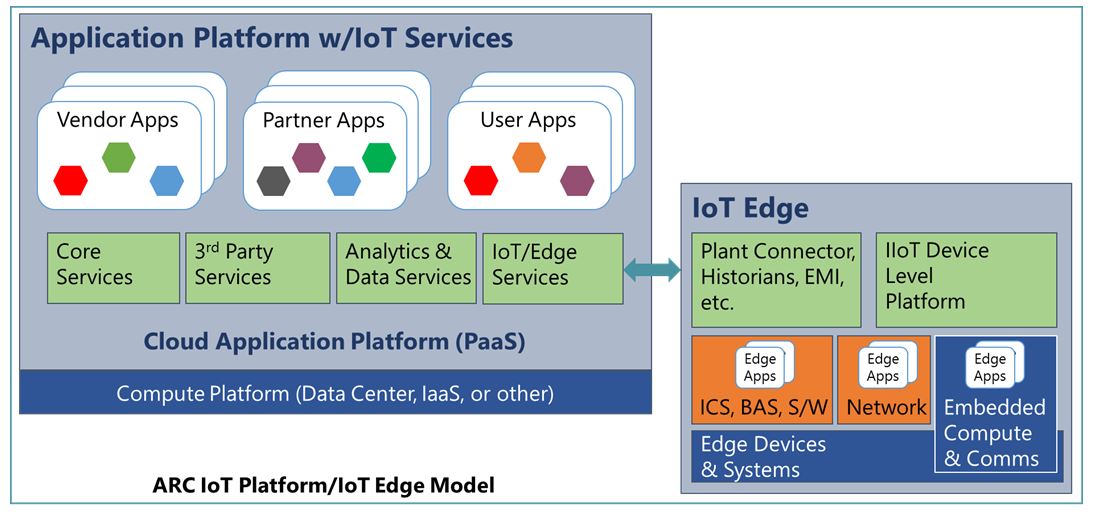
The Application Platform w/IoT Services is fundamentally a cloud application platform, a Platform as a Service (PaaS). It may be built on the open source Cloud Foundry platform, or on a proprietary platform such as Microsoft Azure or Amazon Web Services, both also known for providing cloud Infrastructure as a Service (IaaS). The platform is an application development and runtime environment. As such, it may be used for IoT or any other applications. Software is built as microservices. A basic microservice typically performs one simple function well. Basic microservices can be assembled into more complex compound microservices or as complete applications. The platform vendor creates commercial applications here and may permit third parties or customers to also build and deploy apps on the platform.
The cloud Application Platform comes with a Core set of (micro) services and development tools that can be used to build applications. A set of Analytics and Data services, together with IoT/Edge services, rounds out the basic requirements for the IoT platform. In addition, some vendors may incorporate third-party or partner services as part of their platform offering.
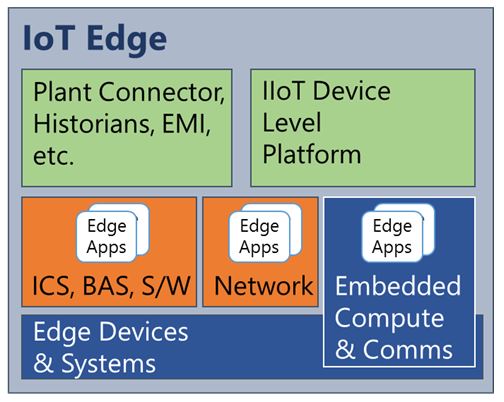 The IoT Edge is made up of edge devices and systems, communications networks, industrial control systems, industrial software, and connectivity software or platforms (such as those offered by PTC or Telit). The edge equipment may be “smart,” that is, with their own (embedded) computing and communications capabilities that can interface to local sensors and information and run local applications or analytics. Additional sensors and devices can be added to “dumb” infrastructure.
IoT apps can run on the edge devices, in controllers and plant software systems, or in the network switches and gateways. Depending on specific business models, latency, and processing requirements; apps may reside at the Edge, in the Fog, in the Cloud, or some combination of these.
Marc Andreeson’s 2011 essay, “Why Software is Eating the World,” made the point that software increasingly plays a vital role in every company’s product and service offerings and can disrupt or transform businesses and entire industries. This is being driven in part by the availability and broad usefulness of machine learning technologies and technologies capable of dealing with massive amounts of data (which are also driving an exponential surge in connected devices that generate data from the edge), and by the availability of modern cloud application platforms.
Companies in industrial or infrastructure/smart cities segments are developing a huge appetite for software. They are generally not interested in developing software themselves and, instead, want to look to the competitive marketplace for most apps (though they also want to develop the occasional special app themselves). To support these customers, apps will need to meet certain expectations for availability, quality, speed of deployment, performance, interoperability, support, and security.
A software supplier can try to keep up with all its customers’ needs and wants by building, maintaining, and updating its own software portfolio. Or it can elect to focus on core software, and create a platform wherein any number of ecosystem partners can create apps to fulfill the needs of the marketplace. Today the differences seem minimal, but in time, the ecosystem approach may prevail as the number and variety of providers increases.
One of the most challenging aspects of winning in the digitization software and services market will be the many ways industrial platforms can be used to compete. By leveraging IaaS and PaaS, companies can quickly develop apps and even entire software businesses without incurring the expense of building and maintaining the underlying computing hardware and software systems. On a given platform, barriers to entry for new applications are low, and multiple providers may offer similar apps or microservices. Solutions can also be embedded into hardware to quickly extend cloud-based services to compete at the edge. Companies can even use their competitors’ platforms to nibble away at their market share. Solution providers will also have to consider how to keep customers while also migrating them over to new pricing and use structures.
There are also challenges associated with user choices. With platform-based services, users can choose and deploy solutions with much more freedom around length of use and depth of services. This is fundamentally different than the traditional “all-in” purchasing of larger software. As a result, revenue is likely to be less consistent than traditional pricing models, at least until the market more fully matures and users are converted to platform pricing models. Countering this dynamic is the fact that software subscriptions are annuities that can eventually provide a more stable revenue stream than license sales models.
The positive side to this dynamic is that it reduces some existing market barriers for solution providers. In the past, some vendors, particularly larger ones, didn’t compete for certain types of business because deals simply weren’t large enough. Microservice-based solutions remove the deal-size barrier. On the other hand, the ability to deliver smaller chunks at lower prices may increase the overall market size.
Finally, there is a great deal of uncertainty among solution providers as to how big the digital software and service market will become in the industrial and infrastructure/smart cities segments. Many still wonder how a platform-based business model can open new revenue streams and how it compares to traditional software models.
“Open IoT Operating System for Industry”
GE Predix, Siemens MindSphere 3.0, and SAP Cloud Platform all are positioned as an “operating system” for industry. Each company is competing for a share of the cloud application platform market and wants to be seen as a preferred solution. Each hopes to benefit from having a partner and customer ecosystem in which everyone can contribute or consume apps via some type of app store. Each strives to make its own platform the dominant platform, if not for all of industry, then at least for certain sectors. And each embraces the concept of machine makers using its platform for monitoring smart, connected products and offering related services to their own customers and others. At the very least, each wants to be a premier competitor and top tier provider of a next-generation software PaaS for industrial and infrastructure companies.

GE and Siemens both leverage their industrial products and expertise to great advantage, positioning themselves as premier platform providers AND automation and software solution experts in selected industrial spaces. SAP relies more on partnering and standards for OT connectivity, but has an advantage when it comes to business system and extended supply chain integration.
“IoT Cloud Platform with Industry Solution Partners”
Companies such as Microsoft and Amazon focus on providing IaaS and PaaS cloud platforms for all industries, not just the industrial, infrastructure, and smart cities sectors. Suppliers such as Schneider Electric and Honeywell, build their IoT solutions on Microsoft Azure IaaS and PaaS. Others use Amazon AWS or other platforms. These suppliers also use the term, “platform,” for their software offering, but have not positioned themselves as application platform providers. Instead, they position themselves as automation and application experts in selected industrial, infrastructure, and smart cities spaces that now have cloud-based solutions. (“Automation Solution Expert with a Cloud-based IoT.”) The underlying IaaS/PaaS provider (Microsoft Azure, Amazon AWS, Google Cloud Platform) may become the base platform for other applications.

In addition to the cloud application platform, several other kinds of platforms are frequently encountered in digital transformation projects. We highlight a few of the most common ones below.
 IIoT Device Level Platforms
IIoT Device Level Platforms provide connectivity to edge devices and systems. These platforms also typically provide tools for managing devices as well as developing and deploying applications on devices and in the cloud. They provide context for connected data and may offer modeling, visualization, and certain analytics tools. These platforms are often complemented by a cloud application platform, so cloud-to-cloud integration capabilities as well as enterprise integration tools are often included.
Until recently, analytics and business intelligence platforms have been thought of as an engine and toolset for use by data scientists. Companies typically deployed these applications at the business level. Most were expensive, monolithic, and arcane; placing them out of reach for decision support for the typical business manager. But in recent years, things have changed dramatically. Advanced analytics and machine learning tools are typically available as services in cloud application platforms. They are often provided by the platform supplier, but may also be supplied by a third party. IBM Watson Services is an example of cognitive analytics services in the latter category.
Advanced analytics solutions, particularly those that use machine learning to predict asset failure, are becoming widely available in industrial markets. Asset failure prediction can be based on condition monitoring or can be part of a more complex asset performance management (APM) solution. The underlying techniques used can differ.
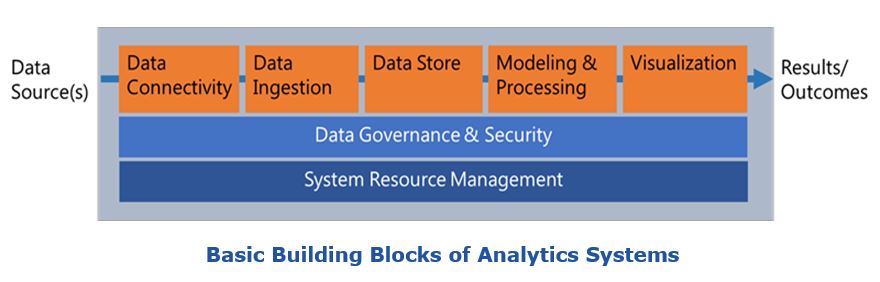
Statistical and single-layer reasoning analytics, like decision trees, draw conclusions. They are very effective at doing so and can be applied via machine learning for asset failure and predictive maintenance solutions. These methods are ideal for discovering hidden but known insights by filtering out noisy, irrelevant data.
Cognitive analytics are suited for the volume and random nature of certain data, particularly if unsupervised learning is called for. When applied to assets, cognitive analysis can identify new patterns or outliers that will lead to degradation and failure.
To a great extent, Product Lifecycle Management (PLM) or Building Information Modeling (BIM) is still offered as a 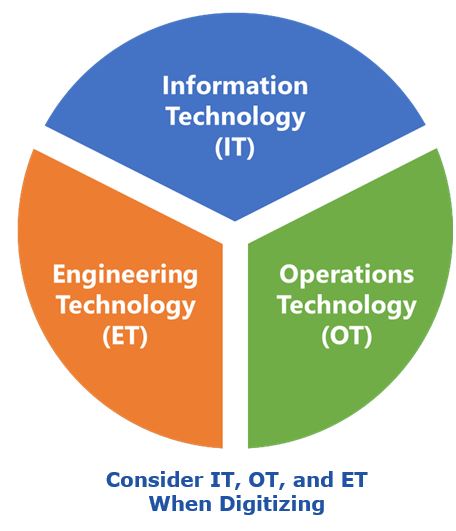 standalone platform. Solutions can be found that run in the cloud (SaaS), or deployed on a cloud infrastructure platform (IaaS). As of this writing, we’re not aware of any major player in the PLM and BIM spaces that offers a significant Cloud Application Platform (PaaS) with microservices. Nevertheless, these platforms remain important to industrial digitization and will be called upon to support two emerging requirements.
The first is providing digital design, engineering, and simulation capabilities to support design, manufacturing, and operations processes and thus provide the “digital thread” throughout these processes. Wearables, augmented reality helmets or glasses, mobile devices, smart carriers, smart containers, smart components, smart products, autonomous machines, video, third-party services, social, additive manufacturing, voice control, remote sensing, and more are becoming an active part of the real-time, data-rich operations environment. New sensors, gateways, and networks will be added. Autonomous vehicles will be deployed. New, smarter robots will be introduced. The list goes on and on, but the key difference is the need to support rapid change in operations through digitization.
For many discrete manufacturers, the second requirement is direct support for additive manufacturing. Additive manufacturing continues to make unbelievable strides towards the manufacturing mainstream and has progressed farther and faster than almost anyone initially foresaw. Driven by materials science and design software advances, this technology can already build optimum parts – in significant volume – that cannot be made any other way. 3D printing may be the most potentially disruptive technology in manufacturing. Companies failing to prepare for its emergence on an industrial scale could soon find themselves at a significant disadvantage.
In yet another example of IT technologies migrating into the OT space, cloud application platforms are beginning to transform operations throughout the industrial and infrastructure operations landscape. This modern PaaS approach to application development and deployment is powerful, efficient, and flexible. It can be a very good way to take advantage of advances in machine learning and device connectivity to improve operations and maintenance or support smart products and the new services that accompany them.
When thinking about platform alternatives, it is important to consider how your operation will want to leverage the platform. Do you expect to build apps yourself? Is it important to have an app marketplace offering third-party apps and microservices available to you? Do you prefer to have a single supplier provide most of the needed functionality?
In addition to these considerations, pay special attention to the included or available machine learning/cognitive computing/artificial intelligence capabilities and how they match your needs. This can be a critical differentiator. Also consider carefully whether you will need a second device-level platform to support your applications, or whether other means of edge connectivity will suffice. Let your desired functionality guide the choice of platforms.
If you would like to buy this report or obtain information about how to become a client, please Contact Us