


This in-depth market data research is split into two key modules: Market Growth Outlook and Competitive Analysis. Each of these modules is further configured into several sub-modules to meet the needs of executives as well as marketing, sales, and product development managers. All of these modules and sub-modules may be purchased as a bundle or separately. A brief description of these modules, sub-modules, and their use cases is included below.
The Grid Power Converting Systems market research delivers current market analysis plus a five year market and technology forecast. The research is available in multiple editions including worldwide and all regions.
Grid Power Converting Systems: Powering the Renewable Energy Transition
ARC Advisory Group research unravels the explosive growth and technical evolution of grid scale PCS (Power Converting Systems). PCS are at the heart of the renewable energy transition. Modern PCS have many advanced control features that make renewable power efficient, safe, and capable of stabilizing electric grids. The solar and wind industries are the largest new sources of electric power, and their PCS are proportional to their power rating. EV chargers are a growing industry that is impacting utilities worldwide. Grid scale batteries have both chargers (rectifiers and inverters) to export power. HVDC power converters are an important sector as new renewable power is often far from the population centers that need the power.
Grid Power Converting Systems Strategic Issues
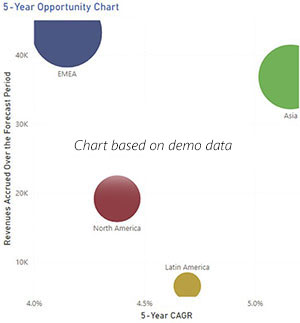 In addition to providing a five-year market forecast, the Grid Power Converting Systems Market Research provides detailed quantitative current market data and addresses key strategic issues as follows.
Optimize DC to AC ratio
In most utility-scale solar PV installations, the PV rating (total wattage of the solar panels) is greater than the inverter capacity. This is known as "oversizing" or having a "DC-to-AC ratio" greater than 1. Solar panels do not consistently operate at maximum capacity, as sunlight levels can fluctuate due to factors such as cloud cover and time of day. By having a higher PV capacity than the inverter can handle at any given point in time, the system can be cost optimized. Inverters are typically more expensive per watt than solar panels. Oversizing PV panels allows for a more cost-effective system by maximizing energy production with a slightly smaller inverter.
When the panels produce more power than the inverter can handle, the excess power is "clipped" or limited. However, this clipping often occurs for relatively short periods during peak sunlight hours, and the overall energy gain from oversizing outweighs the clipped energy.
Utility-Scale: DC-to-AC ratios of 1.2 to 1.4 are common in utility-scale solar farms. This means the PV array‘s peak DC output is 20 percent to 40 percent higher than the inverter‘s AC output capacity. Similar ratios might be used in commercial installations. Residential systems often have lower ratios, closer to 1.1 or even 1.0, as space constraints and shading patterns might differ.
Oversizing can slightly reduce inverter efficiency during peak production periods. However, modern inverters are designed to handle some level of oversizing without significant efficiency loss. Some grid connection requirements might limit the allowable DC-to-AC ratio to prevent excessive voltage fluctuations or other grid impacts. The optimal DC-to-AC ratio is determined by several factors, such as the local solar resource, shading patterns, and the unique properties of the solar panels and inverter Oversizing the PV array relative to the inverter capacity is a common practice in utility-scale solar installations to maximize energy capture and optimize system costs.
Inverter Advanced Features
While not every project requires it, many advanced features will allow projects to smoothly integrate with electric grids and can help gain approvals with an interconnection study. As renewable energy becomes a larger part of the grid‘s power mix, utilities need advanced features more than ever. Incorporating some of these features now could prove beneficial for future operations.
- Grid-Forming Capabilities: the ability to operate in grid-forming mode, providing voltage and* frequency support to the grid, is increasingly important for grid stability, especially with high renewable energy penetration and microgrids.
- Fault Ride-through (FRT): the ability to stay connected and support the grid during voltage dips and various disturbances.
- Reactive Power Control: the capability to dynamically modify reactive power output to manage voltage and enhance power factor.
- Virtual Inertia: the simulation of traditional generator inertia to improve grid stability.
Market Data Research Available Datasets
Market Growth Outlook
ARC’s market growth outlook service delivers an in-depth market opportunity analysis including five-year market and technology forecasts and 3-year history trend lines where available. Besides providing an in-depth analysis of the market opportunity provided by each technology, this service allows technology suppliers to analyze their own customized markets consisting of multiple technologies. For example, customers can view different market scenarios by adding or removing technology markets from the analysis, providing them a Total Available Market (TAM) view of their own served market. A list of the available market growth outlook services can be seen in the list below.
This service is designed to help accelerate your organization's ability to understand an up-to-date view of the market opportunity provided by your current product portfolio and analyze how your company’s market opportunity would change if you were to acquire or divest a particular product line. The service will also help you identify and capitalize on emerging markets, whether these markets are based on an emerging technology, region, vertical industry, or application. Built upon a proprietary market model and ARC’s field proven primary research, this service helps product and marketing managers optimize their business plans by identifying the opportunities provided by emerging trends. ARC’s reputation as the preeminent independent provider of market growth opportunity analyses for nearly four decades also provides greater weight to your business plans. ARC’s market growth outlook services are available in a variety of formats depending on whether you view your market opportunities via different technologies, industries, or world regions.
In addition, ARC has a strong history of providing customized market opportunity reports and services to meet your specific needs. For example, you may sell your products only to specific industries and/or in only one or two regions. You tell us your served markets and ARC can quickly configure a report or service designed to best serve your served market.
ARC provides several versions of these reports and services depending on your role in the organization. Executive Views are high level market opportunities designed to help executives quickly identify key trends and market opportunities around the world. In-depth market opportunity analyses provide marketing and product managers more detailed technology specific market information to plan marketing and product development strategies. The following table shows more specific information included in each version.
| Market Growth Outlook Analysis | Use Cases | Target Role |
| Worldwide Market Growth Outlook by Industry & Region with 3-year history where available | In-depth technology-specific strategic growth planning across multiple technologies, applications, regions, and industries | Product & Marketing Managers |
| Worldwide Industry Growth Outlook by Region with 3-year history where available | Strategic technology growth planning for markets defined by a single or multiple vertical industries | Industry Managers |
| Regional/Country Market Growth Outlook by Technology & Industry with 3-year history where available (includes country data) | Strategic technology growth planning for markets defined by a single or multiple world regions | Regional & Country Sales Managers |
| Market Growth Outlook Executive View | Strategic Total Available Market (TAM) growth planning dashboard covering multiple vertical industries, technologies, and world regions | Executives |
Market Competitive Analysis
ARC’s Competitive Analysis services deliver in depth competitive analyses across multiple technologies, applications, regions, and industries. Besides providing an in-depth analysis of the market opportunity provided by each technology, this service allows technology suppliers to analyze their own customized markets consisting of multiple technologies. For example, customers can view different market scenarios by adding or removing technology markets from the analysis, providing them a Total Available Market (TAM) view of their own served market. A list of the available market growth outlook services can be seen in the list below.
This service is designed to help product and marketing managers identify their company’s market positioning across multiple views within their Serviceable Available Market (SAM). Built upon a proprietary market model and ARC’s field proven primary research, this service helps product and marketing managers optimize their business plans by identifying how their company’s market position would change if the company were to acquire or divest a particular product line or technology. ARC’s reputation as the preeminent independent provider of competitive market benchmarking for nearly four decades lends greater weight to your business plans. ARC’s market competitive services are available in a variety of formats depending on whether you view your market opportunities via different technologies, industries, or world regions.
In addition, ARC has a strong history of providing customized market opportunity reports and services to meet the specific needs of our clients. For example, you may sell your products only to specific industries and/or in only one or two regions. You tell us your served markets and ARC can quickly configure a report or service designed to best serve your served market.
ARC provides several versions of these reports and services depending on your role in the organization. Executive Views are high level market competitive analyses designed to help executives quickly assess their SAM by world region, technology, or vertical industry. In-depth competitive market analyses provide marketing and product managers more detailed technology specific benchmarking information to plan marketing and product development strategies. The following table shows more specific information included in each version.
| Competitive Analysis | Use Cases | Target Role |
| Worldwide Competitive Analysis by Technology | In-depth competitive market analysis that quantifies how your company’s market position has changed over time across multiple technologies, applications, regions, and industries | Product & Marketing Managers |
| Worldwide Competitive Analysis by Industry | Strategic technology-based competitive analyses for markets defined by a single or multiple vertical industries | Industry Managers |
| Regional/Country Competitive Analysis by Industry | Strategic technology-based competitive analyses for markets defined by a single or multiple world regions | Regional Sales Managers |
| Competitive Analysis Executive View | Strategic Serviceable Available Market (SAM) analysis dashboard covering multiple vertical industries, technologies, and world regions | Executives |
Worldwide Research Focus Areas
Worldwide Research Focus Areas
Strategic Analysis
- Executive Summary
- Market Trends
- Buyer Strategies
- Supplier Strategies
- Growth Contributors
- Growth Inhibitors
Competitive Analysis
- Market Shares of the Leading Suppliers
- Market Shares by Region
- Asia
- EMEA
- Latin America
- North America
- Market Shares by Revenue Category
- Hardware Revenues
- Software Revenues
- Service Revenues
- Market Shares by Revenue Type
- Electrolysis Rectifiers
- EV D Charger rectifiers
- Grid Battery PCS
- HVDC PCS
- Solar Inverters
- Wind Converters
- Market Shares by Solar Inverter Type
- Central
- Micro
- Strong
- Market Shares by Customer Type
- Market Shares by Sales Channel
Market Forecast Analysis
- Total Grid Power Converting Systems Business
- Shipments by Region
- Asia
- EMEA
- Latin America
- North America
- Shipments by Revenue Category
- Hardware Revenues
- Software Revenues
- Service Revenues
- Shipments by Revenue Type
- Electrolysis Rectifiers
- EV D Charger rectifiers
- Grid Battery PCS
- HVDC PCS
- Solar Inverters
- Wind Converters
- Shipments by Solar Inverter Type
- Central
- Micro
- Strong
- Shipments by Customer Type
- Shipments by Sales Channel
Industry Participants
Profiles of the major suppliers servicing this market are included.
Regional Research Focus Areas
Strategic Analysis
Competitive Analysis
- Leading Suppliers in Region
- Industry Shares in Region
- Country Shares in Region
- Leading Suppliers by Industry
Market Forecast Analysis
- Market Forecast by Country
- Market Forecast by Industry
Industry Participants
List of countries & currencies included in each region: MIRA-Country
For More Information
To speak with the author or to purchase the Grid Power Converting Systems Market Research, please contact us.
Learn more about ARC In-depth Research at Market Data Services
Learn more about ARC Strategic Services at Advisory Services for Industry Leaders
















