Representative End User Clients







Representative Automation Clients







Representative Software Clients








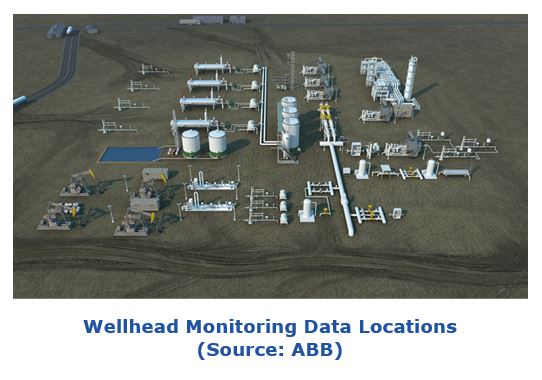
The onshore oil & gas industry is facing new and difficult challenges, and upstream Oil & Gas needs IIoT and automation. In addition to the obvious cost pressures posed by today's depressed oil prices, other hurdles make it difficult to operate a profitable  business. For example, operators are being asked to monitor and manage increasingly larger fields. Some fields, like the Eagle Ford in Texas, are now over 800 square miles (2,000 square kilometers) in size. Fields like the Permian in Texas, Marcellus in the eastern US, and Bakken in North Dakota also have huge areas of operations.
Another key factor is that many fields – especially the unconventional reservoirs - are moving into the “brownfield” phase where the focus is shifting from drilling and completion activities, to optimizing existing production assets.
The field automation technology landscape is also rapidly evolving. Sensors are getting smarter and can now take new and different measurements. This includes additional values generated by process variable sensors, waveform data generated by vibration sensors, and fiber optics cables used as distributed sensors generating a measurement every meter along the cable. Operators must now also make sense of and contend with a new set of data associated with all the smart OEM equipment (pumps, valves, engines, etc.) with embedded sensors generating performance and equipment health data.
So how can field automation help the onshore onshore oil & gas sector meet these challenges? For one thing, companies are 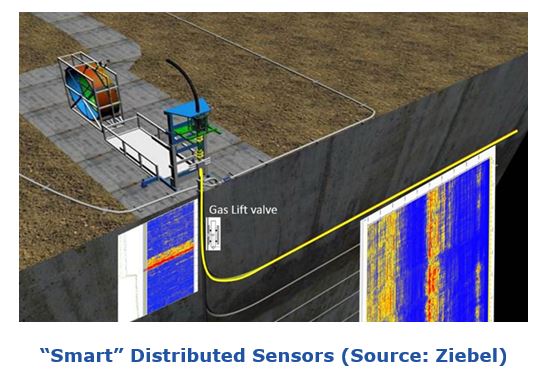 looking to field automation to help reduce costs and increase production.
While the industry has seen significant reductions in drilling and completion costs; this is not necessarily the case for production operations. One new strategy to reduce costs is to use “management by exception.” Here, field automation handles routine tasks such as monitoring and controlling flows and tank levels, while the field workers are directed to higher value work. As a result, field workers can focus their attention to making task-specific trips to the well site to deal with exceptions from normal operating conditions rather than just doing routes to collect data. This results in less wasted “windshield time,” for skilled workers, which reduces labor costs and improves safety due to less driving.
Field automation is also being asked to improve revenues by providing more frequent data to help optimize production. This allows operators to make better informed decisions in areas such as infield drilling and well interventions to help reduce costs and improve reliability. Real-time asset data from sensors feeding equipment health monitoring systems improve reliability and reduce unplanned outages. Monitoring data such as tanks levels can alert operators before a well shut down is necessary – thus improving production. Chemical treatment monitoring can help ensure  that adequate chemicals are available at the well site and that those chemicals are being dosed at the correct rate. This can result in less well shut-ins and lower chemical costs.
To optimize investments, time to “first oil” must be reduced. Gone are the days when owner-operators can take years to build out private infrastructure; the market demands much quicker time to first oil. Field automation must deliver quicker implementations by scaling up to much larger areas of operations.
“Brownfield” projects in more mature fields have different priorities than newly producing fields. Here, field automation systems must help address asset integrity management issues to help ensure long-term performance. Field automation can be used to capture corrosion, well integrity, and equipment reliability information. Field automation can also be employed to support enhanced production recovery methods to help increased estimated ultimate recovery (EUR). This is driving automation control further into the field to optimize enhanced recovery devices such as pump jacks and electrical submersible pumps (ESP). These additional data are also needed to gauge the performance of the various intervention methods to optimize investments in well interventions.
 Another huge implication is that field automation systems must scale to handle the tidal wave of new data. Some well sites are generating up to a terabyte of data per day. Field automation systems must evolve to be able to communicate, store, analyze, and visualize these new data. Conventional systems are too expensive to expand and do not scale to this new world of “Big Data” and predictive analytics. Also, the back end data storage systems must be more than a conventional historian to be able to deal with the increased volume and variety of data.
 IIoT Can Help Address These Challenges
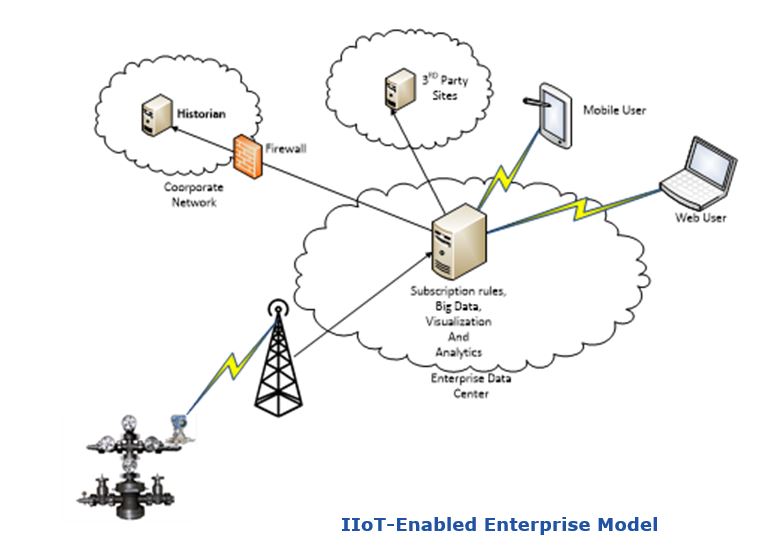
To address these new automation challenges in a secure, cost-effective manner, owner-operators have begun to implement an Industrial Internet of Things (IIoT)-enabled enterprise architecture in which appropriate non-control data from connected field sensors and equipment bypasses the traditional process control network. This helps ensure the security and determinism of critical process control data, while making valuable data available to asset management, inventory control, and other enterprise-level systems. ARC Advisory Group believes that the “sweet spot” for IIoT implementations in onshore oil & gas applications are in areas such as equipment health, corrosion monitoring, and production chemical management.
To learn more about how emerging IIoT-enabled solutions in upstream oil & gas (and other industries), ARC invites readers to join us in Orlando, Florida, February 8-11, 2016 for the 20th Annual ARC Industry Forum. At least one forum session will be dedicated to discussing the business value that smart field devices and IIoT bring to upstream oil & gas. Readers can also monitor the ongoing IIoT conversation by visiting ARC’s Industrial Internet of Things blog.
If you would like to buy this report or obtain information about how to become a client, please Contact Us
Keywords: Industrial Internet of Things, IIoT, Field Automation, Upstream Oil & Gas, ARC Advisory Group.