Representative End User Clients







Representative Automation Clients







Representative Software Clients









In May 2015, the Chinese government formally announced its “Made in China 2025” strategy. Since then, this has emerged as a major focus and a daily topic of discussion across the country’s entire manufacturing community as well as among officials at all  levels of government. Government and industry have also organized numerous seminars and workshops related to implementing smart manufacturing to help the Made in China 2025 strategy succeed. All this activity has significantly increased interest in technologies for smart manufacturing. ARC Advisory Group’s research suggests that this has made China the world’s hottest smart manufacturing market, and it appears that this trend will continue for some time.
Why is this concept so important in China’s manufacturing sector? In addition to the push from government, it’s becoming apparent that Chinese manufacturers face increasing competition from emerging, lower-cost manufacturers, which is gradually eroding their global market position. While we’re still observing plenty of inertia and resistance to change, more and more Chinese manufacturers are coming to realize that appropriate adoption of smart manufacturing approaches, such as Industrie 4.0 and Industrial IoT will be key to their future global competitiveness and survival.
“Made in China 2025,” a ten-year national plan, is intended to transform China from a big manufacturing country, to a strong one. It’s 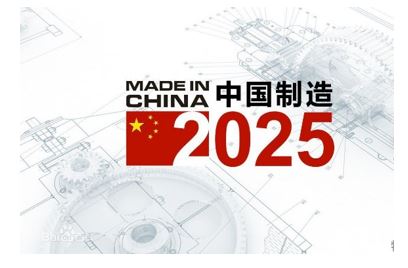 the first action plan that focuses on promoting manufacturing in the country. Since this strategic plan was released, China’s MIIT (Ministry of Industry and Information Technology) has issued a series of guidelines. The main manufacturing regions and industrial sectors have also released their own detailed plans to follow up on this national plan. ARC anticipates that the central government will issue its latest guidelines on smart manufacturing planning sometime this month (December 2016).
To encourage smart manufacturing applications, MIIT launched 46 funded Smart Manufacturing Pilot Projects in 2015, and another 64 projects in 2016. These projects all fall within five main categories:
MIIT also subsidized 189 projects in 2015 and 2016 to create models for standardizing and applying smart manufacturing. In addition, an increasing number of provinces and cities in China have launched their own smart manufacturing related pilot projects.
Finally, 15 projects have been identified in 2016 under a joint Sino-German smart manufacturing program in which Siemens, SAP, and Phoenix Contact (among others) are involved.
A number of leading global automation companies, including (but not limited to) Siemens, GE, Phoenix Contact, Rockwell Automation, Mitsubishi Electric, Omron, Schneider Electric, and ABB are actively supporting Chinese manufacturers in their respective journeys to smart manufacturing.
Siemens, a leading supplier of smart manufacturing technology in China, has a significant footprint in the country and maintains a good relationship with the Chinese government. SEWC, a Siemens “digital factory” in Chengdu, replicates the company’s Amberg factory in Germany and employs many of the latest smart manufacturing applications.
This February, Siemens opened a smart manufacturing innovation center in Qindao; the first of its kind for the company outside Germany. In September, the company opened a R&D center in Suzhou dedicated to digital solutions that leverage Big Data, advanced cybersecurity, IIoT, and more. Siemens is partnering with Baosteel to develop an Industrie 4.0 solution for the iron & steel industry. It has signed orders to help China manufacturers in the aerospace, electronics, food & beverage, iron & steel, shipbuilding, and other industries realize smart manufacturing.
Since 2015, GE has been promoting its Predix platform for the Industrial Internet in China and collaborating with Chinese companies to deliver solutions. The company opened a “GE Digital Foundry” in Shanghai in August 2016 to build a local ecosystem for IIoT. The Foundry brings together different talents, experiences, and perspectives to support digital transformation for Chinese manufacturers.
GE signed an agreement with China Telecom in July 2015 to provide IIoT-based solutions to local customers. In January 2016, the company signed a contract with Haier for the first pilot project for GE Predix in China’s manufacturing sector. In July 2016, GE announced that it will cooperate with Huawei, which will consider GE Predix as the company’s preferred platform to build an IIoT system.
Phoenix Contact has had a presence in China for more than 23 years. Recently, the company has developed clear strategies for smart manufacturing in China and made a significant investment commitment to implement these strategies. The company established Phoenix Contact Smart Manufacturing Technology and Engineering Ltd. to integrate all its smart manufacturing related business to provide solutions to customers in China. The company has announced plans to set up a joint venture with SIPAI to build a smart manufacturing innovation center in Shanghai. Phoenix Contact has a joint venture with the Jiangsu provincial government to provide smart manufacturing related consulting and information services to manufacturers in that province.
We’re also seeing significant smart manufacturing related activities in China from other leading global automation suppliers. For example, Rockwell Automation, which has had a presence in China for 28 years, is promoting its Connected Enterprise solutions. Mitsubishi Electric is promoting e-F@ctory, and Omron is promoting it’s “i-Automation” solutions. Schneider Electric has successfully implemented its smart manufacturing solutions in the company’s own factories in China and begun to introduce many of these to its Chinese manufacturing customers. ABB is leveraging its strong position in the robotics market in China to help its manufacturing customers there implement advanced robotics solutions.
 Even before “Made in China 2025,” several large, state-owned manufacturers and foreign-invested enterprises were early adopters of smart manufacturing. Today, more manufacturers have become involved, and more advanced applications are being planned, if not already implemented. ARC is aware of quite a few successful applications to date in both process and discrete manufacturing. Two excellent examples follow.
State-owned Sinopec, one of the world’s largest oil refiners and a major ethylene supplier, began to plan smart manufacturing upgrades about five years ago. In 2013, the company chose four plants for smart manufacturing pilot projects: Jiujiang, Zhenghai, Yanshan, and Maoming. Among these, Jiujiang plant was listed as a MIIT Smart Manufacturing Pilot Project in 2015, and Zhenghai plant was listed as a MIIT Smart Manufacturing Pilot Project in 2016.
Sinopec has three strategic goals for these pilot projects:
These pilot projects have already yielded important benefits. Automated data collection has been improved by anywhere from 10 to 95 percent. Operational stability has been improved by 5.3 percent. Labor productivity has improved by 10 percent. And the company is saving approximately $1.4 million every year in energy costs.
Sinopec had also implemented Big Data applications in these four pilot projects and is seeing progress in alarm management, process optimization, and predictive maintenance for field devices. Sinopec has about 40 plants. Each plant generates about 4,050 TB data and the company plans to further utilize these data for business analysis and decision support.
SANY is China’s largest construction machinery supplier and the fifth largest in the world. This company began implementing M2M and IIoT applications almost 10 years ago.
Today, more than 200,000 pieces of SANY-brand construction equipment are in operation around the world. The company has installed sensors and communication modules in each piece of equipment. These enable asset data to be transferred to an enterprise-level, customer service platform developed by SANY. Based on these data, the company can monitor the location and status of equipment in real time and perform predictive maintenance. SANY leverages this system to enhance customer service, improve product development, and support its sales and marketing activities.
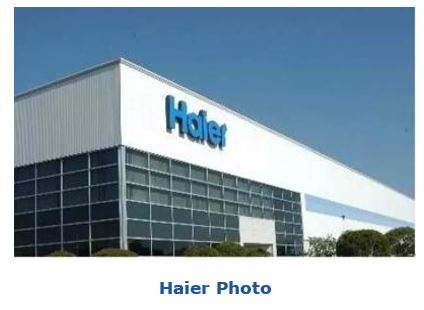 Haier is a leading global supplier of household electrical appliances. The company’s main products include air conditioners, refrigerators, washing machines, and water heaters. Haier’s core concept for its smart manufacturing solutions is “connected factory.” The company defines this as an integrated, customer-oriented ecosystem encompassing the factory, machines, products, and customers.
Haier builds its connected factories based on two dimensions, vertical and horizontal.
Vertically, connected factories can improve customer value by meeting their specific requirements. When customers enter their requirements into the interactive platform, the manufacturing execution system automatically schedules production to enable the factory to quickly produce those customized products. At the same time, customers can check the production status of their products from their smartphones.
 Horizontally, Haier’s connected factories require flexible manufacturing capabilities to meet the customization requirements. This requires modularization, automation, and digitization of production lines and associated business processes.
Haier, which has built eight connected factories to date, is realizing significant benefits from this investment. Product delivery times have been reduced from 21 days to just 10 days; operational costs are down 20 percent; and inventory days are down 50 percent.
In recent years, ARC has observed increased awareness of and acceptance for smart manufacturing and it’s enabling approaches and technologies in China. These include both Industrie 4.0 and IIoT, which are both well-matched to the central government’s “Made in China 2025” and “Internet+” strategies and can serve as vital tools for China’s manufacturers to adopt. While many smart manufacturing related solutions are still being developed and have yet to be proven in practice, many others are ready and available for adoption today.
ARC offers the following recommendations for manufacturers in China:
If you would like to buy this report or obtain information on how to become a client, please Contact Us
Keywords: China, Smart Manufacturing, Process Automation, Discrete Automation, Big Data, Industrie 4.0, IIoT, ARC Advisory Group.