Representative End User Clients







Representative Automation Clients







Representative Software Clients








 Today, your plants may be operating well and delivering what you consider to be a satisfactory level of performance. They’re producing product, your customers are satisfied, and (hopefully) the business is operating “in the black.” But have you taken the time to consider whether your plants could do more to improve the business’ bottom line?
All industrial companies strive to improve their business performance, but this typically involves numerous challenges. One of these is to justify the technology investments needed to improve asset performance at the unit and plant levels in a manner that senior management can relate to, such as adequate return on investment (ROI).
At the recent ARC Industry Forum in Orlando, Florida, the session titled “Are You Receiving an Adequate Return on your Automation Investment?” focused on the need to assess your plant’s automation performance in a systematic, business-focused way. Just being “satisfied” with your plant’s performance, could be “leaving money on the table.” The challenge discussed was how to evaluate the potential for automation improvements that can provide incremental financial benefits for the business, without increasing business risk. As we learned from several technology end users, the objective is to move beyond adequate.
 Barry MacGregor, Transitional Learning Leader, for Dow Performance Silicones, explained that Dow Chemical and Dow Corning have developed a value-driven, 6 Sigma-based process that allows both companies to evaluate opportunities to improve automation in terms of return on net assets. This process starts with an understanding of business values. Through these, critical metrics (or measures) are defined and ultimately weighted based on their relative importance.
The automation functions that would be required to improve these business metrics are then evaluated, compared with the metrics in a Quality Functional Diagram, and evaluated against risk.
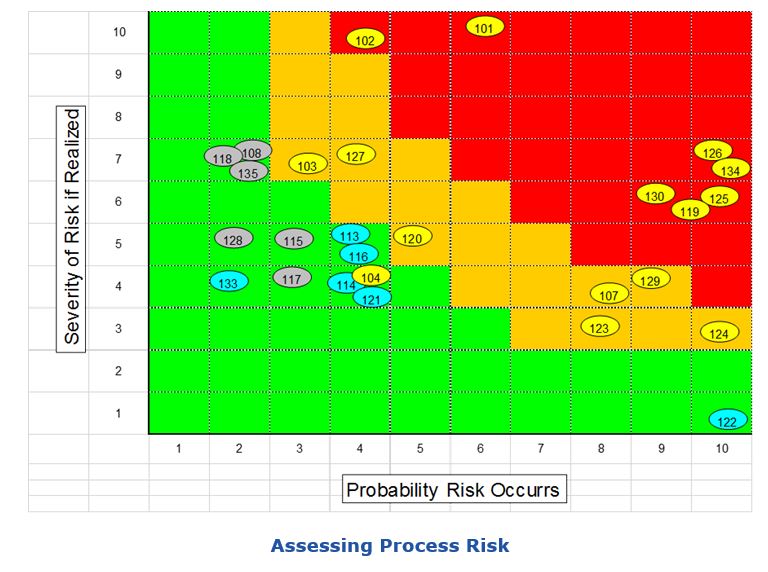
This value-driven evaluation process can be used in a range of automation-related situations related to both greenfield and brownfield automation deployment decisions, as well as to reevaluate the performance potential of existing automation. Mr. MacGregor cited several examples in which the process identified automation improvement opportunities that required little or no new capital investment and produced large ROIs:
Helen Dotson, Global Process Automation Technology Leader, Water and Process Solutions, Dow Chemical described  the enormous challenge that Dow faced due to the March 11, 2011 earthquake and tsunami in Japan, which forced the company’s Soma plant to shut down abruptly.
Ms. Dotson explained that in the wake of this unplanned shutdown, the immediate, “mission critical” path was to get the plant up and running again as soon as possible, ideally within six months. Since this heritage plant had been commissioned by Rohm+Haas with a Yokogawa Centum XL control system, plant management turned to Yokogawa to help them obtain the necessary replacement parts and components. With Yokogawa’s help, the plant was started up again successfully within just six months.
While not ideal from a business perspective, this restart provided an opportunity to begin assessing what the plant needed to do to become a better performer and gradually make the necessary improvements. The fact that the plant had not performed an assessment of its automation prior to the shutdown made this more challenging.
In 2013, the plant adopted Dow Chemical corporate standards for operational performance. Plant management quickly  learned that they needed to work closely with the people in the plant to determine the best way to achieve their goals while maintaining those corporate standards. For example, through interviews, they learned that many procedures have never been automated and still required manual interventions.
Based on these learnings, the plant replaced approximately 75 percent of the legacy Yokogawa system in a like-for-like manner with new technology; but targeted the remaining 25 percent of the transition to performance improvements. The new Yokogawa system was delivered and started on time in April 2016. This resulted in measurable operational savings. In addition, the plant moved from being Dow Chemical’s worst “Ion Exchange Plant” to the best, based on the business metric of reliable production supply.
As we learned, many human factors contributed to the ultimate success of the project. These included:
Doug Lutz, Principal Process Automation Engineer, Nova Chemicals, opened his presentation by asking attendees if anyone among them felt that they could operate their plants without automation. Although the answer was a unanimous “no,” Mr. Lutz pointed out that there are many choices in process automation functionality, and that the choices made will determine if you operate at an “adequate” level, or exceed this. For example, the decision whether to use basic  regulatory control, advanced process control (APC), or other types of control needs to be assessed in terms of desired performance.
Nova Chemicals uses KPIs – and often combinations of KPIs - to help determine what functions are performing well. For example, coupling APC utilization (a KPI that measures the percentage of time that APC is doing its job) with value-based metrics (volume of product, energy usage, quality, etc.) provides “something to talk about” in terms of performance.
The company found that the information must be shared at all levels, from plant floor to top management, to be able to evaluate if there are missed opportunities that could be addressed through improvements to process automation.
Mr. Lutz also highlighted the importance of staffing, explaining that not all suboptimal performance can be blamed on the technology. People must be available to solve problems and look for opportunities to improve and avoid the missed opportunities.
In one example, Nova Chemicals applied Abnormal Situation Management (ASM) principles to display consoles and found that this enabled operators to better address problems. While a problem is often represented with an alarm or multiple alarms, Nova Chemicals is heading in a direction to implement technology that will anticipate problems and guide operators to solutions.
Identifying “adequate” plant performance tends to be subjective, based on the experience, responsibilities, and expectations of the individuals involved. In some cases, “adequate” is expressed in terms of the number of shutdowns experienced within a given time period. In other cases, a plant’s financial performance will be used to determine whether it is operating at an adequate level of performance.
As we learned from these Forum presentations, both plant performance and missed opportunities can be expressed in business value versus risk. To maximize business value, while minimizing risk, ARC makes the following recommendations for process industry end users:
From the beginning, it is essential to have management on your side to obtain the funding and authorization needed to move plant performance beyond “adequate.”
Operational improvements typically require the involvement of many departments, from operations and maintenance, to engineering and IT. It’s best to have key members of these departments involved early, from the time you begin attempting to analyze your facilities’ current performance to develop a baseline for identifying and implementing future improvements.
Over time, your plant’s objectives will change. Whether it is the need to maximize capacity, reduce costs or emissions, accommodate new feedstocks, produce new products, or address other business or technical issues; it’s likely that your automation will need to adapt as well. This makes ongoing automation performance assessments over the life of your plant an important part of a continuous improvement program.
If you would like to buy this report or obtain information about how to become a client, please Contact Us
Keywords: Automation, 6 Sigma, Value-driven Assessment, ARC Advisory Group.