Representative End User Clients







Representative Automation Clients







Representative Software Clients









 In 2016, wind power surpassed hydroelectric power to become the number one source of renewable generating capacity in the US. The US wind industry installed 8,203 MW of new wind power in 2016 and the industry now has 82,143 MW installed. As for any business, the owners of a wind turbine and other assets want to maximize revenue. This is accomplished by producing as much power as possible, without damaging the equipment.
But managing complex rotating equipment is inherently challenging. Wind turbines require rigorous inspection and maintenance to ensure they remain operational across a broad range of wind speeds and operating conditions. Asset owners typically obtain support from the manufacturer, component suppliers, system integrators, and operators of similar equipment.
Wind turbines are limited by the available wind and expected to achieve a certain capacity factor based on the wind resource data collected and used to justify the installation. Many different factors can impact the capacity factor and the operator of a wind turbine often has options to make improvements.
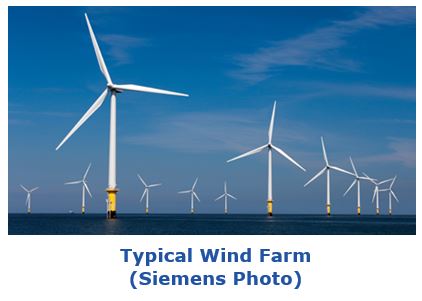 Modern wind turbines are equipped with instruments to provide wind speed and direction measurements. These measurements are used to regulate the blade pitch, the yaw of the nacelle, and determine when it is safe and profitable to operate the turbine based on the current wind speeds. Wind power production varies with the cube of wind speed, which can vary over the day and with the seasons of the year. Several key operational and maintenance issues impact profitability.
In the US, the respective ISO grid operators sometimes call upon wind farm operators to shut down their turbines to stabilize the grid. If this is not done promptly, the wind farm operator can be subject to fines.
Another challenge to achieving capacity factor applies to wind turbines located in urban or suburban settings. Here, turbines that cast a shadow on buildings may need to be programmed to shut off at certain times to avoid irritating flicker.
Many different factors will impact the financial performance of a given wind farm. These include:
Typically, wind turbines are not installed without first measuring the wind speed at the proposed site with a meteorological tower collecting wind and other weather data for at least one full year.
The wind turbine manufacturer typically handles asset management for the turbine during installation and for the duration of the warranty period. Before this warranty expires, the asset owner must determine how the asset will be managed long term.
Internal staff can handle certain tasks such as periodic inspections, troubleshooting, and maintenance. However, many tasks might be more complex than local staffs can handle. In this case, asset owners can arrange service contracts with the turbine suppliers, employ system integrator or support services, and/or use outside firms that support individual components (blades, power converters, control system, brakes, gearbox, etc.). Major repairs require expensive cranes, which in some cases, may need to be disassembled to transport to and from the wind turbine. Hardware and software systems are also available to help wind turbine operators monitor their equipment.
Offshore wind farms often operate under harsh conditions, making it both more challenging and expensive to access machines to perform diagnostics and maintenance than it would be for land-based wind farms.
There are many ways that wind turbines can be made more efficient. As an asset owner, there are limits to changing the machine design, although some owners have found it economical to completely change out equipment to new machines. However, smaller upgrades to the turbines and/or the associated SCADA and asset management systems can have a significant impact on overall system performance.

At the overall level, the operator can monitor and trend the actual capacity factor every month to see the big picture. But, by collecting and storing more detailed operational data (measurements and control system outputs), more in-depth analysis is possible. Such analysis can determine if the control system operated the way it was supposed to. Some 300 to 500 parameters in the control system need to be adjusted correctly to match the machine and the site conditions. With appropriate and accurate sensors and measurements, machine experts can determine if the control system parameters are set for optimum performance. However, domain expertise is required to make the best use of this data.
In most cases, the system is unmanned, so a latching trip requiring manual reset may go unnoticed until the responsible party is notified. The SCADA system can often be configured to provide text and e-mail notifications and/or for remote operation from a laptop, tablet, or smartphone. In some cases, this can speed up the restart of the machine. In other cases, it would at least speed up the service trip to the machine to evaluate the situation and, if needed, speed the repair.
Wind turbine control system suppliers often offer optional asset management applications for condition monitoring that can complement the wind turbine-provided SCADA and/or control systems. Vibration monitoring systems can be added to detect excessive vibration in the turbine bearings, gearbox, or other moving parts to identify and remediate issues before they can impact turbine performance or availability. By collecting operating data, data analytics applications can help identify operational issues. The four main issues to look for are: power production; structural integrity of the foundation, tower, and blades; noise; and electric grid connection. Low operating efficiency could be due to a simple control adjustment or a damaged blade.
Wind turbines stop for various reasons: too little wind, too much wind, grid power down, outside temperature too cold, etc. The controls for these normal situations are arranged to automatically restart when the constraining condition clears. There are, however, latching trips for which the instigating event requires a manual reset. The ability to be alerted of these events can lead to faster response times and improved capacity factors.
Since time to repair is critical, the supply chain issues are paramount. It could take months to order and get a new gearbox to site. Many other parts can take a long time to supply. For complex machines such as wind turbines, it’s important to optimize spare parts inventories based on supplier, cost, and delivery time for every single part.
In every case, the cost of new features must be balanced against the benefit. This can be quite different for a small system with one or two wind turbines compared to a larger wind farm, with hundreds of turbines spread over hundreds of acres.
Maintaining a wind farm to maximize profitable operation and keep a high capacity factor requires a team effort and attention to detail.
Periodic physical inspection is required, along with regular routine maintenance.
Collecting adequate and accurate operating data and then monitoring and analyzing these data with the right asset management software and analytics tools and the right expertise will identify maintenance and efficiency issues early. This goes a long way toward keeping a wind farm running smoothly and the power flowing to improve its profitability.
ARC has been increasing its coverage of wind turbine technologies and solutions and performed in-depth market research in this important and dynamic area. For information on our recent market research into wind turbine control systems, readers can contact their ARC client manager or visit www.arcweb.com/market-studies/wind-turbine-control-systems.
If you would like to buy this report or obtain information about how to become a client, please Contact Us
Keywords: Asset Management, Control System, Wind Power, Renewable Energy, Condition Monitoring, ARC Advisory Group.