Representative End User Clients







Representative Automation Clients







Representative Software Clients









Keywords: Power Conversion Systems (PCS), DC Power, AC Power, Inverter, Rectifier, Power MOSFET, Thyristor, IGBTs (Insulated Gate Bipolar Transistors), HVDC, Data Center, Solar PV, Wind Turbine, Grid Batteries, DC Fast Chargers, Power Grid, Microgrids
While the historical "War of the Currents" between Thomas Edison and Nikola Tesla seemingly settled on AC power dominance, the energy transition is creating a close relationship between AC and DC power. We're witnessing a surge in DC power systems and the need for efficient conversion to and from AC and DC. This is fueled by several factors:
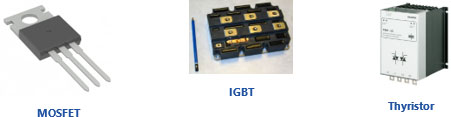
This rise in devices that produce and consume DC power has created a booming market for Power Conversion Systems (PCS). According to an ARC market report, the PCS market (excluding transformers) is valued at $41 billion and ARC projects this market to grow at a compound annual growth rate (CAGR) of about 23 percent. This highlights the increasing importance of efficient and reliable PCS equipment. While it's true that inverters and rectifiers that make PCS, are fundamentally manipulating analog waveforms (voltages and currents) with power transistors, modern PCS systems are far from purely analog and are highly integrated with the digital world.
To handle the complexities of the changing energy landscape, PCS (Power Conversion Systems) are evolving with increasingly sophisticated features. The rise of renewable energy sources presents new challenges for grid stability and reliability, as these power sources are inherently intermittent. Utilities are demanding PCS systems that not only seamlessly integrate renewable power but also enhance grid performance and safety.
This means PCS systems are now tasked with a wider range of responsibilities:
The evolution of PCS technology is crucial for the successful transition to a more sustainable and resilient energy system. By providing advanced functionalities and grid support capabilities, PCS systems are enabling greater penetration of renewable energy sources while maintaining the reliability and stability of the power grid.
ARC Advisory Group clients can view the complete report at the ARC Client Portal.
Contact Us if you would like to speak with the author.
Obtain more ARC In-depth Research Market Analysis.