Representative End User Clients







Representative Automation Clients







Representative Software Clients








When it launched the first idea in 2018, Audi made the business case for breaking with traditional automation architectures and exploring the potential of the emerging IT/OT convergence. Driving the business decision first and foremost was reducing the cost of the shop floor environment in both CapEx (procurement of hardware and software) and OpEx (maintaining disparate hardware in an operational environment). In addition, reductions were expected for the required resources in hardware as well as energy. Finally, advantages were anticipated due to reduced complexity when shifting from special purpose hardware (PLC, IPC) to standard server hardware.
Key Metrics of Audi's EC4P
For Edge Cloud for Production (EC4P), reducing hardware costs is a top metric that can be easily tracked. In this case, it is a trade-off between investments in new servers to host virtualized software versus the elimination of IPCs and PLCs on the shop floor. Legacy hardware is a sunk cost while new servers must be procured. Thus the offsetting metric must be cost savings derived from having less hardware to maintain on the shop floor.
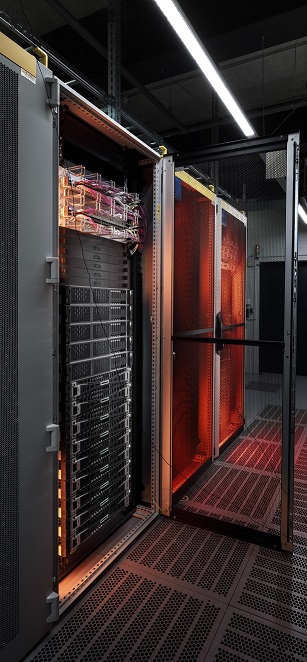
Cost savings from hardware reduction will be driven by Audi’s ‘software, not hardware’ maxim - a key principle of EC4P. In the future, suppliers will deliver functions as software and not in a ‘box’ (hardware). For example, control or monitoring software that accompanies a new machine will be installed and integrated in the EC4P architecture rather than being delivered on an IPC in an electrical cabinet.
On the operational side, equipment availability is a key metric, usually calculated as overall equipment effectiveness (OEE). This is a standard metric that measures the productivity of equipment by looking at three factors: availability, performance, and quality. With less hardware to maintain, OEE is likely to improve thanks to EC4P.
Less tangible metrics include greater flexibility in bringing new features to production equipment. In the past, updates to automation devices were rare because the function of controller software is rigorously tested during commissioning. But the growing sophistication of software in automation solutions exposes plant assets to outside threats. Mitigating these threats requires periodic updates of the IT infrastructure. With EC4P the new architecture is expected to increase scalability (time to up-date), speed up rollout velocity (no delays due to lacking flexibility), and improved stability and availability of the system (platform and application).
New ARC White Paper:
ARC recently published a white paper on "Building Audi’s EC4P platform for shop floor virtualization"
To access the white paper and related content, please register.
Registration to the platform and access to the document is free of charge.