Representative End User Clients







Representative Automation Clients







Representative Software Clients








KEYWORDS: Octave, Cyber Integrity, Cybersecurity Digital Twin, Industrial Data Fabric, AI in Cybersecurity
Octave is revamping its cybersecurity and operational technology software portfolio with a broader platform strategy emphasizing trusted industrial data, operational resilience, and ecosystem integration. A key component of this strategy is Octave Cyber Integrity, which addresses the need for accurate, detailed, and continuously updated information regarding assets, configurations, vulnerabilities, and changes across diverse control system environments in the world of OT.
Octave is positioning Cyber Integrity as a reliable foundation for OT cybersecurity by integrating deep configuration-based asset identification with broader industrial data sources. This approach signifies an intensified commitment and acceleration of capabilities to provide the market with continuously maintained, accurate cybersecurity data, which is critical for operational resilience, risk prioritization, ecosystem collaboration, and AI-enabled decision-making.
Octave takes a different approach from traditional OT asset discovery models that mainly rely on passive network monitoring or active scanning. The company emphasizes configuration-based visibility using backups and control system data to create a comprehensive representation of industrial assets, including devices from Level 0 to Level 3.5, as well as firmware, software, I/O, control strategies, patch status, and configuration baselines. This method is well-suited for critical infrastructure environments where active interrogation of control assets could introduce operational risks.
Octave's new platform direction means that cybersecurity data is now being integrated into the industrial data layer rather than existing as a separate security dataset. By providing access to Cyber Integrity data through an intelligent layer, and eventually through APIs for third-party security and other cybersecurity vendors, Octave is establishing asset integrity and data integrity as essential for AI-enabled operations, more effective cyber risk management, and collaborative OT cybersecurity initiatives. With this approach to data, the company is also laying the foundation for the creation of a cybersecurity digital twin.
Octave is an independent software and SaaS company that emerged from Hexagon’s planned separation of several software businesses, including Hexagon’s Asset Lifecycle Intelligence and Safety and Infrastructure & Geospatial divisions, along with ETQ, Bricsys, and Projectmates. Hexagon announced the Octave name in 2025 as the identity for the spin-off, and the company completed its separation in mid-2026. Octave now operates as a standalone public company (Nasdaq: OCTV) focused on mission-critical software for industrial and public-sector organizations.
The company inherits a broad portfolio built around the lifecycle of physical assets. Its new approach spans four workflow environments: design, build, operate, and protect. This heritage means that Octave does not approach cybersecurity as a standalone discipline. It connects cybersecurity to engineering data, operations, asset lifecycle management, public safety, physical security, and quality workflows.
Octave positions itself as a differentiated industrial software company by combining engineering, operations, safety, cybersecurity, and physical security capabilities around an AI-ready industrial data fabric and continuous digital thread. Its strategy emphasizes open, contextualized data, SaaS delivery, and human-guided industrial AI to help asset-intensive organizations improve lifecycle efficiency, resilience, and operational decision-making.
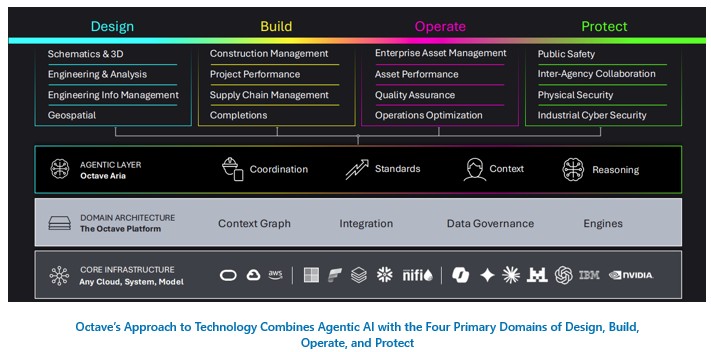
Octave’s new business approach moves the company beyond a product-centric model toward a platform and ecosystem model. Instead of treating OT cybersecurity, physical security, engineering data, and operational intelligence as isolated domains, Octave emphasizes a common foundation of contextualized industrial data. This approach aligns with the requirements of asset-intensive industries that must manage security, reliability, safety, compliance, and operational performance across complex multi-site operations.
This strategy matters most in industries such as oil and gas, power, chemicals, and utilities, where valuable cybersecurity insights often depend on engineering context and configuration detail that traditional IT security tools do not capture. Octave recognizes that no single vendor or detection method can fully address OT cybersecurity on its own. Effective programs require accurate asset intelligence, configuration integrity, operational context, and mechanisms to share trusted data with adjacent tools and workflows.
The Octave platform strategy centers on a unified, trusted data layer that supports design, build, operate, and protect workflows. Cybersecurity data, especially asset inventory and configuration information, becomes a key input to this intelligence layer. In this model, OT cybersecurity extends beyond threat detection. It also requires a reliable representation of the industrial environment so security, operations, and engineering teams can act from a shared source of truth.
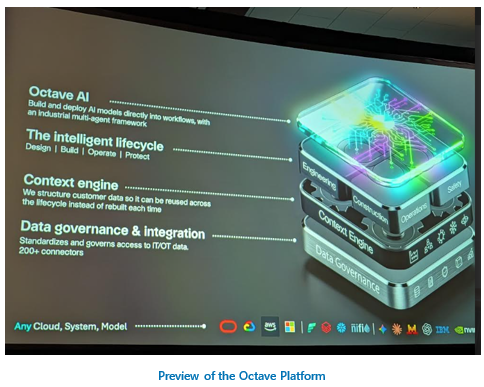
This platform direction matters because many OT risk programs still operate with fragmented asset data. Passive discovery tools identify network-connected devices, vulnerability tools maintain separate patch records, engineering systems hold configuration data, and compliance teams track controls in separate processes. Octave seeks to consolidate these data domains so organizations can use asset identity, configuration state, vulnerability exposure, backup status, and operational context together for faster and more effective remediation and mitigation of OT cybersecurity risk.
Cyber Integrity sits within Octave's Protect portfolio. The product has its roots in PAS Cyber Integrity, which Hexagon previously offered through its Asset Lifecycle Intelligence business. As part of Octave, Cyber Integrity can now support a solution-level approach that combines deep OT asset and configuration data with lifecycle intelligence, operational context, and domain-specific AI. Octave Cyber Integrity identifies, evaluates, and prioritizes OT/ICS cybersecurity risk by capturing critical asset, vulnerability, and configuration data. This elevates the role of Cyber Integrity to that of a risk management and resilience platform for multi-vendor industrial control system environments.
Octave’s value proposition depends on the distinction between basic asset discovery and deep asset identification. Passive IDS-based discovery provides useful network visibility, including IP addresses, MAC addresses, and traffic relationships. However, passive discovery alone often lacks the depth required to validate control system configurations, identify firmware and software detail, understand patch posture, or maintain a known-good baseline. Active scanning adds detail, but in sensitive OT environments it can raise concerns about device stability, vendor warranty exposure, and operational disruption.
Cyber Integrity addresses this gap with a configuration-based approach. It collects backups and control system configuration data to build a more detailed inventory without directly interrogating live control assets in ways that could affect operations. This method requires more time and engineering effort than passive packet capture, but it provides richer data for vulnerability assessment, configuration change detection, compliance, recovery, and lifecycle planning.
Cyber Integrity links asset identification with data integrity by establishing a trusted representation of what exists in the control environment, how each asset is configured, whether that configuration has changed, and how those changes affect cyber risk and operational resilience. In OT environments, inaccurate data can lead to missed vulnerabilities, poor remediation priorities, failed audits, delayed recovery, and unnecessary operational disruption.
Deep configuration data also improves vulnerability management. Rather than relying only on generic device identification or network observations, organizations can correlate asset attributes, patch levels, firmware, installed software, system criticality, and configuration state. This context gives teams a stronger basis for determining whether a vulnerability applies, whether remediation is technically feasible, and which actions deserve priority based on operational impact.
Data integrity becomes all-important as industrial organizations apply AI and advanced analytics to OT cybersecurity and operations. AI models depend on the quality, completeness, and trustworthiness of the data they consume. By feeding verified asset and configuration data into a common intelligent layer, Octave positions Cyber Integrity as an enabler of more reliable analytics, decision support, threat detection, and remediation workflows.
Octave also plans to expose deep asset inventory data through APIs for integration with third party cybersecurity vendors. Most end users rely on multiple tools, including passive monitoring, threat detection, vulnerability management, SIEM, and service management platforms. No single vendor owns the full workflow. By opening Cyber Integrity data to partners, Octave can allow products from vendors such as Dragos, Nozomi Networks, and Claroty to use a deeper asset and configuration foundation, subject to partner agreements and customer approvals. This approach strengthens the broader OT cybersecurity ecosystem by improving data quality across detection, vulnerability prioritization, incident response, and compliance workflows.
Recent attacks on U.S. water and wastewater infrastructure underscore why trusted OT asset and configuration data have become operationally critical. Federal agencies have warned that malicious actors are targeting internet-facing programmable logic controllers, including Rockwell Automation/Allen-Bradley MicroLogix controllers, changing IP addresses and passwords, modifying project files, and causing operational effects such as loss of monitoring, loss of control, pressure loss, flooding, boil-water notices, and sustained manual operations. Earlier campaigns against PLCs in the water sector showed a similar pattern: exposed control devices, weak or default credentials, and limited visibility into controller configurations created opportunities for attackers to disrupt or deface operational systems.
Octave Cyber Integrity is relevant to these incidents because it focuses on the underlying weaknesses that made them possible. Incomplete OT inventories, undocumented internet exposure, weak configuration control, and limited ability to compare current controller state with trusted baselines are all major contributors to the likelihood of a serious cyber incident. By maintaining detailed asset identity, firmware, software, configuration, backup, vulnerability, and change data, Cyber Integrity can help water utilities identify exposed or misconfigured PLCs, validate whether unauthorized changes have occurred, prioritize remediation based on operational criticality, and restore systems from known-good backups. In this context, Cyber Integrity becomes more than an inventory exercise; it becomes a practical foundation for resilience in water infrastructure where operators must preserve safe service even when control systems are targeted.
Cyber Integrity data and the Octave platform have the potential to combine to create a cybersecurity digital twin. In this model, Cyber Integrity would provide the detailed technical foundation: asset identity, firmware, software, configuration files, control logic, backup status, patch levels, vulnerability exposure, and change history. The Octave platform would add lifecycle context, operational relationships, engineering data, workflow status, and domain-specific intelligence. Together, these data sets could create a continuously maintained digital representation of the OT cyber-physical environment.
Cybersecurity digital twins differ from traditional engineering digital twins because they focus on cyber risk, configuration integrity, and operational resilience. A cybersecurity digital twin can show which assets exist, how they connect to processes and systems, what known-good configurations look like, where vulnerabilities apply, which changes deviate from approved baselines, and how a cyber event or remediation action could affect operations. Security, engineering, and operations teams could use this shared model to evaluate cyber risk before taking action in the live environment.
The concept could also improve incident response and recovery. If an organization maintains a current cyber twin, it can compare the live environment with trusted baselines, identify unauthorized changes, assess the operational importance of affected assets, and prioritize restoration from validated backups. This would move cyber recovery from a largely reactive process toward a more structured, model-driven workflow that links cybersecurity decisions to process criticality and asset lifecycle data.
Over time, a cybersecurity digital twin could become a foundation for AI-assisted risk analysis. Octave could use verified Cyber Integrity data and broader platform context to help teams simulate attack paths, evaluate remediation options, identify high-risk configuration drift, and recommend actions based on both cyber exposure and operational impact. The value of this model would depend on data quality, governance, integration with partner tools, and the customer’s ability to keep the twin synchronized with the real OT environment.
Octave’s approach reflects an important industry trend: effective OT cybersecurity increasingly depends on the integrity of the underlying industrial data. Cyber Integrity is more than a simple OT asset inventory product. It serves as a source of trusted industrial cybersecurity data that supports risk management, resilience, compliance, and AI-enabled decision-making across the broader Octave platform. By capturing backups and configuration data, Cyber Integrity helps organizations build a more complete understanding of assets, vulnerabilities, baselines, and unauthorized change. Octave’s planned API and ecosystem strategy could further increase the value of Cyber Integrity by allowing customers and partner tools to use deep asset data without duplicating collection efforts. In ARC’s view, Octave is well positioned to benefit from growing market demand for reliable OT asset intelligence and stronger integration between cybersecurity, operations, and engineering data.
End users should evaluate Octave’s approach against their OT cybersecurity maturity. Early-stage programs may begin with passive discovery to establish basic visibility. More mature programs, especially in critical infrastructure, will benefit from using deep configuration-based inventory to strengthen vulnerability management, change control, compliance, backup, recovery, and operational resilience.
Octave’s platform strategy also reinforces the need to treat OT cybersecurity as part of enterprise industrial data management. Asset inventory, configuration state, vulnerability posture, and recovery data should not remain isolated within specialized security tools. These data sets should inform engineering workflows, maintenance planning, modernization decisions, compliance reporting, and executive-level cyber risk governance.
ARC Advisory Group clients can view the complete report at the ARC Client Portal.
Contact Us if you would like to speak with the author.
Obtain more ARC In-depth Research Market Analysis.