Representative End User Clients







Representative Automation Clients







Representative Software Clients








ARC Advisory Group recently attended the 42nd annual Honeywell Users’ Group (HUG) Americas conference in San Antonio, Texas. Conference attendance and energy alike were strong, with over 1,300 attendees from 30 countries.
Honeywell used the event to introduce several new solutions. These solutions included both hardware and software, but software dominated the event.
 Key takeaways include:
Honeywell continues to leverage IIoT to solve customer’s business problems and support its installed base through software solutions and virtualization
The company has increased its focus on cybersecurity services and products
Closer relationship between Honeywell Process Solutions (HPS) and UOP will help increase efficiency and productivity for end users
Process Automation Ready for a New Wave of Innovation
Vimal Kapur, President of Honeywell Process Solutions, opened the Honeywell Users Group with a discussion around Industrie 4.0 and the readiness of the process industries to accept it. He framed this topic as process automation being ready for the next wave of innovation. In introducing the topic, Mr. Kapur discussed the innovation computers introduced in the 1970’s.
 Mr. Kapur moved on to discuss the new technologies available collectively labeled “Industrie 4.0.” He listed cloud, IIoT, virtual reality, machine learning, and digitization as the technology buzzwords streaming through the news. Really, Industrie 4.0 is unleashing the power of the internet. He noted that virtual machine deployment is growing at 20 percent. This trend feeds into the use of cloud, where Honeywell is now supporting its SCADA, historian, and Performance Management solutions.
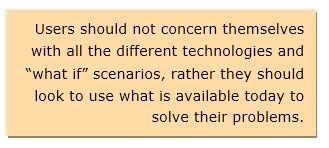
He asked that users not concern themselves with all the different technologies and “what-if” scenarios but instead, look to use what is available today to solve their problems. "Challenges facing manufacturers and plant operators today have not dramatically changed in the last 40 years. Safety, efficiency, reliability, productivity, and security continue to drive innovation across industries," said Vimal Kapur, president of HPS. "What has changed is our ability to better address these challenges. Today, we are able to leverage the power of the internet to employ a broader range of data to transform operations."
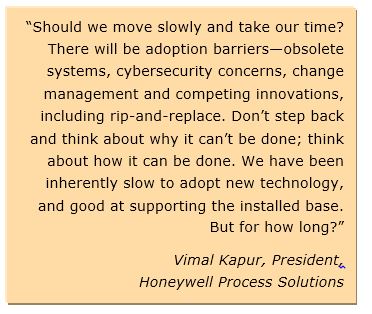
Mr. Kapur challenged the attendees, “Should we move slowly and take our time? There will be adoption barriers—obsolete systems, cybersecurity concerns, change management and competing innovations, including rip-and-replace. Don’t step back and think about why it can’t be done; think about how it can be done. We have been inherently slow to adopt new technology, and good at supporting the installed base. But for how long?”
The “Final Migration”
Chief Technology Officer, Jason Urso, introduced an on-process migration path for TDC systems that basically virtualizes the LCN (Local Control Network) and preserves indefinitely end users’ investments in the legacy DCS platform. "We're learning that it's okay to replace hardware with software, and so this is the last TDC migration you'll ever need to perform," said Mr. Urso.
Mr. Urso told the attendees that the migration path involves converting the company’s legacy control hardware infrastructure and operator displays into virtualized applications that run on the company’s Experion control system platform and fault-tolerant Ethernet (FTE). This means that all the legacy configuration, programs, and operator graphics can be hosted in the virtualized architecture and run peer-to-peer with new Experion hardware, continuing Honeywell’s longstanding commitment to its customers’ intellectual property investments. He stated that “TDC 3000 seamlessly melts into Experion on-process, while letting users retain 100 percent of their intellectual property."
Honeywell estimates that its Experion LCN (ELCN) and Enhanced High Performance Manager (EHPM) solution is four to twelve times more cost-effective than ripping and replacing existing controls and reduces risk by as much as two orders of magnitude compared to a rip and replace migration.
Addressing Cyber Risk
Eric Knapp, Global Director of Cybersecurity Solutions and Technology stated, "This is a lucky time because we're witnessing a pivotal moment in cybersecurity. Weapons-grade exploits were recently released into the 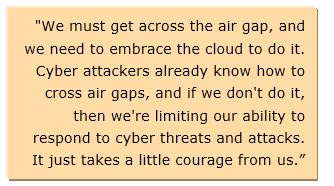 wild, but it's an encouraging time, too, because we've come a long way on cybersecurity."
Industrial organizations have traditionally relied on air gaps and other barrier methods between plant-floor and enterprise systems to prevent cyber probes and potential attacks. However, multiplying ports, network connections, and other often-undocumented access points usually render such barriers ineffective. More active interventions like network traffic evaluation tools are becoming more crucial for effective security, and Mr. Knapp stated that this is where data-processing power of cloud-computing can really help.
To help users with their cybersecurity efforts, Honeywell introduced its Advanced Threat Intelligence Exchange (ATIX). According to the company, ATIX is the first industrial threat intelligence and detection cloud. It consists of securely networked detection engines, reporting functions, machine learning analytics, master threat registry, and third-party threat intelligence features among other resources.
"ATIX will help users employ heuristics, sandbox technologies and other tools to detect threats, zero-day exploits, and other problems, which all benefit from the cloud's computing capabilities," added Mr. Knapp. "The cloud can enhance data centers and Honeywell products. The air gap is no longer an effective defense, but the cloud can be."
Honeywell presented several solutions and initiatives to make cybersecurity more effective and easier for users to employ. These include:
Enterprise Risk Manager, which provides enterprise-wide, industrial cyber-risk visibility
Singapore Cyber Security Lab and Center of Excellence, opening by the end of 2017. This is Honeywell’s third such facility, enabling the sharing, testing and deployment of cybersecurity solutions, and offer red/blue team training on managed security services
The acquisition of NextNine, provider of secure connectivity solutions, announced earlier this month. The company has deployed cybersecurity monitoring and management software at over 6,000 sites worldwide
Secure Media Exchange (SMX), which reduces cybersecurity risk by monitoring and securing the use of removable media such as USB drives.
According to the company, it is the leading cybersecurity services, technology and support organization focusing on industrial and critical infrastructure protection. It boasts 150 professionals as well as consultants and other partners. Honeywell provides industrial cybersecurity solutions in four major areas: industrial security consulting, managed security services, integrated security technology, and cybersecurity software to help end users monitor their applications, and identify security vulnerabilities and threats.
The Connected Process Licensor
One cannot simply think about the value of getting connected to a plant without considering how connections will change the way an industrial facility is operated. After all, process manufacturers have been using IT systems, creating process models, and collecting data for decades. However, the operating environment for the process industries has changed. Unprecedented focus on optimizing existing facilities and improving safety is driving process users to think differently about optimizing plant assets. Now, the process expertise of UOP, combined with Honeywell Performance Solutions’ knowledge of connectivity, systems, and infrastructure provides new meaning to connected plant.
For decades, the more than 500 expert UOP engineers in 200 countries have provided the many refineries, petrochemical, and gas plants that use UOP licensed technology with on-site startup and optimization services. This has not been without inefficiencies for both UOP and process users managing the travel and cost of delivery. Fast forward to today, UOP has created an entirely different model.
The crown jewels of any process licensor have been the process models; the “special sauce” behind how UOP's differentiated process works. These process models have been so tightly guarded; even owner-operators have not been able to access them. Now this highly protected intellectual property can be leveraged online, providing greater benefits for UOP customers. By creating a platform of UOP UniSim models, these “cloud-enabled” Connected Performance Services (CPS) allow UOP process experts to monitor many plants, detecting problems with assets and processes in advance.
Avoiding sub-par performance and downtime can be worth millions of dollars to owner-operators. Plant data from a process historian is batch loaded, usually daily, and validated against the UniSim models for performance monitoring. The CPS offering is a cloud-based subscription service that monitors streaming plant data and applies thresholds and rules, leveraging UOP process models and best practices to find latent or emerging underperformance. The system can alert plant personnel and make specific operational recommendations. The system utilizes user-friendly dashboards that provide an intuitive context and actionable understanding of a plant’s performance. These same dashboards are reported to a dedicated Honeywell UOP process advisor who also monitors performance and can provide additional direction and resources.
Competency Management
Honeywell is also responding to the softer side of automation; competency. Industry trends show an increasing need to manage the competence (skills and abilities) of engineers, technicians, and operators. The mass retirements, younger workers changing jobs, need to hire locally around the world, increasing technical complexity of systems, rapid obsolescence of those systems, and availability of new and more effective training technologies all demand a change in how industry assesses, corrects, and maintains competence.
“An airline pilot uses a simulator for many hours before he’s allowed to fly a plane. We want to take the same approach.” Jack Gregg, Senior Global Director, Lifecycle Solutions and Services, said on the role of simulation, virtual reality, and augmented reality in closing skills gaps.
Inadequate competency management costs plants due to errors, substandard operation, and downtime. According to Mr. Gregg:
70 percent of cyber assessments show critical vulnerabilities
50 percent of Honeywell’s “illness” calls misrepresent the problem
40 percent of Honeywell Global Technical Assistance Center (GTAC) calls are for “training”
30 percent of system behavior is not well understood
30 percent of plants underestimate the skills needed
The company is using technology to measure an individual’s competency and determine the best course(s) of action to improve that competency. “To develop a competent workforce, we must identify the needed skills, assess the employee’s skills, and provide appropriate training to fill the gap,” said Mr. Gregg. According to the company, competency management is more than just product training. It’s process and skill assessment, gap analysis and targeted training. Competency maps and metrics for the individual allow managers to determine what courses need to be taken, in what order.
The technologies involved are role-based simulators, cloud-based analytics, augmented reality, and virtual reality. An important element of training is practice, which is why simulation is so important.
Honeywell competency management offerings range from basic training up to a full training management contract. “It’s like Assurance 360 for competency,” Jack Gregg said. “We want to raise skill levels in a very fast and efficient way.”
But Wait, There’s More
The company also has several other solutions competing for customer mindshare. The Dynamo platform for Operations and Alarm Management addresses the need to support operators better and reduce abnormal situations. Under “cool technologies,” Honeywell previewed its Augmented Reality concept. And then there’s the Uniformance Suite’s integration of Seeq analytics technology in Asset Sentinel.
What About Hardware?
Mr. Kapur reiterated the reason for the ControlEdge PLC as the need for a logic controller that supported Honeywell’s LEAP lean project execution process. Expanding on that same hardware platform, Honeywell introduced the Unit Operations Controller (UOC), targeting end users with small batch processes. This utilizes the same control execution operating system as the Experion C300. Honeywell is also building out this hardware platform by merging different products into the family like HC900 and RTU2020 and filling out the I/O family.
There was also the introduction of Safety Manager in a new C300-type form factor that mimics the Universal Safety I/O form factor.
Conclusions
Honeywell continues to demonstrate a strong commitment to its installed base. With the company’s “last migration” solution, all intellectual property can be maintained without major revisions, a rarity in this industry that should save customers significant time and money and greatly reduce risk. The company’s new cloud-enabled solutions should help customers go beyond the “low hanging fruit” in their plants by leveraging expertise across the enterprise and from outside the organization.
ARC Advisory Group clients can view the complete report at ARC Client Portal on Office 365 or Box.com or New Client Portal on this website
If you would like to buy this report or obtain information about how to become a client, please Contact Us
Keywords: Process Automation, IIoT, Cloud, PLC, DCS, LEAP, UOP, Honeywell, Automation Services, Digital Transformation, Mobility, ControlEdge, Connected Plant, SCADA, Elevate, ARC Advisory Group.