


New research from ARC Advisory Group indicates that the industrial photoelectric sensors market continues to expand in 2025, driven by accelerating factory automation, Industry 4.0 initiatives, and the growing adoption of intelligent sensing technologies. Modern photoelectric sensors increasingly incorporate IO-Link connectivity, real-time diagnostics, condition monitoring, and predictive maintenance capabilities, enabling greater visibility into machine performance, reduced unplanned downtime, and improved operational efficiency. Intelligent sensors embedded with advanced features enable remote diagnostics, reducing machine downtime and enhancing productivity and reliability. This ARC research provides a comprehensive analysis of various photoelectric sensor types, including light barriers, diffuse sensors, and fiber optic sensors, that are widely utilized across industries worldwide.
"As manufacturers continue their Industry 4.0 and digital transformation initiatives, photoelectric sensors are playing an increasingly strategic role within connected factory environments. Enhanced communication capabilities, seamless integration with industrial networks, and greater visibility into machine and process conditions enable more accurate object detection, improved quality control, and data-driven decision-making. The ongoing evolution toward intelligent sensing solutions is creating new opportunities across automotive, logistics, warehousing, packaging, food and beverage, electronics, and machinery industries, where photoelectric sensors are critical to achieving higher levels of productivity, flexibility, and operational efficiency," according to Santosh Kumar, Analyst and key author of ARC's Photoelectric Sensors Market Research.
Photoelectric Sensors Market Trends
In addition to providing detailed competitive market share data, the research also addresses key market trends as follows:
IO-Link
IO-Link has evolved from a premium feature into a standard expectation. Vendors now position it as an end-to-end system solution that enables sensors, actuators, and controllers to exchange data. Configuration is increasingly supported through companion software or mobile apps, and IO-Link masters with IP65/67/69K enclosures are becoming common.
Smart Sensing
Smart sensing combines IoT connectivity, AI, and analytics to provide self-calibration, self-diagnosis, predictive maintenance, and real-time decision support. Smart photoelectric sensors reduce downtime, improve reliability, and support flexible manufacturing.
Sensor-to-Cloud / IT and OT Convergence
Sensors are increasingly connected to cloud platforms using protocols such as MQTT and OPC UA. Modern photoelectric sensors communicate health, diagnostic, and process information through IO-Link and edge gateways into SCADA, MES, cloud, and analytics systems.
Predictive Maintenance & OEE
Actionable edge analytics using lens contamination alerts, optical degradation alerts, and temperature data help prevent unplanned downtime and improve equipment availability.
Expansion of Robotics Applications
Industrial robots increasingly depend on photoelectric sensors for navigation, positioning, object recognition, and collision avoidance. Growth in robotics is generating substantial new demand.
Leading Suppliers to the Photoelectric Sensors Market Identified
In addition to providing specific market data and industry trends, this ARC market research also identifies and positions the leading suppliers to this market and provides and summarizes their relevant offerings. An alphabetical list of key suppliers covered in this analysis includes: Azbil, Balluff, Banner Engineering, Baumer, Bernstein AG, Carlo Gavazzi, Contrinex, Datalogic, Hokuyo, Honeywell, ifm electronic, Keyence, Leuze, OMRON, Panasonic, Pepperl+Fuchs, Rockwell Automation, Schneider Electric, SICK, Takenaka, Telco, Turck, Wenglor.
About the Photoelectric Sensors Research
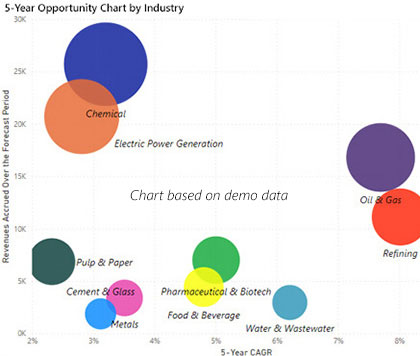
The Photoelectric Sensors research explores the current and future market performance and related technology and business trends and identifies leading technology suppliers. This new research is based on ARC’s industry-leading market research database, extensive primary and secondary research, and proprietary economic modelling techniques. The research includes competitive analysis, five-year market forecasts, and three years of historical analysis. The research segmentation includes World Region, Sensor Type, Diffuse Type, Light Barriers Type, Output Signal, Industry, Machinery Segment, Customer Type, Sales Channel.
This new research is available in a variety of formats to meet the specific research and budgetary requirements of a wide variety of organizations. ARC's Market Data Service (MDS) is an annual subscription service that provides a unique online environment to each customer, together with all the necessary user interface apps and datasets. MDS unlocks the full benefits of ARC’s time-tested market intelligence by leveraging the latest analytical tools and technologies to allow you to make more actionable, real-time business decisions. Interactive access to ARC’s qualitative analysis is displayed in context with up-to-date market data, allowing clients to develop customized views of the market to best suit their needs. ARC continues to offer our traditional static Market Reports as a PDF.
ARC provides several types of market data services. The most common are Market Growth Outlook and Competitive Analysis Services. These services provide detailed market analysis of a single or multiple products or software applications. Please visit Market Data Services page for more details on these services.