


ARC’s qualitative and trend research indicate that the global utility industry software market experienced robust growth in 2023, driven by the ongoing modernization of aging infrastructure and increasing regulatory pressure to enhance grid resilience and integrate renewable energy sources. Utilities continued to invest heavily in software solutions to optimize operations, improve customer service, and meet evolving environmental and social governance (ESG) requirements. While economic headwinds in certain regions, such as Europe and China, tempered growth in the latter half of 2023 and into 2024, the underlying demand for digital solutions remained strong. The market is poised for continued expansion throughout the forecast period. Key factors fueling this growth include:
- Technological Advancements: continuous innovation in areas like AI, machine learning (ML), and cloud computing enable more sophisticated and efficient utility software solutions.
- Automation: utilities are increasingly adopting software to automate processes, improve efficiency, and reduce operational costs. This includes automating tasks such as grid management, meter reading, and customer service.
- Operational Efficiency: software solutions are critical for optimizing asset performance, reducing downtime, and improving overall operational efficiency. This is particularly important as utilities face challenges with aging infrastructure and workforce management.
- Internet of Things (IoT): the growing deployment of IoT devices in the utility sector is generating vast amounts of data that can be leveraged by software solutions to improve grid management, asset monitoring, and customer service.
- Manufacturing Expansion in Emerging Economies: rapid industrialization and infrastructure development in emerging economies are driving increased demand for electricity and water, leading to investments in utility software solutions to support grid expansion and efficient resource management.
"The utility industry is undergoing a profound transformation driven by the convergence of digital technologies and the imperative for a sustainable energy future. Software solutions are playing a critical role in empowering utilities to modernize their grids, integrate renewable energy sources, optimize asset performance, and enhance customer engagement. From advanced analytics and AI-powered grid management to digital twins and predictive maintenance, software is enabling utilities to increase efficiency, improve reliability, and meet the evolving needs of a rapidly changing world," according to Peter Manos, Director of Research and key author of ARC's Utility Industry Software Expenditures Market Research.
Utility Industry Software Expenditures Market Trends
In addition to providing detailed competitive market share data, the research also addresses key market trends as follows:
- Asset Integrity Management
- Influx of Drones, Advanced Sensors and Imaging Technologies
- Role of Digital Technologies
- Digital Twin Software
- Collaborative Workers Across the Enterprise from Anywhere
- New SaaS Subscription and Remote Services
- Enterprise Asset Management
- Awareness of Advanced EAM Systems
- Adoption of Mobile Devices
- ESG Software
- Artificial Intelligence
- Climate Risk
- Field Service Management
- Convergence of Customer Service and Field Service
- SaaS is Displacing Perpetual Licenses
- GIS Software for Smart Cities and Grids
- Cross-sector market drivers
- Simplifying multi-stakeholder projects
- Plant Asset Management
- Advanced Analytics and Machine Learning
- Connected Assets
Leading Suppliers to the Utility Industry Software Expenditures Market Identified
In addition to providing specific market data and industry trends, this ARC market research also identifies and positions the leading suppliers to this market and provides and summarizes their relevant offerings. An alphabetical list of key suppliers covered in this analysis includes: Bentley Systems, Hexagon, IBM, IFS, SAP.
About the Utility Industry Software Expenditures Research
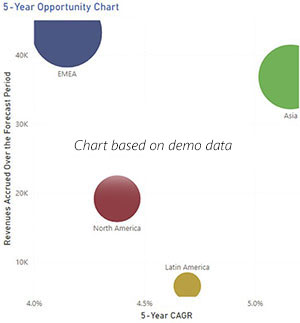 The Utility Industry Software Expenditures research explores the current and future market performance and related technology and business trends and identifies leading technology suppliers. This new research is based on ARC’s industry-leading market research database, extensive primary and secondary research, and proprietary economic modelling techniques. The research includes competitive analysis, plus five-year market forecasts. The research segmentation includes Industry, World Region, and Product Type.
This new research is available in a variety of formats to meet the specific research and budgetary requirements of a wide variety of organizations. ARC's Market Data Service (MDS) is an annual subscription service that provides a unique online environment to each customer, together with all the necessary user interface apps and datasets. MDS unlocks the full benefits of ARC’s time-tested market intelligence by leveraging the latest analytical tools and technologies to allow you to make more actionable, real-time business decisions. Interactive access to ARC’s qualitative analysis is displayed in context with up-to-date market data, allowing clients to develop customized views of the market to best suit their needs. ARC continues to offer our traditional static Market Reports as a PDF.
ARC provides several types of market data services. The most common are Market Growth Outlook and Competitive Analysis Services. These services provide detailed market analysis of a single or multiple products or software applications. Please visit Market Data Services page for more details on these services.