Representative End User Clients







Representative Automation Clients







Representative Software Clients









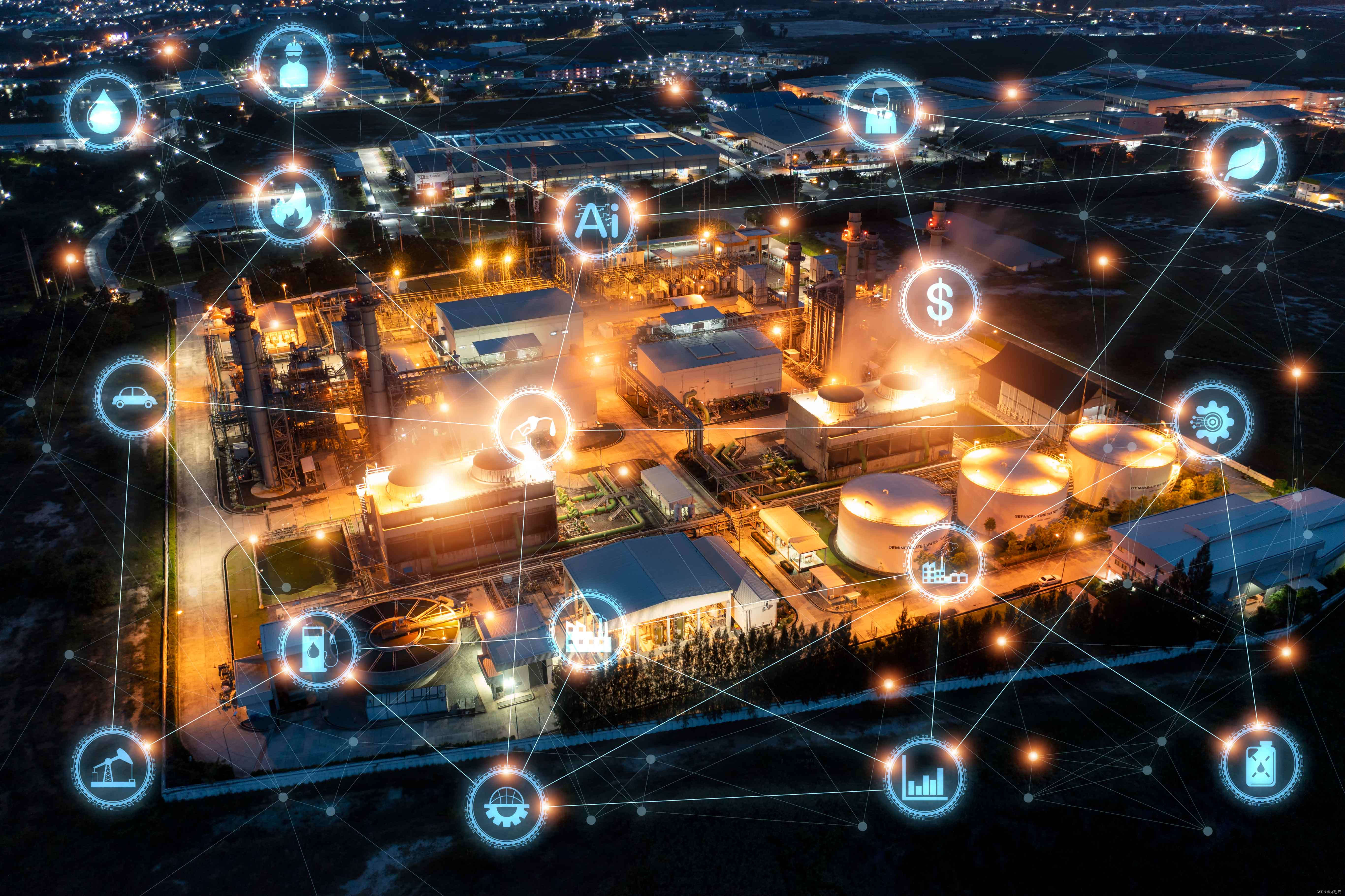
In January 2026, China’s Ministry of Industry and Information Technology (MIIT) officially released the Action Plan for Promoting the High-Quality Development of Industrial Internet Platforms (2026–2028) (hereinafter referred to as the Platform Action Plan). Anchored in China’s broader objective of cultivating new quality productive forces, the plan directly addresses persistent challenges such as industrial homogenization, limited application depth, and weak ecosystem coordination.
The Platform Action Plan outlines four major action areas and defines clear quantitative targets to be achieved by 2028, including the development of more than 450 influential industrial internet platforms, the connection of 120 million industrial devices (sets), and a platform application penetration rate exceeding 55 percent. Collectively, these measures aim to establish a next-generation industrial internet platform ecosystem that supports scalable, data-driven industrial transformation.
Following the release of the Platform Action Plan, MIIT—together with relevant ministries and commissions—issued two additional policy documents: the Implementation Opinions on the Special Action for “Artificial Intelligence + Manufacturing” and the Action Plan for Integrating and Empowering Industrial Internet and Artificial Intelligence. When viewed together, these three initiatives form a coordinated policy framework that advances an integrated empowerment pathway structured around “Network–Data–Model–Agent.”
This policy synergy aligns with the broader trajectory of China’s manufacturing sector as it shifts toward intelligent value creation. As of 2025, China’s industrial internet foundation includes more than 100 million connected devices (sets) on key platforms and an AI application penetration rate of approximately 58 percent within manufacturing. Against this backdrop, the combined policy measures are designed to move the sector beyond isolated, point-based optimization toward full value-chain transformation, providing sustained momentum for digital and intelligent manufacturing during the 15th Five-Year Plan period.
Focusing on the 2027–2028 timeframe, the two AI-focused policy documents establish quantitative targets across technology supply, infrastructure development, and factor support, creating a complementary and mutually reinforcing policy structure.
The Implementation Opinions on the Special Action for “Artificial Intelligence + Manufacturing” emphasize technological empowerment and scenario-driven deployment. By 2027, the policy calls for the launch of 1,000 industrial agents, the construction of 100 high-quality industrial datasets, and the promotion of in-depth applications for three to five general-purpose large models within manufacturing. Together, these measures aim to form a closed-loop supply system linking technology, scenarios, and data.
In parallel, the Action Plan for Integrating and Empowering Industrial Internet and Artificial Intelligence prioritizes infrastructure scale-up and broad-based adoption. It specifies that by 2028, at least 50,000 enterprises should complete the transformation of new industrial networks, alongside the development of high-quality datasets across 20 key industries. This infrastructure-focused approach is intended to provide a stable foundation for large-scale AI–industrial internet integration.
When combined with the Platform Action Plan’s 2028 objectives, the three initiatives collectively define a three-dimensional indicator system encompassing scale, capability, and application. This layered design links device connectivity breadth, data resource depth, model algorithm precision, and agent application maturity. The result is a policy framework that strengthens both hard infrastructure support and soft intelligent capabilities, while also providing measurable benchmarks for policy execution and outcome evaluation.
Through coordinated implementation, the two AI integration plans aim to dismantle technical barriers and data silos, reshaping the relationship between artificial intelligence and the industrial internet from simple coexistence to deep coupling. This transition is structured as a progressive integration pathway encompassing network foundation building, data empowerment, and model-and-agent deployment.
In the network foundation phase, the Action Plan for Integrating and Empowering Industrial Internet and Artificial Intelligence positions infrastructure as the core carrier for AI application in manufacturing. The plan prioritizes upgrades that enable industrial networks to evolve toward integrated control, networking, and computing. By deploying technologies such as Time-Sensitive Networking (TSN), 5G-Advanced (5G-A), and edge computing, the policy accelerates the rollout of new industrial networks across 50,000 enterprises and promotes a collaborative cloud–edge–end architecture. This architecture supports the high throughput, low latency, and high reliability required by industrial AI applications, while enabling real-time data collection, transmission, and processing across devices, systems, and platforms.
High-quality data is treated as a central enabler of integrated development across both plans. The Implementation Opinions on the Special Action for “Artificial Intelligence + Manufacturing” emphasize full-scenario industrial data supply, supporting the construction of 100 datasets spanning research and development, production, operations, and maintenance. Meanwhile, the Action Plan for Integrating and Empowering Industrial Internet and Artificial Intelligence focuses on 20 priority industries, advancing data cleaning, annotation, synthesis, and security governance, and establishing trusted mechanisms for industrial data circulation.
Supported by the industrial internet identification resolution system and the national industrial data catalog, these efforts promote interoperability among heterogeneous data sources, strengthen intellectual property protection, and enable the transition of industrial data from a passive resource to an active production asset. This transformation provides high-quality input for industrial large model training and agent development.
In the model and agent deployment phase, the two plans position models as integration bridges and agents as execution carriers, translating technological advances into tangible industrial efficiency gains. The Implementation Opinions on the Special Action for “Artificial Intelligence + Manufacturing” prioritize the development of industry-specific large models and specialized small models, promote the Model-as-a-Service (MaaS) approach, and target the large-scale deployment of 1,000 industrial agents by 2027. These agents are expected to address common manufacturing scenarios, including quality inspection and equipment operation and maintenance.
Complementing this, the Action Plan for Integrating and Empowering Industrial Internet and Artificial Intelligence establishes a shared model pool within industrial internet platforms, improves model coordination efficiency, and explores a “platform + scenario agent” architecture. By encouraging deeper agent adoption in industries such as steel and aviation, the plan seeks to elevate industrial AI from auxiliary decision support to autonomous execution. This end-to-end integration pathway effectively addresses the “last mile” of technology deployment and underpins the development of a scalable industrial AI ecosystem.
For enterprises, the coordinated policy framework underscores the importance of proactively capturing policy-driven opportunities. Organizations are encouraged to focus on core production scenarios, accelerate the transformation of new industrial networks, expand device connectivity, and adopt industrial large models and intelligent agents to improve production scheduling, quality management, and equipment maintenance.
Leading enterprises are positioned to play a catalytic role by opening technological capabilities and data resources, fostering ecosystem development, and enabling small and medium-sized enterprises to participate in platform-based intelligent transformation. At the same time, sustained investment in research and development, stronger industry–university–research collaboration, and targeted responses to challenges such as scenario adaptability and data security are critical. Through ecosystem-level collaboration, enterprises can move beyond isolated efficiency gains toward durable, system-wide value creation.