Representative End User Clients







Representative Automation Clients







Representative Software Clients








The event took place at Hotel Okura in Amsterdam, Netherlands, from October 14–16, 2025, and brought together more than 260 infrastructure leaders, engineers, project owners, AI specialists, technology partners, and media and analysts. ARC was represented by Mohan and Karthik from India, Jim Frazer from the US, Florian Gueldner from the EU, and Rita Liu from China.
Bentley Systems’ Year in Infrastructure (YII) 2025 showcased major sessions on Connected Cities, Energy Production, Transportation, Electric Utilities, and Mining, with nearly 250 projects from 47 countries nominated for the Going Digital Awards.
Key product announcements included Bentley Infrastructure Cloud Connect, iTwin Engage, SYNCHRO+, AI-powered search in ProjectWise, and advanced AI-enabled applications such as OpenSite+ and Substation+. Core themes throughout the event included Infrastructure AI, Digital Twins, Open Data and Interoperability, Geospatial Intelligence, Sustainability and Decarbonization, Smart Cities, Energy Transition, Grid Modernization, Water Infrastructure, and Flood Resilience.

Nathan Marsh, SVP EMEA, opened the conference with a call for integrated, systems-based planning that acknowledges the interdependence among cities, energy, and water systems. He emphasized that digital twins and data-driven modeling are essential for visualizing cross-domain relationships and enabling resilience. Stressing the need to balance technical excellence with sustainability, he urged organizations to embed carbon reduction, biodiversity, and resource efficiency into every phase of project delivery.
CEO Nicholas Cumins spoke about how AI is reshaping the infrastructure lifecycle—from design to maintenance—amid a global shortage of engineering talent. He described this moment as an inflection point where organizations are shifting from AI experimentation to scaled deployment. He reiterated that AI enhances, rather than replaces, engineering expertise, enabling teams to focus on creativity and strategic problem-solving. Highlighting initiatives like the Energy Atlas, which produced detailed 3D models for more than 5,000 buildings, he illustrated how AI-powered digital twins are evolving into dynamic systems capable of learning, predicting, and optimizing performance.
Patrick Cozzi, Chief Platform Officer, outlined Bentley’s open platform strategy that unites geospatial data, IoT, and AI to create living digital twins. By leveraging drones, LiDAR, and sensors, infrastructure teams gain real-time visibility into asset conditions. Cozzi also showcased AI-powered feature extraction tools in Cesium Ion, which automate data classification and significantly reduce manual work.
CTO Julien Moutte focused on breaking down data silos with Bentley Infrastructure Cloud Connect, the foundational layer of Bentley Infrastructure Cloud built on iTwin technologies. This environment supports advanced ProjectWise and AssetWise workflows, real-time collaboration, continuous updates, and spatial digital twins that connect assets to their geographic context—strengthening resilience, sustainability, and decision-making throughout the infrastructure lifecycle.
Francois Valois, SVP – Open Applications, presented next-generation applications such as OpenSite+, which combine GIS and CAD for context-aware site design. He demonstrated how intelligent drainage modeling, real-time simulations, and cloud-enabled collaboration accelerate project delivery while reducing waste and environmental impact.
Marion Bouillin, Senior Product Marketing Manager, introduced SYNCHRO+, Bentley’s AI-driven construction management platform that integrates design, cost, and scheduling into a unified ecosystem. SYNCHRO+ provides predictive insights, automates progress tracking, and enables seamless collaboration—transforming how projects are delivered on time, sustainably, and with greater transparency.
AI Panel: From Hype to Reality – The State of Infrastructure AI
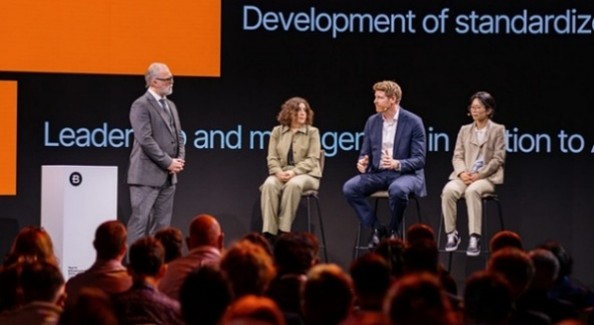
Moderated by Mark Coates (Bentley), the AI panel explored global trends in adoption.
Anne-Marie Friel (Pinsent Masons) emphasized the importance of ethical AI governance and trust frameworks.
Guy Beaumont (Turner & Townsend) highlighted the need for workforce upskilling and shared lessons from implementation.
Yeun Jin Kim (Mott MacDonald) discussed human-in-the-loop AI systems for predictive design and maintenance.
Panelists agreed that AI is augmenting, not replacing, engineering expertise, and is enabling more consistent, context-aware intelligence across project workflows.
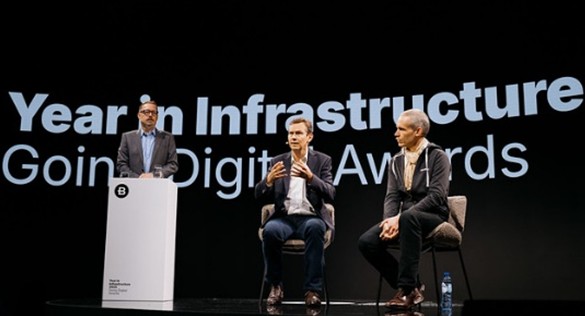
ARC analysts met with Bentley executives to discuss open data standards, interoperability, AI integration, and data protection. Bentley reaffirmed its commitment to secure, federated data environments that support innovation while protecting sensitive infrastructure information. The discussions underscored Bentley’s vision of an interconnected ecosystem that unites disciplines, partners, and technologies to create smarter and safer infrastructure.

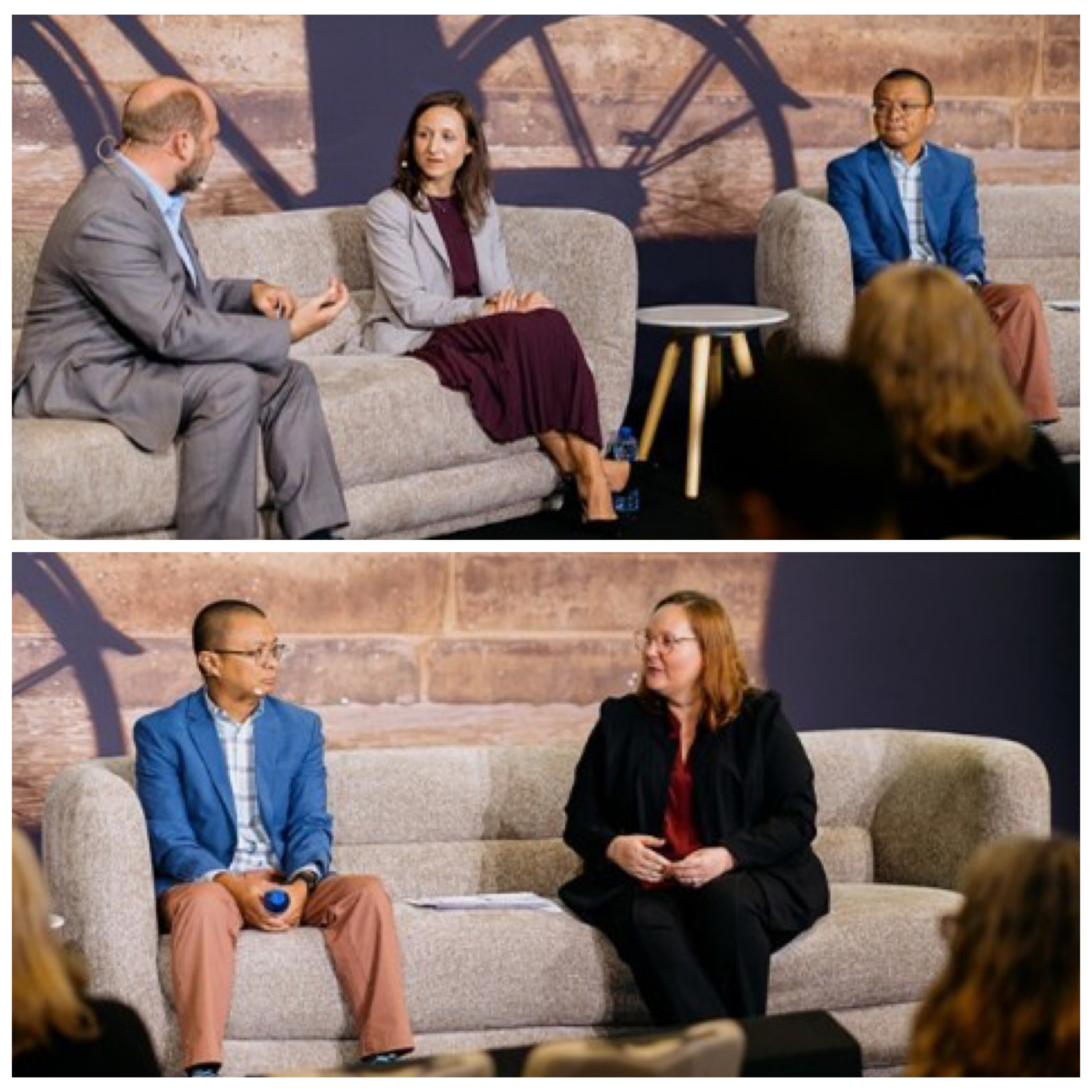
Experts from academia, government, and industry explored how digital twins support sustainable and resilient urban development.
Richard Vestner (Bentley) emphasized integrating water, mobility, and planning data.
Rebeca Herrera (City of Madrid) shared how AI and BIM streamlined the city’s building permit process.
Yuan Lei (China Baowu) and James Moore (Hatch) discussed AI-driven innovation and inclusive planning aligned with UN Sustainable Development Goals.
Brad Johnson (Bentley) outlined how AI and iTwin technologies support predictive grid management.
Savannah Altvater (Eurelectric) emphasized the role of open data frameworks in accelerating Europe’s energy transition.
Mark Tablante (Burns & McDonnell) demonstrated digital twin-driven design optimization.
Stephanie Gossman (Georgia Power) highlighted data integrity, cybersecurity, and workforce readiness as essential elements of grid modernization.
Projects from Italy, Brazil, China, and India demonstrated how digital twins and AI are powering smarter cities and infrastructure.
Italferr (Italy): Digital twins for bridge and tunnel management
Pennoni (US): AI-enabled design for Philadelphia’s waterfront reconnection
SENER (Brazil): iTwin deployment for Latin America’s largest bridge project
Adax Consultoria (Brazil): Flood resilience modeling in Manaus
MMI Planning (China): Smart industrial campus development
Voyants Solutions (India): Sustainable design for Agra’s Atal Puram Township
ARC analysts held focused discussions with Bentley specialists in cities, water, and transportation.
Zubran Solaiman discussed Bentley’s federated twin ecosystem for secure, interoperable urban data exchange.
Cecília Correia highlighted OpenFlows and iTwin applications for flood modeling and water resilience.
Bibhuti Aryal explored connected transportation systems, autonomous mobility, and MaaS integration through open digital standards.
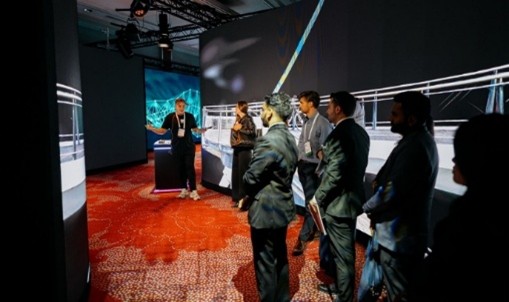
The iLab demonstrated next-generation digital infrastructure workflows through hands-on experiences with AI, digital twins, and cloud-enabled collaboration. Attendees saw how connected data environments streamline design, construction, and asset management, offering a preview of the future of intelligent engineering.
The conference enabled deep engagement among engineers, infrastructure leaders, and technology innovators from organizations such as DAR Engineering, AVS United Services, TATA, SuperDNA 3D, and Geospatial World. These interactions provided insights into emerging trends, digital transformation strategies, and lessons from large-scale global projects.

The closing ceremony honored outstanding achievements across 12 categories:
Bridges & Tunnels: Italferr, Italy
Cities, Campuses & Facilities: Voyants Solutions, India
Construction: Deloitte & Vale, Brazil
Energy Production: Baosteel Engineering, China
Geospatial & Reality Modeling: Al Madinah Region Development Authority, Saudi Arabia
Project Delivery: Egis, France
Rail & Transit: PT Kereta Api Indonesia
Roads & Highways: JKRS, Malaysia
Structural Engineering: AVS Engineers & Partners, India
Subsurface Modeling: Fervo Energy, US
Transmission & Distribution: China Energy Guangxi Electric
Water & Wastewater: PT Wika Tirta Jaya Jatiluhur, Indonesia
Special Awards:
Bentley-Envision Award for Sustainability: GeoStruXer, Saudi Arabia
Educator of the Year: Irfaan Peerun, Griffith University, Australia
The evening concluded with live music, dinner, and a celebration of collaboration and innovation. YII 2025 emphasized Bentley’s “Connected Intelligence” vision—bringing together AI, open data, and digital twins to build resilient, efficient, and human-centered infrastructure.