Representative End User Clients







Representative Automation Clients







Representative Software Clients









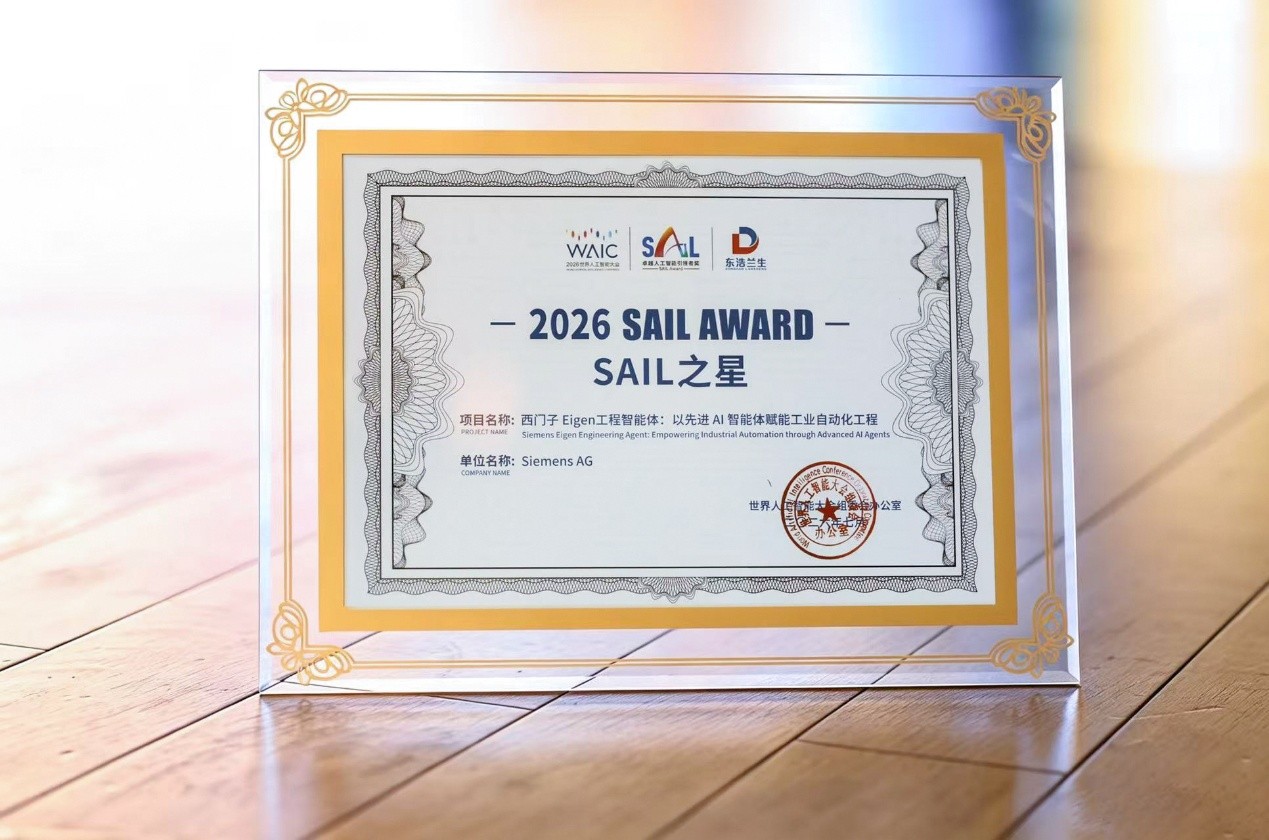
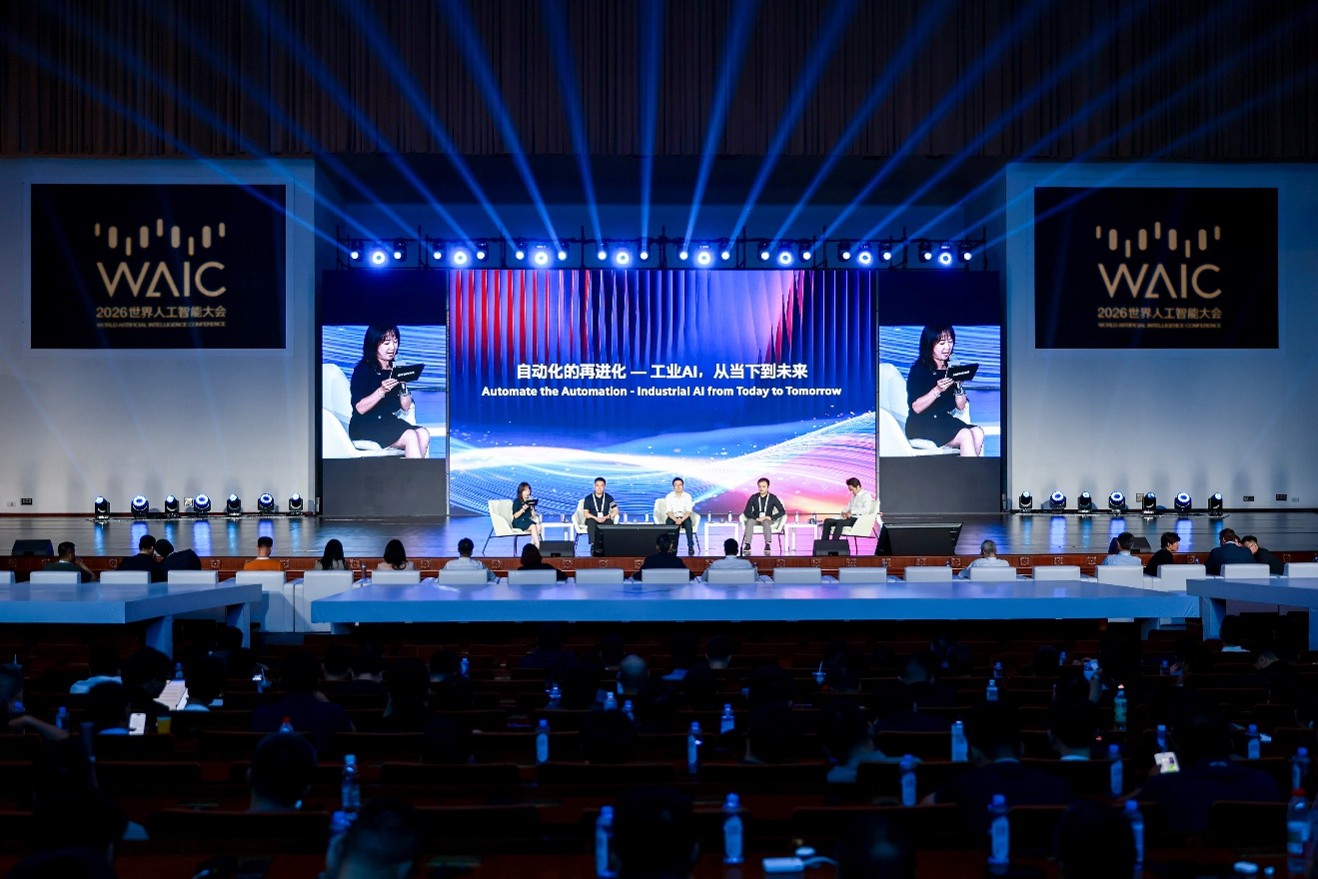
On July 18, 2026, during the 2026 World Artificial Intelligence Conference (WAIC 2026), Siemens hosted the “Industrial AI Comes to Reality—Siemens Eigen Engineering Agent Launch Event” at the Red Hall of the Shanghai World Expo Center. The event featured a special roundtable dialogue, gathering more than 900 industry pioneers, technical experts and ecological partners to discuss the re-evolution of automation and the practical deployment path of Industrial AI. At the event, Siemens announced the full availability of the Eigen Engineering Agent in China. It is Siemens’ first AI agent globally purpose-built for industrial automation engineering. Driven by its groundbreaking industrial value, the product won the WAIC 2026 SAIL Star Award.
“Over the past two WAIC sessions, I have shared the same viewpoint: ‘Consumer AI makes the headline, Industrial AI makes the real impact,’” said Dr. Xiao Song, Executive Vice President of Siemens AG and Chairman, President & CEO of Siemens China.
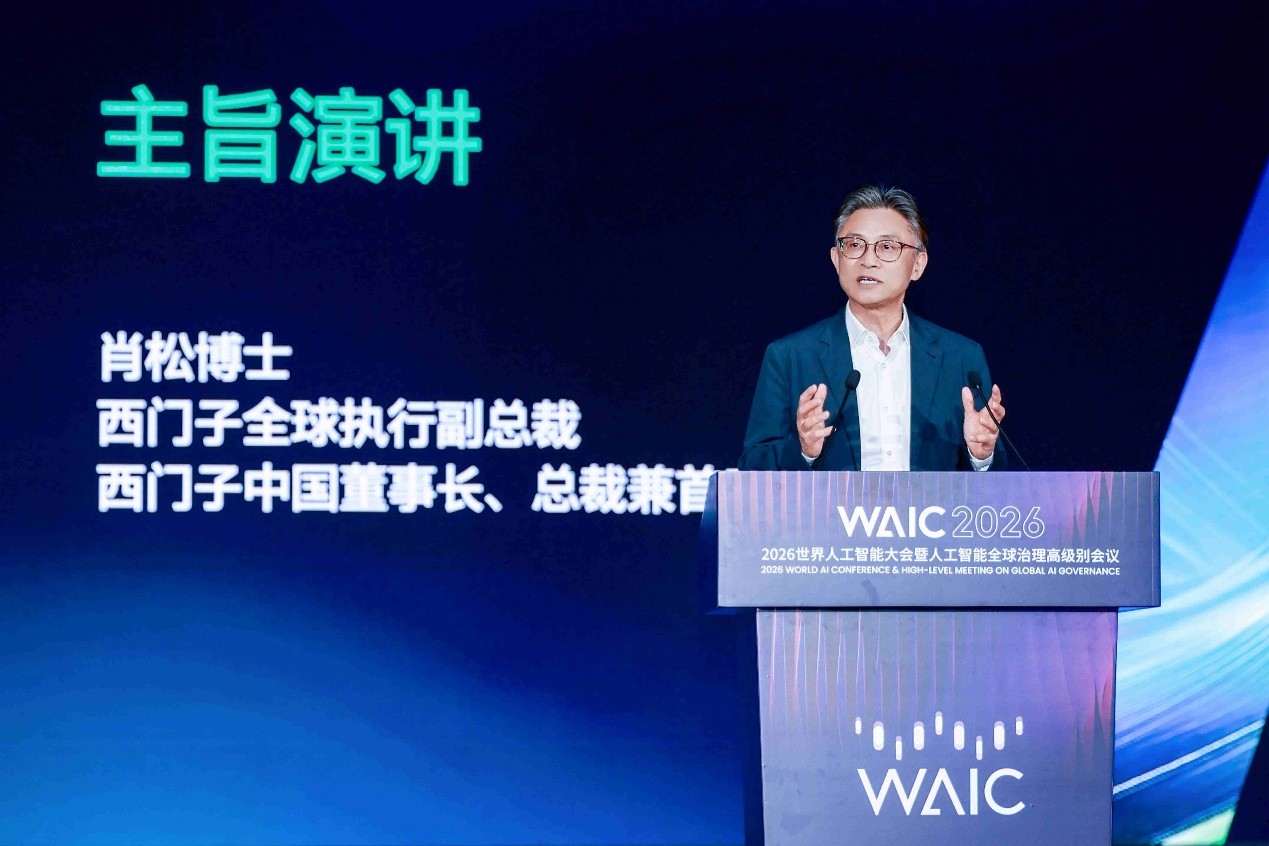
Taking the factory deployment of embodied intelligent equipment as an example, Dr. Xiao illustrated the fundamental differences between Industrial AI and consumer AI. Factory operators care far more about operational stability, deployment cycles, labor input, error risks and transformation costs than model parameters or architectural designs. Unlike consumer products featuring short iteration cycles and low trial-and-error costs, industrial production lines operate continuously year-round. A single program error may lead to shutdowns, rework and even safety hazards.
“The core value of Industrial AI does not lie in innovative concepts, but in its ability to penetrate R&D, production, operation and other key links, solve tangible problems in real scenarios and deliver measurable returns.” Dr. Xiao summarized this philosophy as AI for Real—moving beyond impractical demo showcases to enable AI to fully comprehend industrial mechanisms, process constraints and operational data, creating industrial intelligent tools that are practical, user-friendly and reliable. The core value was widely recognized by roundtable guests, who summarized four major strengths of Industrial AI empowering manufacturing: efficiency booster, stable operational partner, innovation driver and forward-looking prediction tool. As emphasized by participants, stability serves as the fundamental prerequisite for quality, cost, efficiency and low-carbon goals in industrial manufacturing; advanced AI technologies mean nothing without stable on-site implementation.
Different from traditional AI tools that only provide advisory suggestions, Eigen Engineering Agent independently delivers end-to-end industrial automation engineering planning, execution and closed-loop verification. It understands natural language project requirements and autonomously completes PLC programming, HMI interface development, equipment configuration and iterative optimization. By taking over repetitive tasks such as configuration, coding and parameter debugging, Eigen frees engineers from mechanical labor and allows them to focus on high-value work including process optimization and production line architecture design, realizing the innovative paradigm of “automating automation.” Currently deployed in over 100 enterprises across 19 countries worldwide, Eigen received thousands of Chinese domestic enterprise applications within two weeks after opening Chinese pilot access, with CASMT and Tztek Technology among the first batch of pilot partners.
While the main launch session demonstrated Eigen’s technical capabilities, the supporting roundtable dialogue showcased its quantifiable industrial value through practical use cases across four segmented sectors, analyzing inherent bottlenecks of traditional automation and differentiated Industrial AI breakthrough paths.
Zhao Dan, President of CASMT, shared pain points from the perspective of a non-standard equipment integrator. Traditional configuration for a new energy production line used to take two to three weeks, and product or process iterations required massive repeated manual program modifications that easily caused human errors.
With Eigen, engineers only need to input basic business requirements to generate programs and configurations rapidly, cutting program development and on-site debugging cycles by 30 percent each and reducing labor and material losses by 10 percent. “Eigen acts as a critical efficiency lever for non-standard project delivery, shifting engineers’ focus from repetitive configuration to process optimization and customized solution polishing, and accelerating standardized replication of non-standard production lines,” Zhao commented.
Regarding the long-term development of the industry, Zhao pointed out that the core of Industrial AI lies in ensuring engineering certainty, which relies on data preprocessing models and a unified CAX agent base that connects the full workflow of design, simulation and coding. CASMT has independently built the CASMT AI+CAX platform and cooperates with Siemens on the Eigen Engineering Agent as well as the broader Industrial AI ecosystem.
Chen Haoming, Director of the Intelligent Manufacturing Institute at Changan Automobile’s Manufacturing Center, analyzed the inherent conflicts in vehicle manufacturing. Traditional automation is designed for mass standardized production, which clashes with the booming personalized and customized demands in the automotive market. New production lines cannot be built for every new vehicle model, making zero-stop flexible transformation essential.
Chen introduced Changan Automobile’s “one body, two wings” AI strategy, in which the “body” refers to intelligent agents, while the “two wings” cover customer-facing AI applications and AI-enabled business operations. In manufacturing, Changan is exploring the use of Eigen in production-line installation and commissioning. More broadly, the company is extending AI applications upstream into areas such as process design and product-process collaboration, as part of an AI transformation spanning R&D, production, supply, sales, operations and services.
Chen also pointed out that talent requirements have undergone fundamental changes. Rather than focusing primarily on coding speed, companies increasingly need multidisciplinary engineers who understand industrial scenarios and customer processes, can use AI tools proficiently and communicate effectively with customers.
Tan Hongzhi, Senior Engineer at the Central Research Institute of Shanghai Electric, focused on predictive maintenance for energy equipment. He stated that industrial equipment requires both efficient operation and precise downtime control, as an unplanned one-hour shutdown of a million-kilowatt generating unit may cause economic losses of hundreds of thousands of yuan.
Shanghai Electric is exploring two predictive-maintenance areas with Siemens: intelligent operation and maintenance for offshore wind power, and health monitoring for industrial machine tools. In offshore wind, equipment condition and weather forecasts could help determine the optimal sequence and timing for turbine maintenance, reducing operational costs and lost power generation. For machine tools, AI could help identify suboptimal operating conditions and analyze their relationship with product quality and production capacity.
Tan stressed that Industrial AI practitioners must be deeply rooted in production sites and understand how factories and equipment actually operate. He also highlighted the importance of data and corpus quality, estimating that they may account for 60 percent to 70 percent of AI performance in some industrial applications.
Huang Yun, Deputy General Manager of Tztek Technology, shared exponential value gains in the precision inspection sector. While intelligent production lines may require higher upfront hardware investment, the data and optimization capabilities they provide can generate significant long-term returns.
Tztek is among the first Chinese companies piloting Eigen, which Huang said can reduce large amounts of repetitive low-code engineering work and allow experienced R&D engineers to focus on developing the company’s own process AI software.
Separately, Huang cited a customer application of Tztek’s self-developed AI process software. The solution reduced testing time for a bottleneck process by 60 percent, meaning that a task previously requiring 100 inspection devices could be completed with 40. The reduction also generated savings in factory space, maintenance staffing and energy consumption. Huang described this as an exponential combination of benefits rather than a simple linear cost reduction.
Huang also mentioned that proactive training and incentive mechanisms are essential to reduce engineers’ resistance to AI tools. In future recruitment, the company expects to place greater emphasis on logical thinking and system-architecture capabilities rather than coding skills alone.
Roundtable guests reached a consensus: Industrial AI empowers rather than replaces human engineers. It undertakes repetitive and mechanical engineering work, freeing professionals to focus on process innovation and high-value solution design. Siemens will continue to improve professional training and certification systems to support engineers’ career transformation. Looking ahead, the industry will embrace Agent-to-Agent collaboration. With declining hardware costs and improving AI inference accuracy, AI-enabled equipment, workshops, and factories will be implemented in phases. The industry urgently needs a unified CAX intelligent agent base covering design, simulation and programming to ensure full-process engineering certainty and build an open and collaborative Industrial AI ecosystem.
Michael Schrapp, Global Director of Data and Artificial Intelligence at Siemens, unveiled Siemens’ comprehensive Industrial AI strategic layout. With one-third of global factories equipped with Siemens PLC controllers, Siemens boasts a full-spectrum industrial service system covering R&D, engineering design, manufacturing, and operation and maintenance—a key differentiator from general-purpose IT providers.
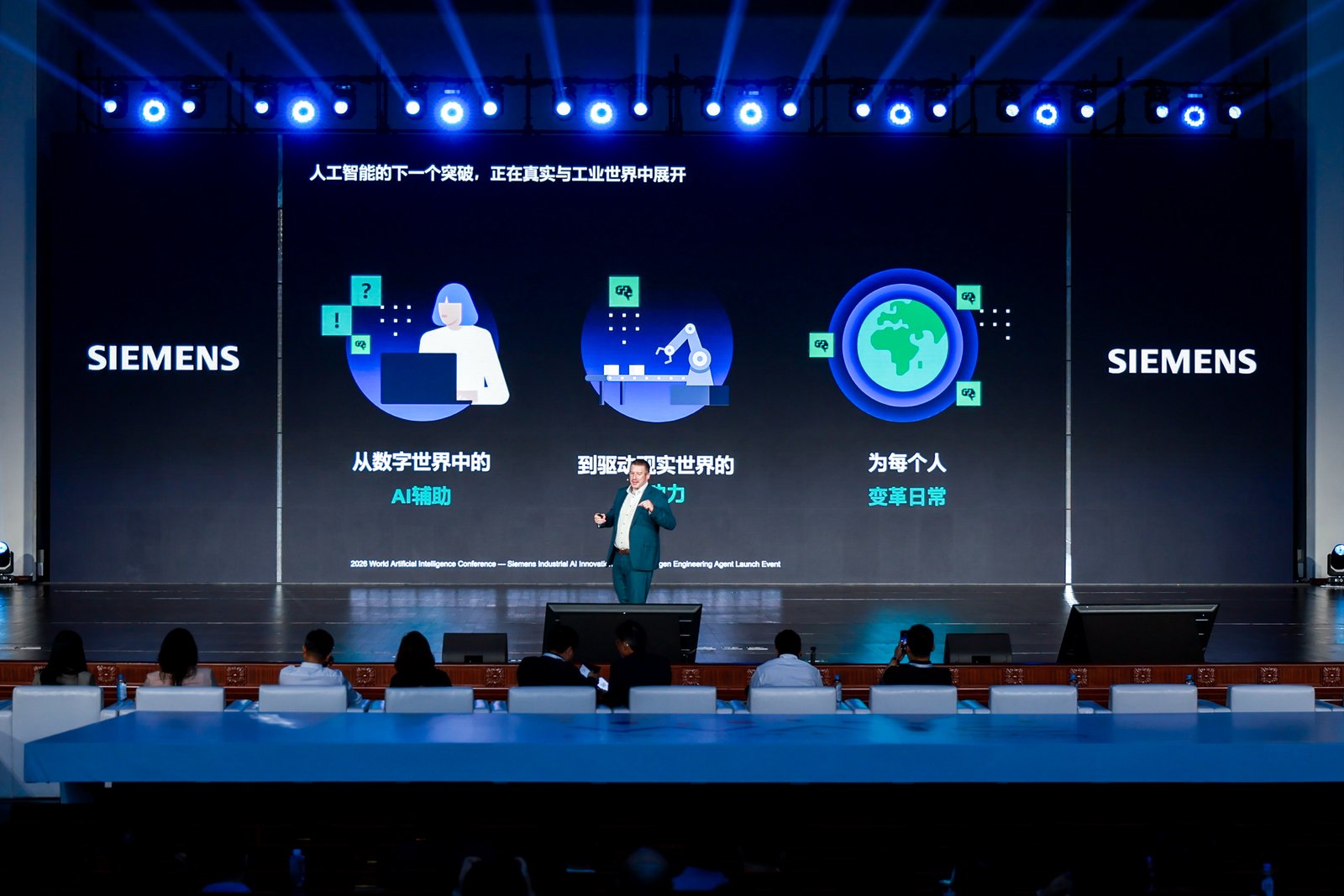
Manufacturing generates massive industrial data every day, most of which remains isolated and underutilized. Siemens’ core goal is to break data silos across systems and lifecycles to realize cross-scenario data interconnection and contextual collaboration. Leveraging operational experience from over 100 self-owned global factories, Siemens continuously integrates real industrial domain knowledge into AI product systems to build differentiated competitive strengths.
In terms of technological evolution, Industrial AI is advancing from traditional predictive maintenance to generative AI and engineering agents and will eventually realize large-scale physical AI implementation. While Eigen currently focuses on improving engineering efficiency in automation, similar AI capabilities will extend to the entire industrial value chain, turning autonomous production from a conceptual trend into industrial reality.
Concurrent with the conference, the 4th Siemens Xcelerator Open Competition officially launched. Centered on Eigen Engineering Agent application development, the event targets automation engineers and system integrators, exploring the value of industrial agents in engineering efficiency improvement and process experience digitalization, and continuously expanding the Industrial AI ecological boundary.
From its global debut at Hannover Messe to its China launch at WAIC in Shanghai in less than three months, the rapid pilot scaling of Eigen reflects a profound shift in China’s Industrial AI demand—from tentative exploration to active deployment and future scaling.
As Dr. Xiao Song concluded: “Industrial AI is not conceived in laboratories, but developed, refined and verified through real industrial projects before gradually being scaled.” With 900 industrial practitioners gathering at the Shanghai World Expo Center, Eigen bringing AI into real automation-engineering workflows, and industry representatives sharing practical applications across automotive manufacturing, energy equipment and precision inspection, industrial AI has firmly taken a solid step forward from conceptualization to real industrial implementation.