Representative End User Clients







Representative Automation Clients







Representative Software Clients









On 7 August, the ARC Forum in Singapore brought together more than 180 industry leaders, technology providers, automation end users, and innovators at the Singapore Marriott Tang Plaza Hotel for its second Singapore Industry Leadership Forum. The full-day program featured 22 expert speakers and 14 presentations with real-world case studies. Sessions explored four key themes shaping the future of industrial automation—Future Automation: Open, Standardized, Software-Defined; Industrial 5G: Connecting the Smart Factory; Artificial Intelligence for Industry; and 21st-Century Operations: Smart, Secure, and Sustainable—and included two panel discussions on open standards and artificial intelligence.

The forum opened with a keynote address by Chandran Nair, CEO of Universal Vapor Jet Corporation (UVJC) and a veteran in industrial automation and advanced manufacturing. Nair traced the progression from early machinery to today’s intelligent operations, emphasizing that success in the AI era requires more than tools—it demands resilience, openness, and human-centered collaboration.
“While AI may change how factories are, work or will operate, the real transformation is still cultural, that is still, for now, cultural is still very much based on us, humans. […] We are, looking at, will people trust working alongside robots,” he noted. He described the emerging fifth industrial evolution as human-centric, sustainability-driven, and rooted in closer connections between technology and people.
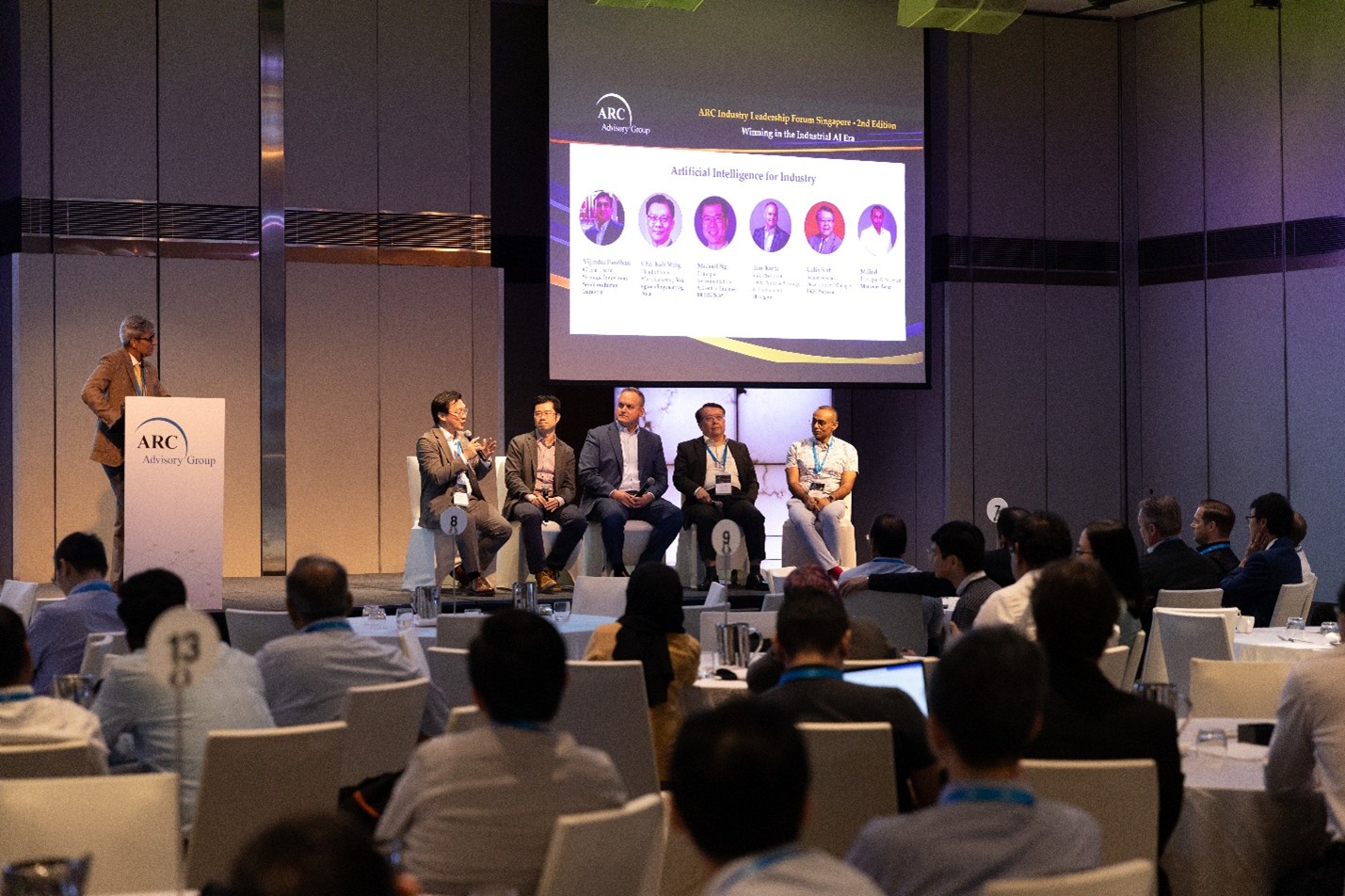
Artificial intelligence was a recurring theme throughout the forum, shaping discussions on open architecture, interoperability, connectivity, and future operations. The AI session featured perspectives from industry associations, technology suppliers, and end users, highlighting different approaches to adoption. Oliver Tian, Director and Founder of Oliver Tian Associates and affiliated with several industry associations including the Asia Pacific Assistive Robotics Association, set the tone for the discussion. Focusing on the industrial space, he addressed key issues with AI, underscored that AI is here to stay, and encouraged organizations to embrace it, learn with it, and leverage AI technologies to maximize impact: don’t struggle to be smarter than AI—be smarter with AI.
Chai Kah-Ming, Head of Smart Manufacturing at Yokogawa Engineering Asia, shared challenges in deploying AI solutions, the importance of selecting the right tools, and case studies showing how Yokogawa creates value for customers through AI. Michael Ng, Principal Instrumentation & Control Engineer, and Mohd Azlan Shah Abd Rahim, Staff Engineer Instrument & Control at PETRONAS, provided an end-user perspective, highlighting cybersecurity considerations in AI-enabled operations. Tom Kurtz, Vice President of EAM Portfolio Strategy & Enablement at Hexagon, explained why the digital backbone is foundational for AI and how Hexagon’s AI strategy leverages it to structure and enrich data, enhance decision-making, and make insights accessible across the asset lifecycle.
The track concluded with a panel discussion featuring additional experts Colin Koh, Senior Business Development Manager at LKH Precicon, and Milind, Senior AI Scientist at Mercedes-Benz, who shared diverse perspectives across industries and organizations.
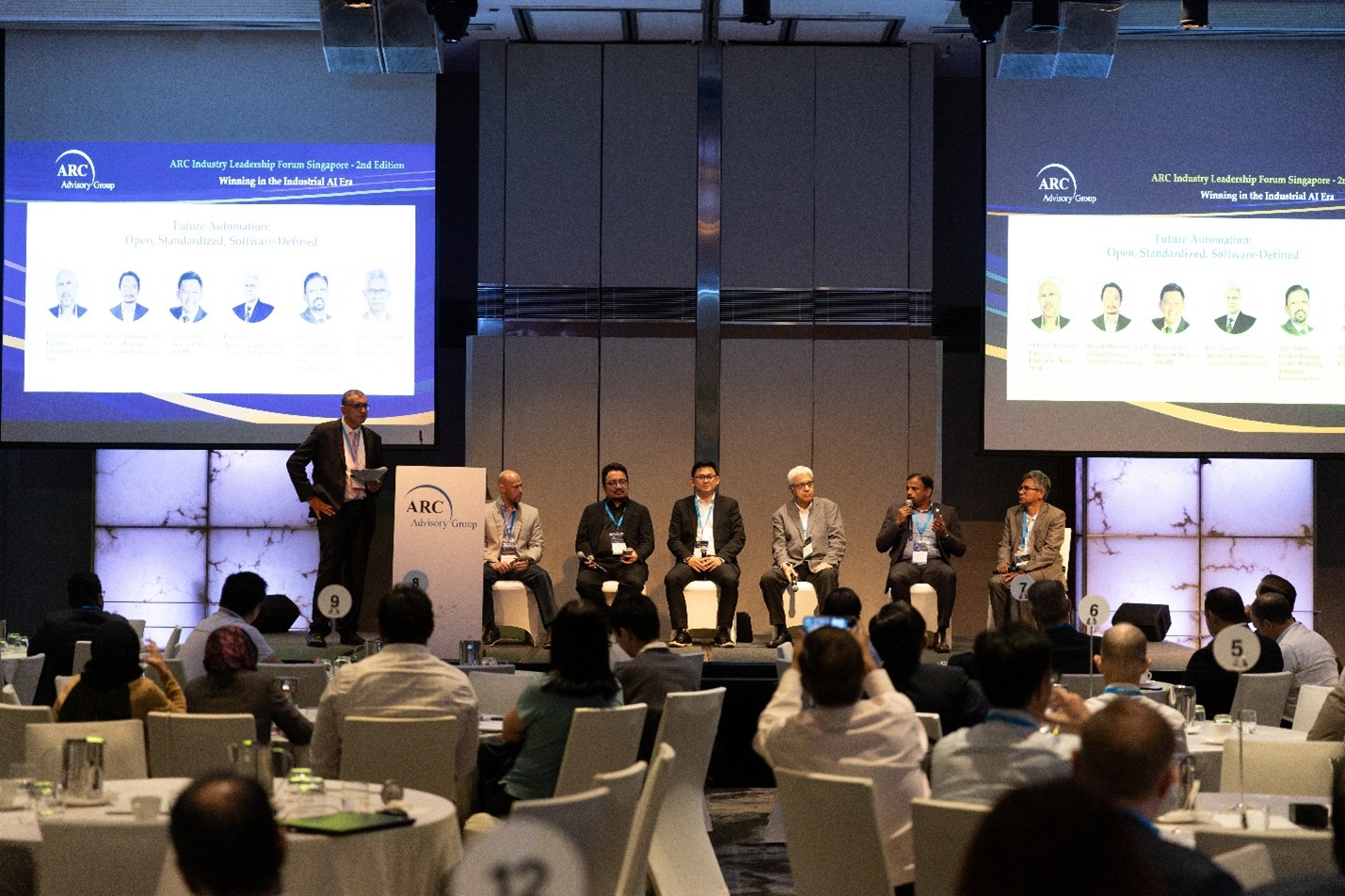
Data is the lifeblood of the Industrial AI era, and the Open Standards session highlighted how its flow, quality, and accessibility are central to success. Octavio Paschoal, Electronic Intelligence Agent at Nova Smar, showed how AI can complement O-PAS, enabling smarter, data-driven control in industrial automation. Megat Shamsul Arif of Tri Systems Engineering shared how his team is applying IEC 61499 and UniversalAutomation.org technology to upgrade offshore control systems, with the goal of making them more efficient, handling more data with less bandwidth, and increasing robustness. William Tanuwijaya, Technical Liaison at OPC Hub ASEAN, introduced the OPC Foundation Cloud Initiative, demonstrating how OPC UA can accelerate IT and cloud interoperability, support AI analytics, industrial data spaces, digital product passports, industrial metaverse, and digital twin applications, and provide standardized, secure, regulation-compliant cloud architectures.
The panel included Ravi Jagasia, Americas Representative of UniversalAutomation.org; Sharul A-Rashid, Chair (Elect) of ISA Asia Pacific; David Chia, Head of OPC Foundation ASEAN Hub; and Sujit John, Head of Regional System Marketing at Yokogawa Engineering Asia.
The Industrial 5G track featured four speakers, highlighting how advanced connectivity is transforming factories, autonomous systems, and robotics. Terence Wong, Head of APAC 5G Industry & IoT at GSMA, provided an overview of the 5G landscape in APAC and demonstrated how 5G creates value across industries through regional deployment case studies. Mohamed Firdaus, Senior Director of Enterprise Group at Singtel, offered the service provider perspective, explaining how private 5G networks in industrial and manufacturing settings leverage network slicing and the 700 MHz spectrum to deliver secure, reliable connectivity for smart factory operations. Ethan Kuch shared how ST Engineering uses 5G to connect multiple manufacturing sites, enabling AI-driven automation and scaling real-time operational intelligence across its plant network. Roy Lim, CEO of Robocore, discussed the adoption of 5G-powered robotics, the value it brings, and its deployment across industries.
The 21st-Century Operations track explored how emerging technologies are reshaping industrial operations, focusing on robotics, cybersecurity, and the transformation of operations through AI. Matthias Gronstedt, Managing Director at HHLA Sky, shared insights on autonomous operations and high-risk labor tasks to improve safety and efficiency. AJ Eserjose, Regional Director of OT-ISAC, highlighted why traditional threat reports often fall short in OT environments and used the UNC3886 case (a China-linked threat group recently reported to have targeted Singapore’s critical infrastructure) to show the importance of turning intelligence into actionable defense. Vikram Kalkat, Director of Strategic Services at ARC Advisory Group, presented a consulting case study on how ARC guided an end user in advancing their automation maturity and preparing for AI adoption.
Beyond formal presentations, the forum offered opportunities for networking, knowledge exchange, and engagement at exhibition booths. Across these interactions, a recurring theme emerged: success in the Industrial AI era depends as much on leadership, organizational readiness, and strategic foresight as on technical innovation. Human and cultural factors also play a pivotal role in the successful deployment of AI.
With strong participation and robust discussions, ARC Singapore 2025 showcased the emerging future of AI, highlighting the changes and capabilities needed to unlock its full potential. The forum emphasized the strategic role of AI and its vast potential for value creation, the importance of interoperability and open standards for data flow and multi-vendor integration, and the necessity of connectivity for handling high-volume data as AI takes physical form in robotics. It also underscored the critical importance of cybersecurity in enabling safe AI adoption and operational resilience. Collectively, these insights set the stage for continued exploration of industrial automation and operational readiness, as the community looks ahead to ARC Singapore 2026.
The event video highlights are available here