Representative End User Clients







Representative Automation Clients







Representative Software Clients









As airports increasingly adopt AI, automation, video analytics, mobile applications, and real-time operational systems, reliable connectivity has become essential infrastructure. Ericsson, Insight Enterprises, and the Metropolitan Airports Commission (MAC) have partnered to deploy a private 5G network at Minneapolis-St. Paul International Airport (MSP)—one of seven Twin Cities area airports operated by the MAC—to provide reliable wireless connectivity for airport operations and lay the foundation for future digital transformation initiatives. The airport is using the dedicated wireless infrastructure to improve connectivity for operational technologies while supporting future digital transformation initiatives.
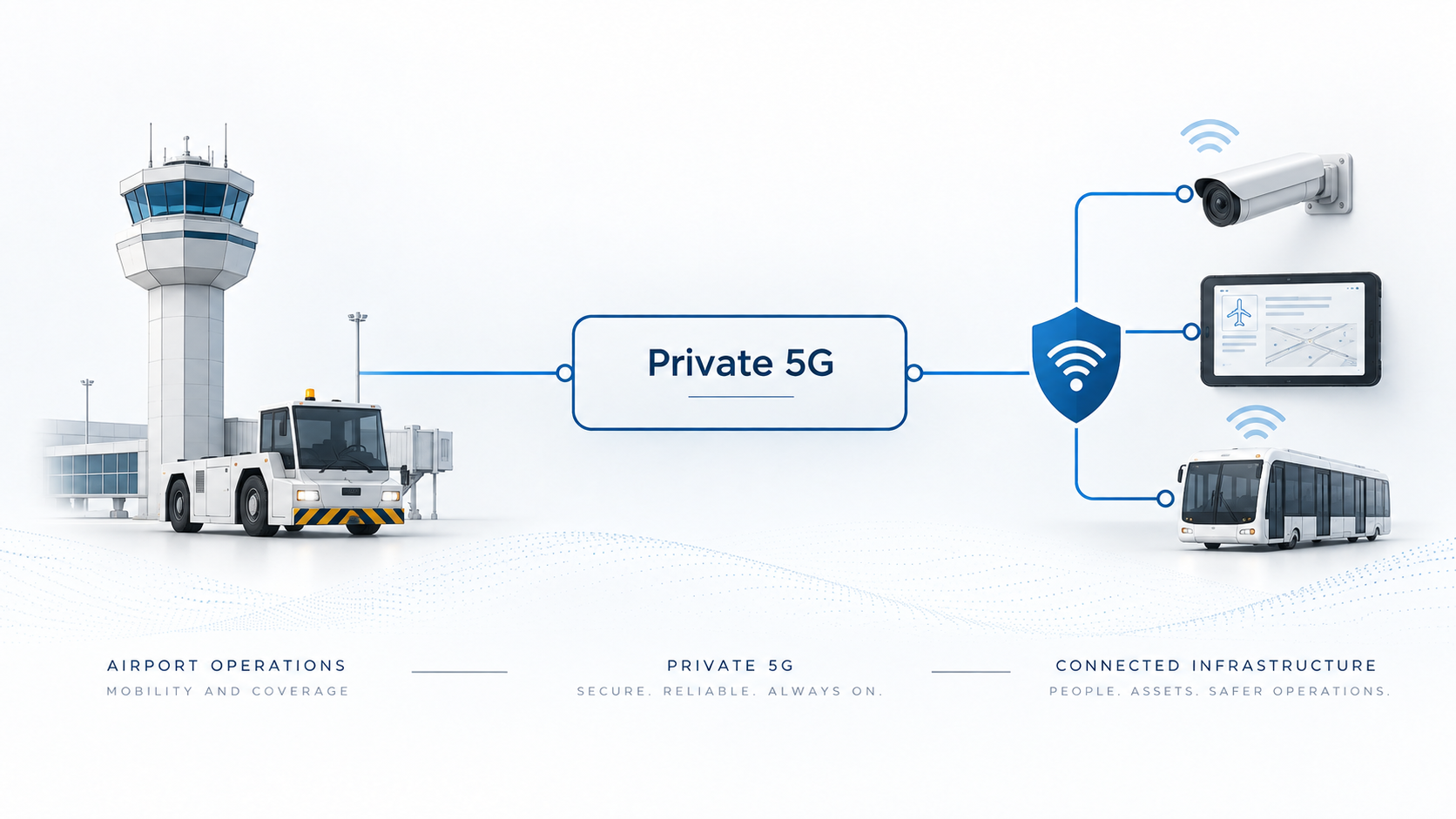
At MSP, modern operational technologies such as in-motion mobile devices, surveillance systems, and various internet applications for real-time data historically relied on Wi-Fi, which can be vulnerable to interference from unmanaged devices, operational obstacles on the airfield, and mobility challenges as equipment moves between access points. To address these challenges, the MAC sought a connectivity platform that would help provide broader, more seamless coverage with predictable, high-performance connectivity across MSP’s five-square-mile campus, spanning both indoor and outdoor environments. Rather than expanding Wi-Fi infrastructure or deploying additional fiber, the airport selected private cellular technology to address these requirements.
The new network gives MSP its own dedicated wireless infrastructure, separate from public cellular and Wi-Fi networks. The network supports key technologies by providing essential connections to video systems, common-use ticketing equipment, and mobile workforce applications. One of MSP’s early use cases includes a private cellular-enabled camera system that provides HD video monitoring on airport trams. Airport personnel use connected tablets throughout operational areas, while the network provides dedicated, secure cellular coverage across outdoor environments such as runways, taxiways, and gate areas.
The network also supports dozens of connected airport vehicles equipped with Ericsson Cradlepoint routers. These provide MSP teams with reliable access to operational applications across the airfield while enabling connectivity through both private 5G and public cellular networks when needed. Looking ahead, the MAC envisions extending connectivity to airlines, concessionaires, and other airport partners while expanding its own use to improve maintenance and operations.
The MSP deployment highlights the growing adoption of private cellular networks in transportation and critical infrastructure environments where mobility, reliability, security, and broad-area coverage are essential. Airports represent particularly challenging connectivity environments due to their large physical footprints, mixture of indoor and outdoor operations, and increasing dependence on connected devices and operational technologies. Private 5G provides an alternative to traditional wired and Wi-Fi-based architectures while enabling more predictable performance for mission-critical applications.
As organizations pursue digital transformation initiatives, private 5G is increasingly being evaluated as a strategic connectivity platform for mobile assets, edge applications, AI-enabled operations, and real-time data collection. Deployments such as MSP demonstrate how dedicated wireless infrastructure can support operational resilience while providing a scalable foundation for future innovation. ARC's ongoing research examines the evolving role of private cellular networks within industrial digitalization strategies and the broader industrial wireless networking market. Look for ARC’s upcoming update of our industrial Private Networks coverage.