Representative End User Clients







Representative Automation Clients







Representative Software Clients









The industrial workforce is changing, and the tools they use must change with it. As experienced operators retire and facilities become increasingly complex, plant managers are facing a critical skills gap. To bridge this divide, Human Machine Interface (HMI) software is undergoing a major evolutionary leap. It is no longer just a digital representation of a physical machine; it is rapidly becoming an active, intelligent partner on the factory floor.
Whether you are an end user modernizing a facility, a system integrator designing next-generation architectures, or a technology supplier validating your product roadmap, understanding the new baseline for HMI capabilities is critical.
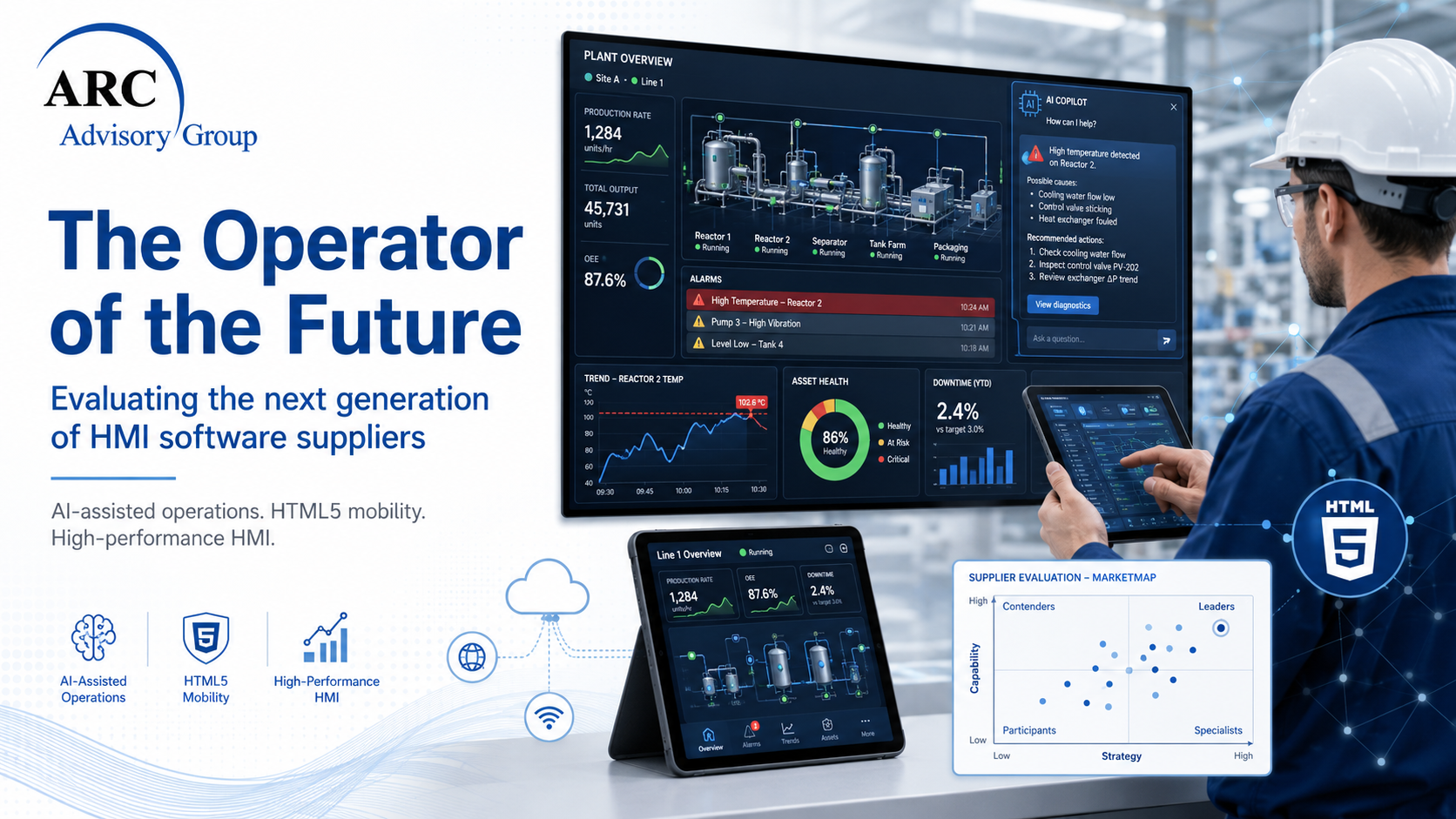
The most significant shift in the HMI market is the integration of Artificial Intelligence and Generative AI copilots. The HMI is shifting from a passive monitoring screen to a prescriptive assistant. Instead of simply flashing an alarm code that requires an operator to consult a manual, modern HMI software can suggest troubleshooting steps, predict imminent failures, and guide newer operators through complex resolution workflows in real time.
The era of tethering operators to fixed, thick-client terminals is ending. Today’s industrial environments demand true mobility. Built on web-native HTML5 architectures, modern HMI platforms allow secure, seamless access to plant data across ruggedized tablets, smartphones, and remote desktops. This untethers the workforce, allowing operators to monitor assets and make decisions from anywhere in the facility or the world.
More data does not equal better decisions. In fact, legacy HMI screens filled with brightly colored, cluttered graphics often create cognitive overload. The industry is rapidly adopting High-Performance HMI (HPHMI) design principles. By using muted, grayscale backgrounds and reserving bright colors exclusively for anomalies, modern HMIs provide immediate situational awareness, dramatically reducing the learning curve and reaction time for the newest generation of operators.
While understanding these overarching technology shifts is vital for high-level alignment, mapping which technology providers actually possess these next-generation capabilities requires a deeper look. The gated ARC MarketMap provides a definitive, multidimensional visual layout of leading HMI Software and Services suppliers. It evaluates each vendor based on its current execution of these advanced features and future strategic direction, giving users the data needed to de-risk the selection process.
Explore ARC’s complete portfolio of MarketMaps to discover how interactive supplier positioning grids can help evaluate vendors, benchmark technologies, and de-risk selection decisions across the industrial architecture.