Representative End User Clients







Representative Automation Clients







Representative Software Clients









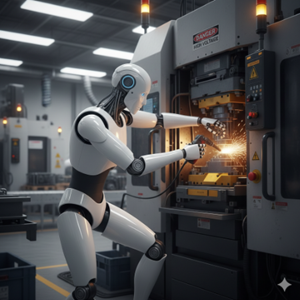
Looking back at previous CES themes—from ubiquitous AI to agentic AI—Physical AI emerging as a central theme at CES 2026, held from January 6–9 in Las Vegas, came as little surprise. By 2025, the concept was already gaining wider traction with the introduction of prototype humanoid robots, and CES 2026 reflected a prospective shift from mere proof of concept toward real-world applications. For the manufacturing and industrial community, several humanoid robots are now said to be ready for real industrial deployments. Coming from different parts of the world to converge at the event, these included Atlas (Boston Dynamics, US), the Agibot G2 Series (Agibot, China), AEON (Hexagon Robotics, Sweden), ALLEX (WIRobotics, South Korea), and 4NE1 (Neura Robotics, Germany).
Notable recognition at the event involving humanoid robot innovations further highlighted this shift. Hexagon Robotics’ AEON was named a 2026 Honoree in the Robotics category. Meanwhile, Boston Dynamics’ Atlas won the “Best Robot” award in the Best of CES 2026 by CNET Group. The selection panel of over 40 experts cited its naturalistic walking style and its transition toward a mass-production-ready platform optimized for autonomous learning in factory environments.
When it comes to robotics, Boston Dynamics is a well-known name for agile legged robots and advanced mobility platforms. With Hyundai Motor Group—an established industrial conglomerate that received a CES 2026 Innovation Award in Robotics for its MobED, a “Mobile Eccentric Droid” designed for complex terrains—having acquired a majority stake in the company in 2021, attention is increasingly turning to how Physical AI could scale within manufacturing. At CES 2026, Hyundai unveiled its AI robotics strategy under the theme Partnering Human Progress. At its core, the strategy emphasizes human–robot collaboration, collaboration among AI leaders, and the development of an end-to-end robotics value chain. Partnership is clearly central to Hyundai’s approach.
Industrial AI is not a standalone component. Building machines that can reliably sense, compute, and act in real time requires the integration of multiple layers—hardware, sensing, AI models, edge and cloud infrastructure, and deep industrial know-how. Delivering AI at industrial scale increasingly depends on partnerships among robotics manufacturers, AI technology providers, and industrial software companies. This ecosystem-based approach reflects a broader shift: intelligence in the physical world is most effective when specialized competencies are combined into cohesive, deployable systems. With Boston Dynamics’ robotics expertise, Hyundai’s manufacturing experience, and collaborations with AI leaders such as Google DeepMind, the strategy appears well aligned with advancing next-generation industrial AI.
Hexagon Robotics also highlighted a strategic partnership with Microsoft at CES 2026. The division—formed in March 2025 to focus on industrial automation—had already introduced its industrial humanoid AEON in June 2025. Designed to navigate complex environments and perform tasks such as inspection and defect detection, AEON is being positioned for industrial use. The partnership with Microsoft, alongside the use of NVIDIA’s robotics and AI technologies, combines Hexagon’s sensing capabilities with scalable AI, moving AEON closer to production-ready industrial applications.
Meanwhile, the pace of development continues to accelerate. Closer to home in Southeast Asia, Agibot has made a recent move with a launch in Malaysia — opening its first Robotics Experience Centre outside China, held in partnership with I‑Berhad. Its portfolio includes industrial-grade humanoids such as the G2 series showcased at CES, with the centre providing a platform to demonstrate their capabilities to regional audiences.
CES 2026 demonstrated that Physical AI has moved beyond experimentation. AI is no longer confined to digital interfaces; it is becoming tangible, operational, and increasingly embedded in industrial environments. Across robotics, infrastructure, and industrial software, the emphasis is shifting toward collaboration—between humans and machines, and among technology providers themselves. Keeping humans in the loop remains central.
The event also marked the beginning of a broader conversation about how Physical AI could reshape industrial automation in the years ahead.