Representative End User Clients







Representative Automation Clients







Representative Software Clients









PTC announced the availability of the new FeatureScript MCP Server capability in its Onshape CAD and product data management (PDM) platform. Available through the Onshape Labs initiative, the capability helps to enable engineers to create custom CAD features using natural language and AI.
Engineers can describe the functionality they need, and AI can help to build, test, debug, and refine the corresponding custom features in FeatureScript.
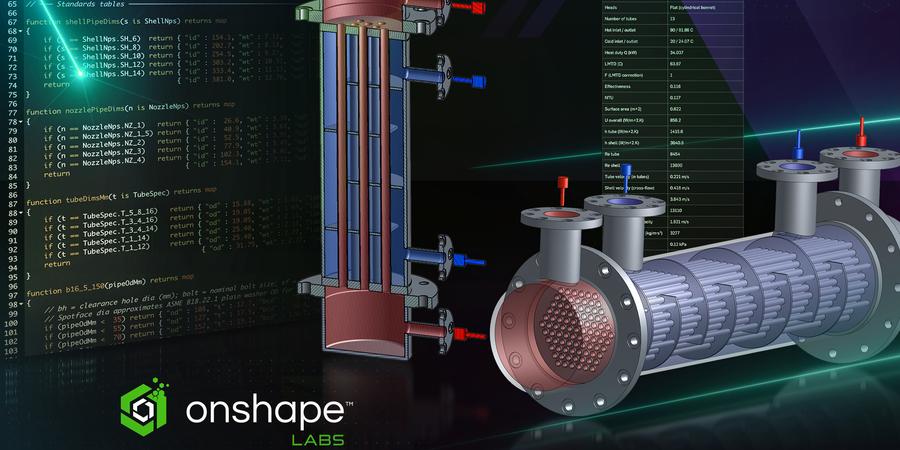
FeatureScript is Onshape’s programming language for CAD automation. It helps to enable organizations to capture engineering knowledge, automate repetitive design tasks, and develop custom design tools tailored to specific workflows.
The new FeatureScript MCP Server extends these capabilities to coding large language models (LLMs), including Claude, ChatGPT, and Gemini. Built on the Model Context Protocol (MCP), the server enables AI systems to connect directly with Onshape FeatureScript code.
Rather than limiting AI use to generating individual CAD models, the approach helps to enable engineers to use natural-language instructions to create reusable FeatureScript-based capabilities. Once developed, these custom features can be shared across teams and projects, allowing organizations to help turn established engineering practices into repeatable design tools.
This text-to-code-to-CAD approach can also make CAD customization more accessible to engineers who may not routinely work directly with FeatureScript code.
The FeatureScript MCP Server builds on PTC’s broader expansion of AI capabilities within Onshape.
In July 2026, PTC launched Onshape Labs as an early-access environment for testing emerging AI and automation capabilities within product development workflows. At the time, the FeatureScript Model Context Protocol Server was among the capabilities PTC outlined for the program, alongside AI agents, drawing validation, AI-assisted rendering, and robotics simulation.
ARC noted that the FeatureScript capability could make CAD customization more accessible by translating natural-language instructions into code and geometry. However, AI-generated outputs and automation still require engineering review to help ensure that resulting designs meet functional, manufacturing, safety, and regulatory requirements.
The new release moves the FeatureScript MCP Server from an announced Onshape Labs capability into availability within the program.
PTC has also been expanding AI assistance elsewhere in Onshape. Its latest Onshape AI Advisor release introduced real-time design guidance and outlined additional agent-based workflows, including FeatureScript generation and automated engineering operations.
The FeatureScript MCP Server also aligns with PTC’s broader Intelligent Product Lifecycle strategy, which focuses on establishing a consistent product data foundation and extending that information across engineering and other enterprise functions.
Onshape combines CAD and PDM within a cloud-native environment, providing product history, design relationships, versions, and other engineering context that can support AI-assisted workflows. ARC has previously highlighted the importance of this contextual product data as AI capabilities move beyond general-purpose generation toward engineering-specific tasks.
PTC is following a similar direction across its broader product development portfolio. Creo 13 and Creo+ 13.3, released earlier this year, introduced Creo AI Assistant to provide embedded guidance within CAD design workflows.
By connecting LLMs directly with FeatureScript, PTC is extending AI from design assistance toward the creation of reusable engineering automation. The value of the approach lies not only in generating an immediate design output, but also in capturing engineering practices within tools that can be reused across future workflows.
ARC has been tracking PTC’s expansion of AI across CAD, PDM, and engineering workflows, including the evolution of Onshape from embedded AI guidance toward AI-assisted automation and code generation.
PTC Launches Onshape Labs to Test AI Capabilities Within Product Development Workflows examines the launch of Onshape Labs and PTC’s plans for AI agents, FeatureScript MCP integration, drawing validation, rendering, and robotics simulation.
PTC Strengthens CAD AI Offerings With Latest Onshape AI Advisor Release looks at the evolution of Onshape AI Advisor and PTC’s roadmap for FeatureScript generation and agent-based engineering workflows.
PTC Adds Embedded AI Guidance to Creo Design Workflows examines PTC’s introduction of Creo AI Assistant and its broader effort to embed AI directly into engineering design environments.
Together, these developments show PTC moving from AI-assisted guidance toward more integrated engineering automation, with product data, CAD context, and reusable engineering knowledge forming the foundation for increasingly capable AI-enabled design workflows.