Representative End User Clients







Representative Automation Clients







Representative Software Clients








The 2016 version of Rockwell Automation Fair took place in Atlanta the week of November 7. With new CEO Blake Moret leading the way and the Rockwell Automation Connected Enterprise theme on full display, the event was a microcosm of industry in transition.
Mr. Moret opened up Automation Perspectives with a talk that laid out the company’s vision for the market and Rockwell Automation's role within it. He emphasized three major and interrelated market drivers impacting the company’s business strategies. The drivers mentioned are:
Ultimately, Rockwell Automation’s response to these market drivers boils down to harnessing data and domain knowledge. Mr. Moret stated that Rockwell Automation knows where all the high-value operational data is and how to use it. He indicated that the company will use this data and domain knowledge to take a leadership role in helping Rockwell Automation customers define and execute IT/OT convergence strategies.
Versus its competitors, the company believes it is well positioned to do so because of its historic roots in and knowledge of operational processes and technology. This knowledge is the foundation of Rockwell Automation's connected enterprise, which enables the company to:
Of course, Rockwell Automation represents the OT side of convergence. It is interesting to hear providers on both sides of the IT/OT convergence issue stake claim to the market leadership role of helping customers develop and execute IIoT-enabled strategies. It's becoming a tug of war between these entities with roots in either IT or OT.
Both sides have valid arguments as to why they are best positioned to lead. On one hand, OT companies like Rockwell Automation do have deep expertise in operational processes and equipment. They claim they understand where the data is and what it means. As well, they have domain knowledge that enables them to provide guidance for how end users can move toward a connected enterprise and what benefits they should expect.
Conversely, IT providers lay claim to deep expertise in data management. They understand data across the management continuum. Big data, governance, security, scalability, and mobilization are core competencies. As well, they have a good understanding of how unstructured data fits into the overall IIoT and analytics picture.
It will be interesting to keep an eye on this tug of war. Neither side has a perfect claim as to their capacity to lead (rather than enable) digital transformation. The results of the leadership may ultimately be in the form of unlikely and innovative partnerships across the many intersections of convergence. As well, some providers are addressing gaps by quickly adding capabilities to their portfolio, risking large investment multipliers for speed to market and customer share.
On welcome area of discussion was the role of IIoT as a solution to knowledge management and transfer challenges. Knowledge management is something I’ve discussed before, and I believe it is one of the central benefits IIoT can deliver. Many companies mention knowledge management, but they do so in a way that seems more an output of IIoT solutions rather than a major tenet.
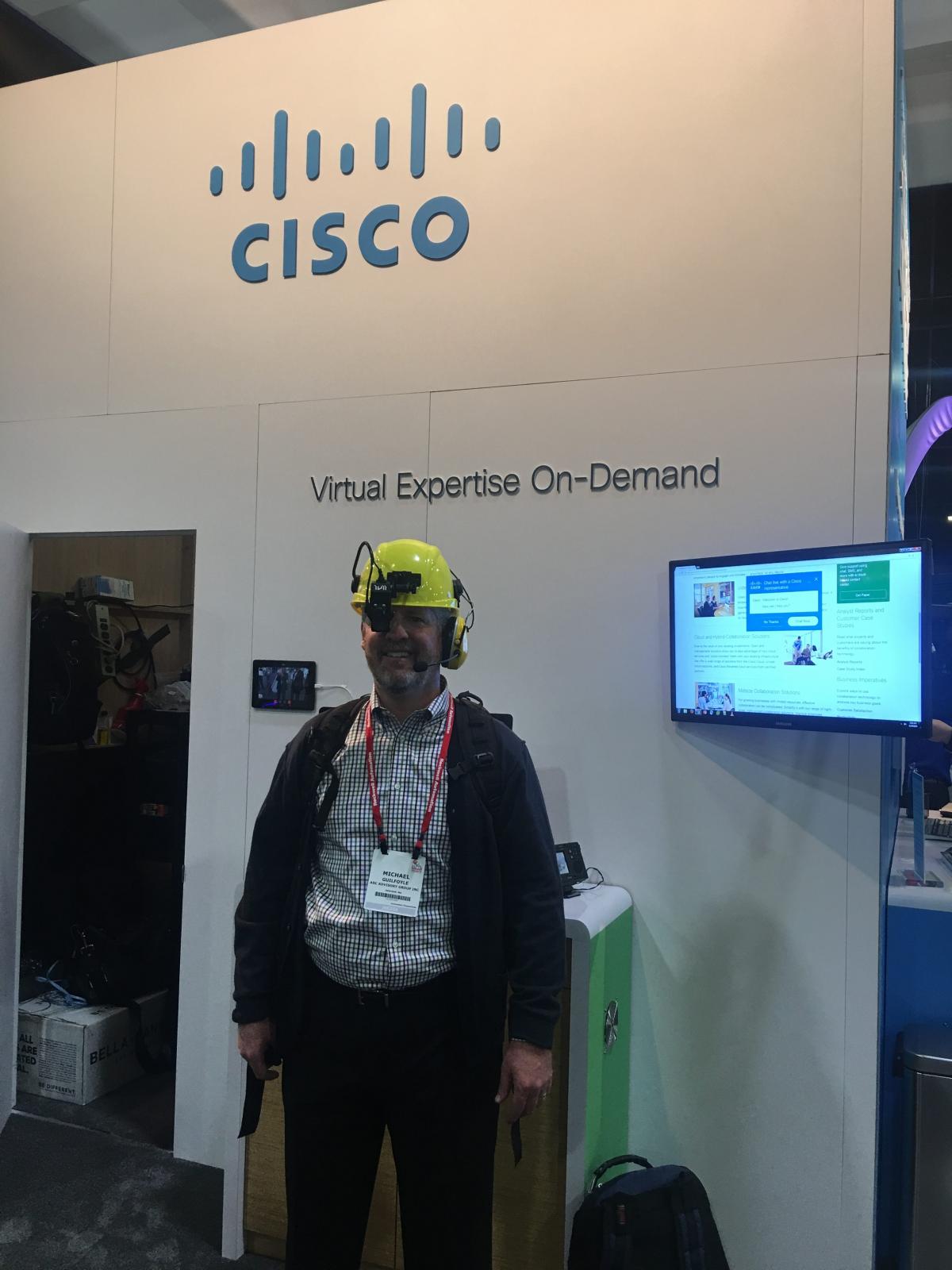
That’s not the case with Rockwell Automation, as their thinking in this area seems mature. Conversation on the topic over the course of the week included the usual – capturing the knowledge of retiring workers. However, we spent a good deal of time also talking about the benefits of training cost models that rely on augmented reality instead of traditional methods. Another example was a discussion about how remote monitoring solutions can be leveraged by end users as a recruitment and retention tools of urban talent.
This attention to knowledge management is a good thing for Rockwell Automation and the market. For the company, it’s likely a component of their emphasis on domain expertise as a competitive differentiator.
Analytics were a point of emphasis. Productivity and safety uses cases were abundant. The examples I saw used historic performance data, combined with good monitoring capabilities.
Historic, structured data analytics are becoming common for many analytics providers. Like many others on the OT side of business, Rockwell is still building upon its roots by now adding new uses of these analytics to its portfolio. It is keeping just ahead of its customers’ pace of market adoption.
Rockwell Automation will need to accelerate education of its market about where and how to embrace these types of capabilities. At the same time, the company will also need to increase its pace of adoption of more advanced forms of analytics being offered by the larger companies it is now consistently competing against.
IIoT adoption, including advanced analytics, is a bit of a funny thing—end users value its benefits but are often very puzzled as to how to get started within the context of their existing business processes. With IIoT, market education isn’t about seeding the market for a sale or trying to push brand supremacy. It’s a necessary component of digitalization and the change management inherent within connected environments.