Representative End User Clients







Representative Automation Clients







Representative Software Clients








In the dynamic world of industrial automation, pressure transmitters are essential for measuring the force exerted by liquids or gases and converting it into electrical signals. Widely used across sectors such as oil and gas, refining, chemicals, water and wastewater, and power generation, these devices are now being revolutionized by artificial intelligence (AI), which is expanding their capabilities and opening up new industrial use cases.
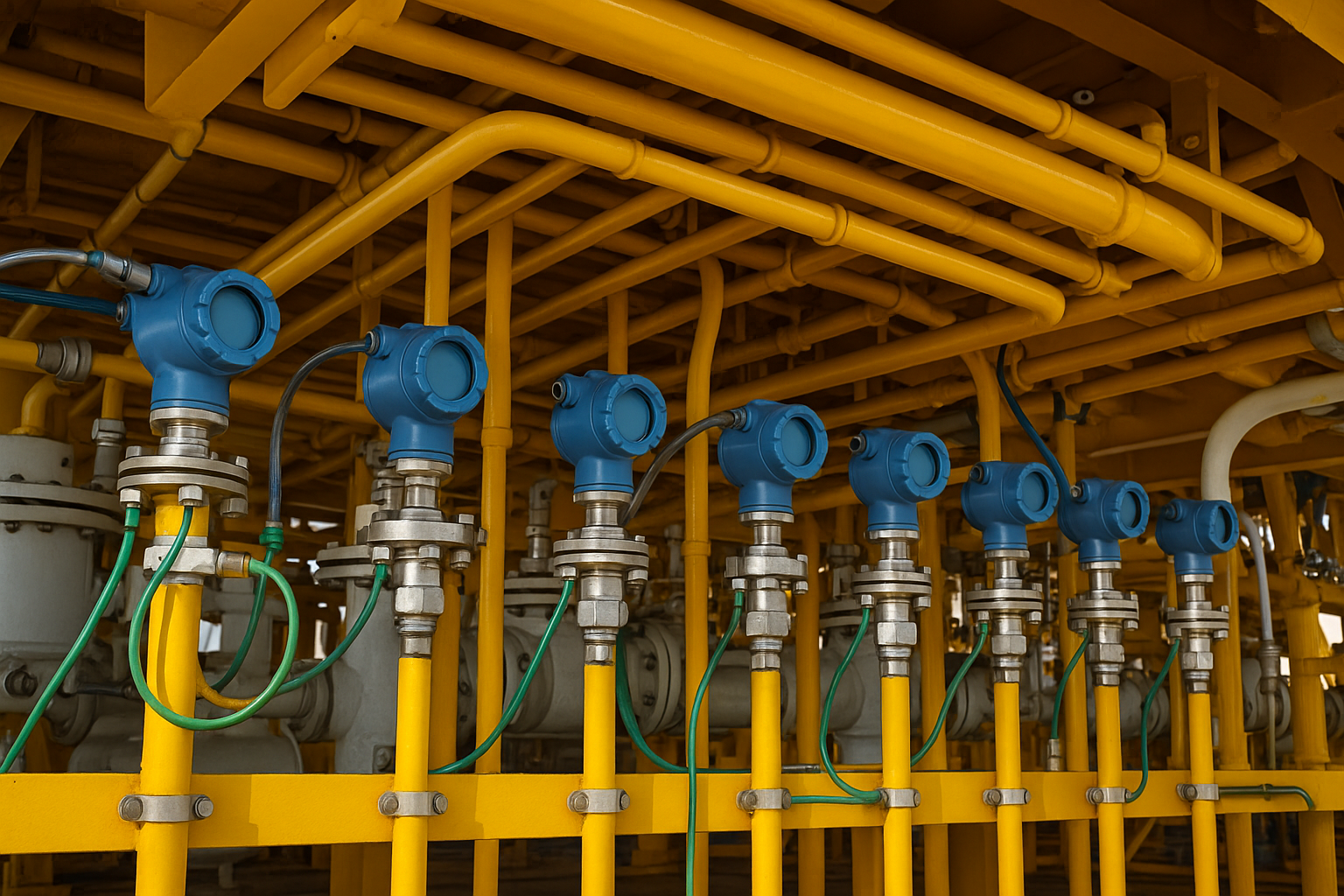
The future of pressure transmitters with AI is bright, as AI integration continues to drive innovation and increase the focus on smart devices and digital connectivity.
AI integration in pressure transmitters brings several key benefits. These smart devices can perform self-diagnostics to detect issues early, helping reduce downtime and maintenance costs. By using AI algorithms to process real-time and historical data, they improve measurement accuracy and optimize performance in response to changing conditions. This leads to greater efficiency and responsiveness. In addition, AI helps maintain long-term stability by allowing transmitters to adapt to environmental changes and usage patterns, minimizing drift and reducing the need for frequent recalibration.
The industrial landscape is shifting toward intelligent sensing. While traditional pressure transmitters have long delivered accurate measurements, the addition of AI is taking their capabilities further. Today’s smart transmitters leverage AI for predictive maintenance, anomaly detection, self-diagnostics, and adaptive calibration. This fusion of advanced hardware and intelligent software enhances efficiency, minimizes downtime, and increases operational flexibility.

While AI brings great potential to pressure transmitters, its adoption comes with key challenges. Many existing analog and semi-digital systems make integration difficult, and edge AI requires more processing power and energy than most compact transmitter designs can currently support. Increased connectivity also raises cybersecurity concerns, exposing critical operational data to potential threats. Additionally, the shift to AI-driven systems demands a specialized workforce skilled in both instrumentation and data science—talent that remains scarce across the industry.
The combination of pressure transmitters and AI is transforming industries by enabling smarter, more efficient solutions. As technology continues to advance, the advantages of AI-powered pressure transmitters will become even more significant, fueling growth and innovation across multiple sectors.