Representative End User Clients







Representative Automation Clients







Representative Software Clients









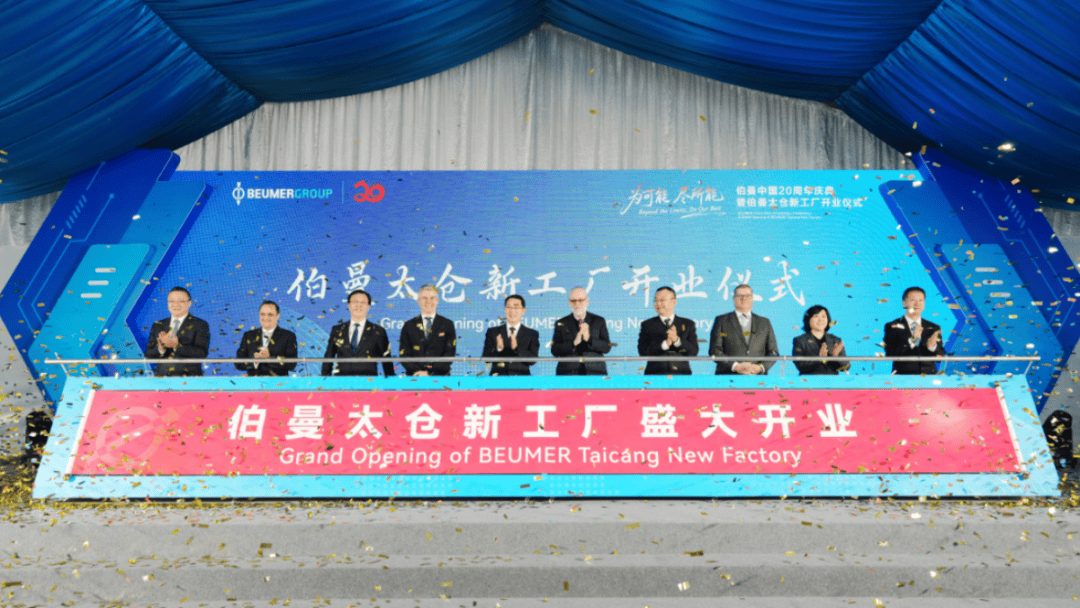
On December 10, 2025, in the High-Tech Zone of Taicang, Jiangsu Province, the brand-new workshop of BEUMER Group was officially put into operation. With a total investment of 100 million euros, this modern base is not only BEUMER’s sole advanced manufacturing and R&D center in China covering the entire product line and production process, but also marks Taicang—China’s “hometown of German enterprises”—welcoming the commissioning of its 500th German-funded enterprise. From Weiss Chemistry in Qingdao to BEUMER Group in Taicang, and from industry giants to “hidden champions,” the wave of German enterprises establishing factories in China during 2024–2025 is not only an inevitable choice driven by the restructuring of the global industrial chain, but also a mutual pursuit of China–Germany manufacturing cooperation.
The eastward relocation of German enterprises is driven by the practical challenges facing domestic development. Plagued by an energy crisis and economic downturn, energy prices in Germany once surged to two to three times those in China. In 2024, the number of bankrupt enterprises in Germany hit a ten-year high of 22 thousand, while the self-assessed competitiveness of industrial firms fell to a 31-year low. Pillar industries such as automotive and chemicals are under mounting pressure to transform, with electrification and digitalization efforts requiring broader markets and more sophisticated supply chain support.
The strong appeal of the Chinese market has become key to German enterprises’ turnaround, a fact clearly reflected in investment data. China has fully lifted foreign investment restrictions in the manufacturing sector, continuously optimized the development of free trade zones, and strengthened intellectual property protection, providing German enterprises with a stable and predictable business environment. According to data from the Deutsche Bundesbank, Germany’s direct investment in China reached 7.3 billion euros in the first half of 2024, including nearly 2.5 billion euros in Q1 and a sharp increase to 4.8 billion euros in Q2, setting a historical record for the same period. Meanwhile, data from China’s Ministry of Commerce shows that Germany’s new investment in China totaled 5.7 billion euros in 2024, a year-on-year increase of 25%. This growth momentum continued into 2025, with Germany’s new investment in China reaching 5.81 billion US dollars in the first three quarters, signaling a shift from steady progress to accelerated expansion.
More importantly, China possesses the world’s most complete industrial system, with manufacturing value-added accounting for 31 percent of the global total. Industrial hubs such as Taicang have maximized this advantage. Adjacent to Shanghai and home to the busiest container port along the Yangtze River, Taicang can access 90 percent of its suppliers within a 30-kilometer radius. Seventy percent of automotive components can be sourced locally, and it reportedly takes “just one bus ride to procure all parts for a new energy vehicle’s electric drive system.” For BEUMER Group, a logistics equipment “hidden champion” founded in 1935, selecting Taicang was a precisely calculated strategic move. Its core client, the Nike China Logistics Center, is located directly across the road from the new factory, while two key customers are only two to three kilometers away. This proximity significantly reduces logistics costs and enables rapid responses to the customized needs of local clients such as JD.com, SF Express, and Shanghai Pudong International Airport.
From a market perspective, China remains Germany’s largest trading partner. Bilateral trade volume reached 185.9 billion euros in the first three quarters of 2025, a year-on-year increase of 0.6 percent. For many German enterprises, revenue from their China operations accounts for more than one-third of their global total. The BEUMER Group Taicang base is projected to achieve an annual output value exceeding 1.4 billion yuan, positioning it as a key growth engine for the group’s global performance.
German enterprises’ factory establishment in China is shifting from “simple production launch” to “in-depth symbiosis", injecting momentum into industrial development in both countries. For China, German enterprises bring not only capital, but also high-end technologies and advanced management experience. Schaeffler has established a dual-system training center in Taicang, transferring mold precision control technologies to local suppliers through a “master-apprentice” model, increasing the yield rate of domestically produced gears from 85 percent to 93 percent. Volkswagen has localized its PPE pure electric platform, encouraging domestic component suppliers to align with international quality standards.
The arrival of BEUMER Group has further deepened this cooperation. Its Taicang base integrates R&D, design, and production, introducing core technologies such as world-leading intelligent conveying and sorting systems, as well as airport baggage handling systems. It has created a synergistic effect with local logistics equipment enterprises such as Hong’an Machinery and Morandi, further strengthening Taicang’s logistics equipment industrial ecosystem. This technology spillover has accelerated the upgrading of China’s manufacturing industry. In areas such as autonomous driving and the industrial internet, collaborations between Mercedes-Benz and ByteDance, as well as Siemens and Huawei, have become representative examples of this synergy.
As development shifts from “isolated efforts” to “cluster-based growth,” industrial clusters have become the core pathway for German enterprises to establish long-term roots in China. These clusters are not merely geographical concentrations, but multi-dimensional ecosystems characterized by “industrial chain coordination, technology interoperability, and talent sharing.” Cities such as Taicang, Shenyang, and Chengdu have emerged as distinctive cluster hubs.
Taicang is one of the regions with the highest density of German enterprises in China, hosting more than 560 German-funded companies, over 30 percent of which are global “hidden champions.” Six of Germany’s top 10 machine tool enterprises have operations there, forming an industrial cluster focused on auto parts and high-end equipment manufacturing. It took just two years for the number of German enterprises in Taicang to grow from 400 to 500. This cluster effect has reduced supporting costs for new enterprises by more than 30 percent, while enabling local companies to achieve synchronized technological upgrades.
Similarly, anchored by BMW’s production base, Shenyang has attracted nearly 100 German automotive parts suppliers, forming a complete industrial chain spanning vehicle manufacturing, battery production, and autonomous driving. In Chengdu, leading enterprises such as Siemens and Bosch have helped build an industrial automation and digitalization cluster. Across the Yangtze River Delta, cities including Shanghai, Suzhou, and Wuxi have developed an inter-city collaborative network of German enterprises, enabling integrated layouts for R&D, manufacturing, and logistics.
The surge in German enterprises’ investment in China during 2024–2025 is not coincidental, but the inevitable result of market dynamics and industrial logic. German enterprises bring advanced technologies and sophisticated management experience, while China offers a complete industrial chain, a vast consumer market, and a highly efficient business environment. This mutual alignment has moved beyond the traditional notion of “simple capacity transfer,” establishing a model of in-depth cooperation centered on joint technology R&D, market sharing, and ecosystem co-construction.