KEYWORDS: AI, Innovation, Smart Manufacturing, Digital Transformation, Industrial Equipment, Automotive Industry
Summary
This ARC Industry Brief provides an overview of key trends and growth drivers in the automotive industry, emphasizing the importance of AI, digital transformation, and technology adoption for future readiness.
Industry Trends
Automotive manufacturers have entered a new era of production, driven by digitalization, AI, and connected technologies. Factories are being reimagined as intelligent, flexible, and data-driven ecosystems, capable of supporting complex manufacturing, software-defined vehicles and highly personalized mobility solutions. Successful manufacturers are reaping the benefits of investing in advanced manufacturing technologies, modernizing operations, and adopting innovative workforce strategies to enhance efficiency, agility, and competitiveness.
The following key trends are shaping the current landscape:
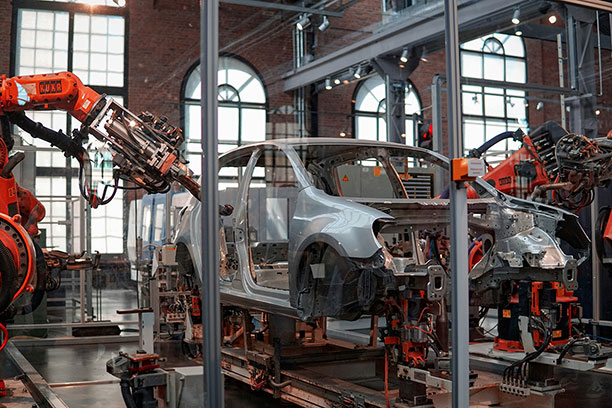
- Intelligent Adaptive Factories: Automotive plants are evolving into smart factories with digital twins, connected machinery, and AI driven real-time analytics. Production lines can adapt dynamically to different customizations, improving efficiency and reducing downtime.
- Automation and Robotics: Beyond traditional robots, manufacturers are deploying autonomous mobile robots, collaborative cobots, and AI-guided assembly systems to handle complex tasks, material transport, and quality inspection, increasing precision throughput.
- Energy Efficiency and Sustainability: Factories are embracing low carbon operations, renewable energy, recycling and circular manufacturing practices. Energy optimization and ecofriendly processes are now central to compliance and ESG goals.
- AI-Driven Optimization Across the Value Chain: Beyond predictive maintenance, AI innovations are quickly being applied to everything from process optimization, defect detection, generative design, supply chain forecasting and autonomous equipment operation. Generative AI is being used as a tool for engineering, documentation, and workforce training, speeding up product innovation cycles.
- Geographic Diversification & Localized Manufacturing: Building regional production hubs to improve supply chain resilience, reduce costs, and comply with local content rules in key markets.
- Workforce Transformation: As factories become more digital, manufacturers are integrating AR/VR training, digital work instructions, and AI-assisted operations to upskill employees, enhance productivity, and bridge labor gaps.

ARC Advisory Group clients can view the complete report at the ARC Client Portal.
Contact Us if you would like to speak with the author.
Obtain more ARC In-depth Research Market Analysis.








