Representative End User Clients







Representative Automation Clients







Representative Software Clients








The February edition of the Digital Transformation Council (DTC) Asia webinar, hosted by ARC Advisory Group, India was on driving digital transformation. Welcoming the online audience, G. Ganapathiraman, Vice President and General Manager, ARC Advisory Group, India, explained that this is part of the DTC initiative started by ARC a few years ago for industry, smart cities, and supply chain, enabling end users to interact with their peers. Members, restricted to end users only, have access to the Council’s library and survey reports. Further, he informed the audience about the agenda and process to be followed during the webinar. Next, Bob Gill, General Manager, Southeast Asia, ARC Advisory Group introduced the webinar’s topic and the speaker Esteban Remecz, Chief Information Officer, VP IT/DT, Iochpe-Maxion. Mr. Remecz’s presentation was followed by a panel discussion and a Q&A session with the audience. The webinar can be watched here.
Bob Gill said that digital transformation is garnering a lot of attention because of the arrival of a host of new technologies that are, for example, improving operational efficiency, worker safety, and facilitating the development of new revenue models. So, while it’s important to learn about new technologies, such as cloud, edge, analytics, artificial intelligence and what they can do for us, we also need to understand that digital transformation takes place in an organizational context. And that involves the organization’s culture, leadership, and digital readiness. He noted that given that one of the aims of the Digital Transformation Council is to enable members to learn and share with peers, hearing from those who have already started down the digital transformation path can be invaluable for those still looking to make that leap. With that in mind, he invited Mr. Remecz to share his valuable insights on Iochpe-Maxion’s digital transformation journey.
Iochpe-Maxion is a family established business, headquartered in Brazil and traded on the country’s stock exchange. The company is the world’s largest steel and aluminium wheel manufacturer and produces a variety of automotive structural components. The company’s digital transformation efforts encompass both processes and products, and it recently received an international award for the first digitally enabled product, the Wheel TAG smart wheel.
Mr. Remecz said that we live in a VUCA (volatile, uncertain, complex, ambiguous) world and this year the black swan event - COVID-19 impacted businesses globally, and we saw the emergence of a “new normal.” Digitalization has changed business models and operations, he said. In this context he spoke about companies that didn’t exist two decades ago, such as Uber (taxi company, but doesn’t own any vehicles), airbnb (accommodation provider, but doesn’t own real estate), etc. As market demands have changed, a new ecosystem has evolved, and Industry 4.0 makes this journey possible. Iochpe-Maxion believes that digital transformation is mandatory to improve and transform businesses.
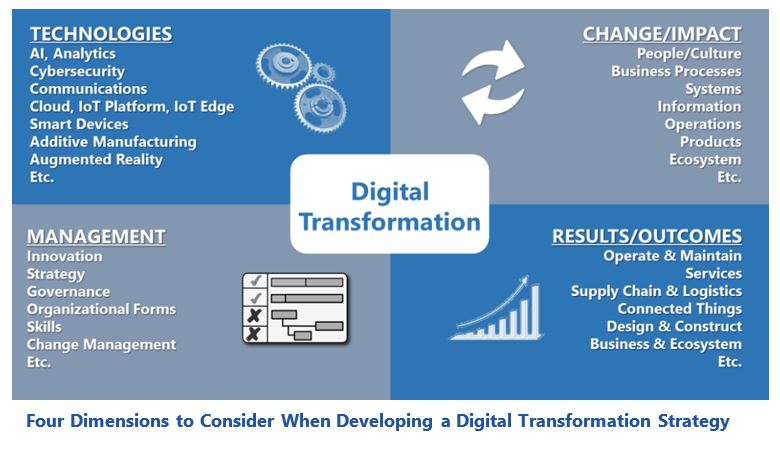
Data connectivity is all important, said Mr. Remecz, and the company’s digital ecosystem connects all operations and functions. Before starting on the digital transformation journey, it is important to know the company’s objectives and the outcomes you want to achieve, he said. By digital process and product innovation the company created new products and business models. The company launched its digital transformation initiative by creating a sense of community, whereby all personnel could participate in every function/operation. In this manner, each plan had a digital transformation “champion”, and these champions were orchestrated to define the specific technologies required and how to implement them. Simultaneously, a cluster of ongoing initiatives was created so that efforts were not dissipated, and the teams became more efficient. The company’s success formula: think big, make a roadmap, but start small after doing the POV (proof-of-value).
“What triggered the company’s digital transformation journey?” asked Mr. Gill. The main driver was that the company understood that digital transformation is necessary, and this was adopted top down as the CEO is a strong advocate of digitalization. A team was formed to launch the digital transformation drive a few years ago, and from then on everyone has been involved.
Responding to a query on how the company prioritizes projects and possibilities, Mr. Remecz said that an inventory is maintained and workshops are held and then the priority sequence is discussed. The ones that are cherry-picked are based on those that have the highest and fastest ROI. Next, he spoke about cultural differences, learning from failures, and moving ahead with agility. Understanding new technologies and collaborating with strategic partners formed an integral part of the company’s digital transformation initiatives.
The challenges on this journey include availability of resources, understanding and implementing new technologies (reluctance to change) etc.
Cybersecurity breaches: Moving into a more connected world involves more risk, but with constant monitoring and due diligence the company is implementing technologies for cyber resilience.
Performance of IoT devices tagged on to the smart wheel: Very reliable and these were implemented after careful evaluation, partnering with a vendor, and strategic integration between the shop floor and top floor.
Value derived from the digital initiatives: The company calculates the ROI and after deployment the actual savings is calculated. After proof of value is determined, then the company scales operations.
Maintaining interest and enthusiasm in long-drawn out projects: Quality is equated to value, replied Mr. Remecz. So, the objective is to generate value from operations with a focus on quality to improve the bottom line. To achieve this, best practices are shared and internal quality audits are conducted.