KEYWORDS: AI, Innovation, Smart Manufacturing, Digital Transformation, Industrial Equipment, Aerospace and Defense Industry
Overview
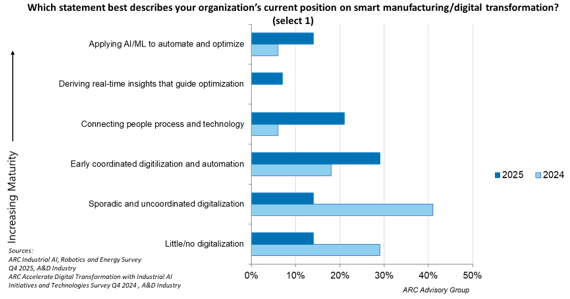
Aerospace and defense companies are rapidly advancing their digital capabilities, moving from isolated pilots of AI, digital engineering, and analytics to enterprise-wide adoption across design, production, and sustainment. Between 2024 and 2025, survey data and industry observations showed a pronounced acceleration in digital maturity, driven by growing program complexity, production ramp-ups, and pressure to improve fleet readiness and operational resilience. Investments in model-based systems engineering, digital twins, predictive maintenance, and connected manufacturing are enabling earlier design validation, faster development cycles, and more effective lifecycle management. As companies embed these capabilities across programs and supply chains, digital technologies are becoming essential tools for managing risk, improving program execution, and sustaining competitiveness in an increasingly complex, regulated, and geopolitically sensitive aerospace and defense environment.
Between 2024 and 2025 aerospace and defense companies accelerated their smart manufacturing initiatives progressing from experimental pilots to essential, scalable capabilities.
The following key trends are shaping the current aerospace and defense landscape:
- Digital Engineering and Model-Based Development: A&D companies are accelerating the adoption of model-based systems engineering (MBSE), digital twins, and integrated simulation environments. These digital engineering approaches enable earlier validation of complex systems, reduce development cycles, and improve collaboration across engineering, suppliers, and manufacturing teams.
- Defense Spending Growth and Strategic Rearmament: Rising geopolitical tensions are driving increased defense spending and long-term procurement programs across NATO countries and Asia-Pacific. Governments are prioritizing modernization of air, naval, missile defense, and space capabilities, creating sustained demand for next-generation platforms, advanced sensors, and integrated defense systems.
- Supply Chain Resilience: A&D companies are facing supply chain constraints related to critical materials, electronics, and specialized manufacturing capabilities. The industry is investing in supplier diversification, domestic sourcing for critical components, and improved supply chain visibility to support higher production rates for both commercial aviation and defense programs.
- Sustainability and Next Generation Aviation Technologies: Commercial aerospace is investing heavily in lower-emission aircraft technologies, including sustainable aviation fuels (SAF), hydrogen propulsion, hybrid-electric aircraft, and advanced aerodynamics. These innovations aim to meet increasingly stringent environmental regulations and long-term net-zero targets.
- Workforce Challenges: The industry faces shortages of skilled engineers, technicians, and manufacturing specialists. At the same time, production ramp-ups in commercial aviation and defense programs are increasing demand for highly specialized labor. Companies are investing in digital tools, automation, and training programs to maintain productivity and transfer institutional knowledge.

ARC Advisory Group clients can view the complete report at the ARC Client Portal.
Contact Us if you would like to speak with the author.
Obtain more ARC In-depth Research Market Analysis.








