Representative End User Clients







Representative Automation Clients







Representative Software Clients








Asset performance management (APM) systems are designed to improve the reliability and availability of physical assets in manufacturing plants and other industrial facilities. This typically involves collecting, visualizing, and analyzing  asset health data for condition monitoring, predictive forecasting, asset integrity management, and reliability-centered maintenance (RCM). APM improves integration between production management (making the product) and asset management (ensuring the capability to produce).
Data on failure patterns from four asset reliability studies show that only 18 percent of assets have an age-related failure pattern appropriate for preventive maintenance. The other 82 percent require predictive or prescriptive maintenance using Industrial Internet of Things (IIoT)-enabled solutions with analytics to support the production and C-suite metrics.
Based on numerous interviews with end user companies, ARC Advisory Group summarizes that, currently, the predominant applications for IIoT solutions involve predictive maintenance. IIoT-enabled analytics are used to monitor the condition of a piece of equipment to support predictive maintenance. When incorporated within a comprehensive APM strategy, predictive maintenance helps prevent disruptive and costly unplanned downtime.
APM systems act to improve the reliability and availability of physical assets while minimizing risk and operating costs.  APM typically includes condition monitoring, predictive forecasting, asset integrity management, and RCM, and often involves technologies that support collecting, visualizing, and analyzing asset health data.
APM involves information sharing and application integration between plant operations and maintenance groups to provide a comprehensive view of production, asset performance, and product quality. APM improves integration between production management (making the product) and asset management (ensuring the capability to produce). With effective APM, goals and objectives become more clearly communicated and shared. The ramifications of APM extend into business processes, technology, and organizational structure.

APM synchronizes production and maintenance, while sharing information across enterprise asset management (EAM), manufacturing execution systems/manufacturing operations management (MES/MOM), plant asset management (PAM), asset integrity management (inspections), and other solutions to provide a comprehensive view of production and asset performance. This integration increases cross-functional visibility, collaboration, and communication to help improve plant productivity, reliability, safety, quality, and return on assets (ROA).
Industrial IoT (IIoT) and Industrie 4.0 provide new opportunities to improve overall business performance, particularly for APM. For owner-operators, this includes operational improvements largely involving improved asset reliability in the process industries and improved product quality in the discrete industries. For original equipment manufacturers (OEMs), IIoT offers new sources of revenue by extending the OEM’s business model into aftermarket services to improve reliability and quality. For both end users and suppliers, these service solutions incorporate IIoT, analytics, and other predictive and prescriptive technologies.
 APM optimization spans functions such as operations, maintenance, and quality management that, traditionally, have operated as silos. This often results in inefficiency, waste, and even dysfunction. APM provides the means to systematically improve key metrics like uptime, mean time to repair (MTTR), asset longevity, cost, quality/yield, and safety. Success with these metrics leads to improvements in executive metrics like revenue, margin, customer satisfaction, and work-in-process (WIP) inventory.
Based on many interviews with end users at companies that use IIoT in some manner, ARC summarizes that the predominant application involves predictive maintenance. IIoT-enabled analytics are used to monitor the condition of a piece of equipment. When incorporated within a comprehensive APM strategy, predictive maintenance helps prevent disruptive and costly unplanned downtime.
The use cases can be consolidated into two specific business models:
Recent research indicates that IIoT applications are also emerging in factory operations to help improve product quality and throughput in the discrete manufacturing industries.
Traditionally, maintenance practices have been classified into three levels: reactive, preventive, and condition-based. IIoT and analytics now enable two higher levels: predictive and prescriptive.
Reactive (run-to-failure) maintenance is the most common approach for equipment, since most assets have a very low probability of failure and are non-critical. This approach helps control maintenance costs, but is only appropriate for non-critical assets.
Here, maintenance is performed based on either time (analogous to replacing the batteries in your household smoke detectors once a year), or usage (changing your car's oil every 5,000 miles). Preventive maintenance applies to assets with an age-related failure pattern where the frequency of failure for the asset increases with age, run-time, or number of cycles.
Condition-based maintenance (CBM) involves monitoring a specific asset parameter. The focus tends to be the amplitude of the value, with vibration monitoring being the most common. CBM typically applies to production (rotating) equipment and automation (instruments and the control system) equipment. For stationary plant equipment such as steam boilers, piping, and heat exchangers, periodic inspections and condition evaluations are often used.

Predictive maintenance (PdM) uses engineered algorithms and/or machine learning with multiple input parameters to provide higher accuracy (fewer false positives or missed issues) and more advanced warning before failure. It combines “small data” from a particular device or system with algorithms that model that type of equipment (sometimes called virtual equipment or “digital twin”) to monitor condition and raise an alert when appropriate. This provides the more advanced notice needed to schedule and execute the maintenance during planned shutdowns.
Prescriptive maintenance builds on PdM with alerts that provide diagnostics and guidance for repair. Information for determining the timing and impact of failure is also included to help assess priority and urgency.
Increasing maturity typically involves more engineering investment. For specific types of equipment, one benefit of the engineered algorithm or model for predictive and prescriptive maintenance is the ability to replicate it like a template across many similar devices – like doors on a passenger train or transformers in power transmission lines. This approach provides economies of scale and a basis to financially justify the inherently larger engineering and development costs.
 Users have reported that moving from preventive maintenance to predictive or prescriptive approaches provided a 50 percent savings in maintenance labor and MRO materials. With predictive and prescriptive maintenance, near-zero unplanned downtime for critical equipment can be achieved. This level of equipment reliability cascades into other significant business benefits, including improvements in on-time shipments, revenue, customer satisfaction, quality/yield, safety, and WIP inventory.
Unfortunately, while maintenance and operations personnel tend to focus on cost reductions for labor and MRO materials to financially justify a project; a broader viewpoint with higher business impact is often more successful in obtaining executive attention and the resources needed to succeed.
Control systems, like those based on PLC, DCS, or SCADA technologies, typically execute specific manufacturing steps 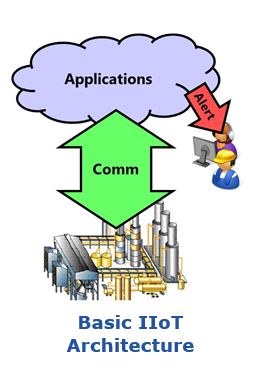 that are critical to manufacturing products and obtaining the associated revenue to fund the business. When the control system doesn’t function properly, it gets a lot of attention fast – which can include attention from executive management. As a result, the control engineers responsible for these systems are usually very protective of the control system. Frequently, this prevents other parts of the organization that might need access to these systems from doing so (as the author of this report admits to doing when he was a control engineer).
To obtain the needed real-time data for analysis and alerts without affecting the control system, reliability and maintenance engineering groups have used IIoT. This is somewhat akin to the situation in the late ‘80s and early ‘90s, when we saw rapid adoption of personal computers in business to avoid the corporate mainframe systems and limited IT resources.
Consumer IoT – including smartphones, apps, networking, cloud computing, analytics and security – created economies of scale and a robust infrastructure for these technologies. Now, industrial organizations are adapting proven IoT technologies for their industrial applications. In this context, we essentially have an IIoT architecture that has smart industrial devices taking the place of consumer smartphones.
Prior to IIoT, predictive maintenance-type applications would almost always be built using data from the historian. The data would be imported into a custom application that performed engineered analytics, i.e., first-order mathematical formulas and/or decision trees. This was problematic for a few reasons:
As confirmed by earlier ARC surveys, prior to IIoT, predictive maintenance implementations were few and far between, even for critical assets.
Today’s supplier-provided IIoT platforms help take much of the drudgery out of developing a predictive maintenance application. They provide the infrastructure so the user can focus on the application. The IIoT platforms include ABB Ability, Bosch IoT Suite, GE Predix, Honeywell Connected Plant, IBM Bluemix, Microsoft IoT Central, Oracle IoT Cloud Service, PTC ThingWorx, Rockwell Automation FactoryTalk Analytics, SAP S/4Hana Predictive Maintenance, Schneider Electric EcoStruxure, and Siemens MindSphere.
These systems typically function as a platform as a service (PaaS), a category of cloud computing services for users to develop, run, and manage applications without the complexity of building and maintaining the associated IT infrastructure such as database, programing tools, services like analytics, and more. Infrastructure as a service (IaaS) focuses more on the datacenter with virtual machines. PaaS and IaaS are two of the three main categories of cloud computing services alongside software as a service (SaaS).
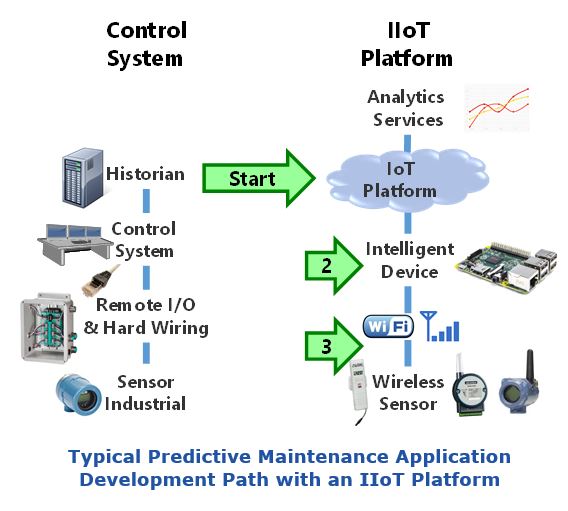

The historian contains a wealth of data about the process. Typically, application development starts with importing process data (temperature, flow, pressure, etc.) from the historian and into the IoT platform. Analytics services available with the platform are applied to this process data to assess the asset’s health, and determine when an alert should be generated.
Process data alone can sometimes be sufficient for predictive maintenance. But often, additional equipment data (vibration, motor current draw, voltage, etc.) is needed to more accurately assess the equipment’s condition, and avoid false positive alerts.
Often this equipment data is available through an intelligent device that contains a processor, storage and a network connection. This could be in the equipment itself, or through a “wrap around” device like a PLC that reads the I/O in parallel to the equipment.
Eventually, new I/O devices will be needed for the condition monitoring. These can be incorporated wirelessly, which significantly reduces installation costs. Also, lower-cost, commercial I/O devices can be applied for non-hazardous areas.
Using an IIoT platform for predictive maintenance provides several benefits that can help mitigate many issues of the past:
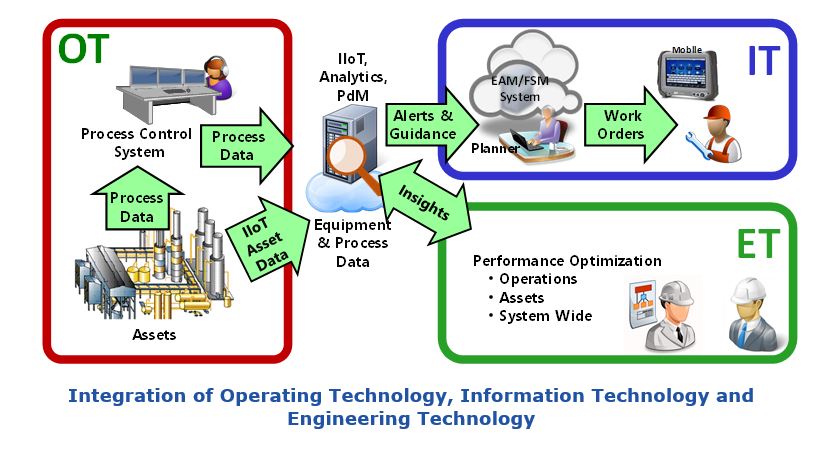
It does no good to identify a pending failure, without taking appropriate preventive action. Unfortunately, most organizations operate in silos, with only ad hoc communications between operations, reliability, maintenance management, and technicians. Too often, identified problems become lost, resulting in a failure to act and, ultimately, unplanned downtime. Workflow improvements involving application integration for business process automation helps to avoid lost alerts. Combining IIoT with application integration helps assure fewer “lost” issues, providing higher uptime and asset longevity.

The business process from the process control system through to EAM provides an example of operational technology (OT) and information technology (IT) convergence. OT is tied to the control systems, where the IIoT data originate. The EAM system is part of the enterprise’s IT systems. The corresponding EAM work order is executed by the maintenance technician and affects the production process with the associated OT systems. In this manner, OT/IT convergence supports bidirectional workflows.
Engineering systems (ET) also enter the picture. Ad hoc analytics and more standardized reports provide engineering with insights about the process, its performance, and means to make improvements. When these insights become process improvements, the transfer occurs in both directions providing another area of convergence.
End user presentations at last year’s ARC Industry Forum in Orlando, Florida communicated convincing case stories on how emerging technologies, including IIoT and analytics, allow specific types of critical assets to have near-zero unplanned downtime while improving asset longevity and maintenance costs.
In his presentation “Making EAM and IIoT Work as One,” Stephen Tatton, Director of Business Systems & New Technology, JBT Aerotech focused on using IoT to improve facilities management for airports. The key benefits he identified for integrating EAM and IIoT include:
Based on his experience with airport facilities, Mr. Tatton provided some specific recommendations with wide applicability:
Readers can see a video of Mr. Tatton’s presentation here:
https://www.youtube.com/watch?v=zexedvF5PUU
Clarksville, Arkansas, a rapidly growing city with an estimated population of 9,524 in 2016, is spread out over 18.8 square miles. The presentations by John Lester, General Manager, Clarksville Light & Water (CLW) and by Dee Brown, PE, Principal, Brown Engineers provided insights for security.
One of the challenges the municipal electric utility faced was that it did not have a SCADA system for managing the electric or wastewater utility systems (although one existed for the water utility). For data communications, CLW installed a 288-strand fiber optic network for the SCADA system that provides ample capacity for the present and should be adequate to accommodate other municipal services in the future. In July 2016, the water, wastewater, and electric utilities began using the fiber for business operations. Clarksville has begun exploring adding the public schools, hospital, and some local businesses.
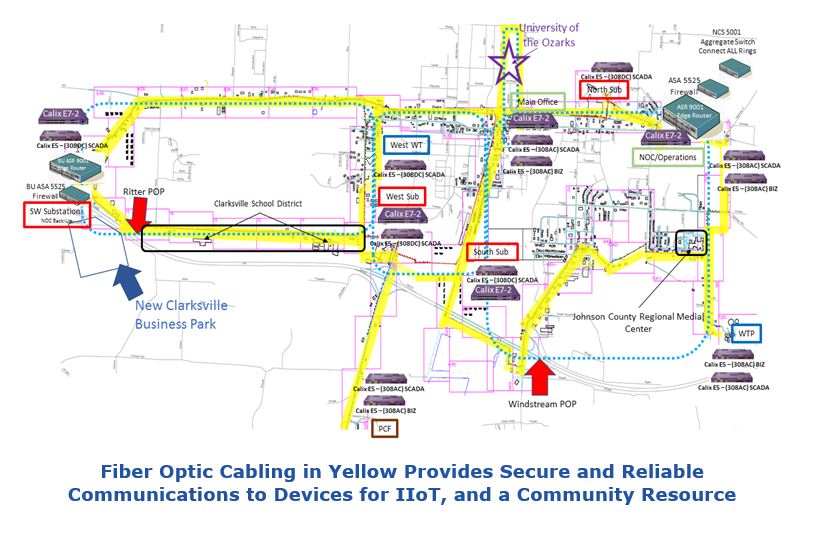
Both reliability and cybersecurity were mission critical for the SCADA system. For a small community, this change was hard, since upgrading facilities costs money and the culture was risk averse – particularly for new IT. It chose fiber optic, because this media is difficult to penetrate mechanically for an unauthorized connection. The cable was configured in redundant rings for reliability. In addition to SCADA, the extra bandwidth became a community resource and an opportunity to add value to the community with additional services like internet, public safety, educational, and business.
The recent implementation of this network holds promises for improved efficiency of the electric grid with the future layering of smart grid applications and proactive management that can reduce the loss factor. The projections indicate that the operational-related savings approach $423,000 per year. The approximately $1 million investment has a 2.5-year payback based on this operational efficiency improvement alone. Proposed internet services are expected to provide a new source of revenue.
The initial implementation preserved and connected legacy equipment and devices in the field. The operations and maintenance staff can now monitor status and make changes using mobile devices like their smartphones.
The focus of the initial project was data communications for the SCADA systems (water, sewer, and electric departments) for controlling water production and distribution. This provided a vision for providing the citizens of Clarksville with a community resource for data communications. The SCADA system infrastructure of open architecture computer software with unlimited tags and licensing, cybersecure PLCs, and dedicated fiber network positions Clarksville for the future. Now that the foundation has been put in place, these features can be leveraged to improve operational performance and energy management with IIoT connectivity and analytics.
Videos of the presentations can be found here:
John Lester Video: https://www.youtube.com/watch?v=5c5j5zgGIY0
Dee Brown Video: https://www.youtube.com/watch?v=Y_CscFXaFWw
Wagner Emerick, Product Support Director, Sotreq, presented “Zero Downtime with Enhancing Information.” This company, a distributor for Caterpillar that covers 75 percent of Brazil, has extensive experience with remote asset monitoring. This now includes 11,700 condition monitoring agreements, over 6,300 assets connected via satellite, and three condition monitoring centers.
In the past, the distributor had more than 10 different applications that were not fully integrated. This made it difficult for the company’s 18 condition monitoring analysts to share information. Response times at 48 to 96 hours was an issue. The fragmented approach with different databases and applications led to lost information. It needed another approach to improve response times and generate new business.
Now, the condition monitoring analysts feed the systems with condition monitoring rules and standard jobs, so when a fault is found, the system identifies the replacement parts and sends a quote to SAP to support the broader business processes for selling services and parts, purchasing, inventory management, and executing maintenance. The SotreqLink solution has three main layers for data storage, data processing, and integration. Four interfaces are provided for customers, management, service and support, and sales teams.

Specific business improvements cited by Mr. Emerick included:
This large software development application included both equipment condition monitoring and integration with SAP. Choosing a partner with skills in both areas – automation systems for the equipment and ERP – was a key for success.
Sotreq has 30 years’ experience in condition monitoring that needed to be transferred to the partner in a way that fits the application. Detailed documentation of the business process including the scenario, roadmap and steps for a multi-generation project was another key for success.
Sotreq implemented SAP and this SotreqLink in the same year. This stretched and stressed resources leaving issues that were resolved later. A better understanding of the size of these projects would have led to a more appropriate implementation timetable.
Video of the presentation can be found here:
https://www.youtube.com/watch?v=GUzXcBqVLto
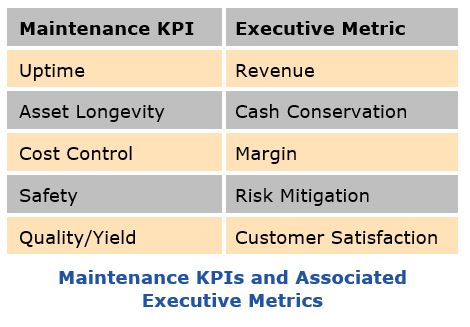
Higher maintenance maturity supports both production and C-suite objectives. KPIs for asset management focus on uptime, asset longevity, cost control, safety, and quality to support production. These KPIs also directly affect C-suite metrics of revenue, cash conservation, profitability, and risk management. The C-suite’s metrics involve the profit and loss (P&L) statement and balance sheet scrutinized by financial analysts and potential investors. Improving their metrics gets executive attention and the resources needed for a successful project.
Data on failure patterns from four asset reliability studies show that only 18 percent of assets have an age-related failure pattern appropriate for preventive maintenance. The other 82 percent require the higher maturity maintenance strategies to support the production and C-suite metrics. Deployment of predictive or prescriptive maintenance strategies use IIoT with analytics to monitor condition and identify issues prior to failure.
ARC’s research and the case stories in this report identified key findings for owner-operators that encompass production and asset optimization with a project using IIoT and analytics:
If you would like to buy this report or obtain information about how to become a client, please Contact Us