Representative End User Clients







Representative Automation Clients







Representative Software Clients









Given the increasing convergence of information technology (IT) and operational technology (OT), along with the  increasing awareness of the potential benefits of Internet of Things (IoT)-enabled solutions in industrial environments, ARC Advisory Group believes it’s time to start focusing on the industrial edge. In industrial environments, edge computing offers the promise of getting the right device data in near real-time to drive better decisions and even control industrial processes. For this to work, the edge device, its embedded software, edge servers, gateways, and cloud infrastructure must all deliver industrial-grade availability and performance.
To gain fresh insights into the current drivers for edge computing in industrial environments, along with the status of, and constraints to this approach, ARC recently conducted a web survey of more than 300 end users about the current and future state of the market.
Key Takeaways from the Survey
 manufacturing process as possible, either at the edge, or on the plant floor level
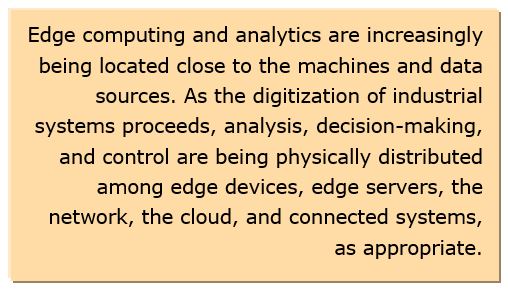
Let’s first define the edge as “the place where computing is performed between the data center and the cloud.” The growth of Industrial IoT (IIoT) extends the edge to industrial devices, machines, controllers, and sensors. Edge computing and analytics are increasingly being located close to the machines and data sources. As the digitization of industrial systems proceeds, analysis, decision-making, and control are being physically distributed among edge devices, edge servers, the network, the cloud, and connected systems, as appropriate. Computing and analysis functions will be deployed where it makes the most sense for the application, so today’s automation assets must be designed to leverage IIoT, the cloud, and the edge.
Edge computing and IIoT embody IT/OT convergence, bridging these two areas of the architecture. This is particularly obvious as edge devices evolve beyond their traditional role of serving field data to upper level networks and emerge as an integral part of the industrial internet architecture. Today, the IT organization owns more and more of the architecture and standards associated with the industrial internet, including both clouds and networks.
With edge computing and analytics, data is processed near the source, in sensors, controllers, machines, gateways, etc. These systems may not send all data back to the cloud, but the data can be used to inform local machine behaviors as it is filtered and integrated. The edge systems may decide what gets sent, where it gets sent and when it gets sent. Placing intelligence at the edge helps address problems often encountered in industrial settings, such as oil rigs, mines, chemical plants, and factories. These include low bandwidth, low latency, and the perceived need to keep mission critical data on site to protect IP. Now, let’s see how end users feel regarding the edge and the IIoT.
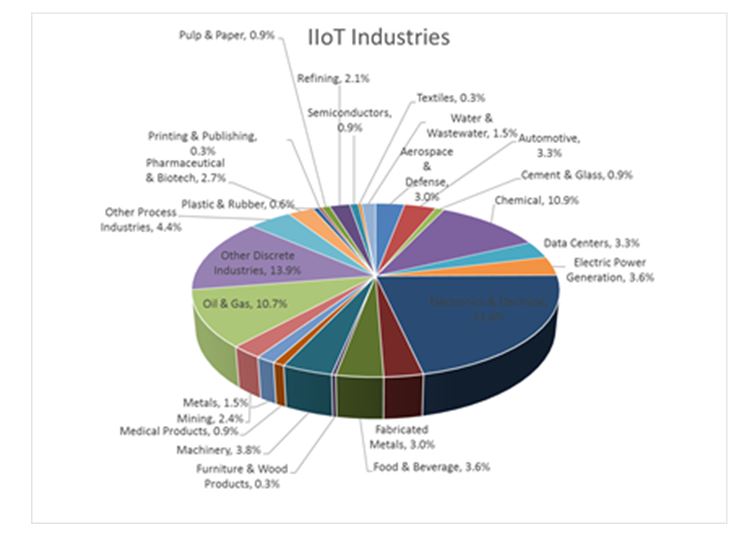
Our survey generated significant interest among the industrial user community. We collected 327 responses, from a wide swath of discrete and process industries. For our analysis, responses were grouped into the process and discrete sectors, with 154 and 173 respondents, respectively.
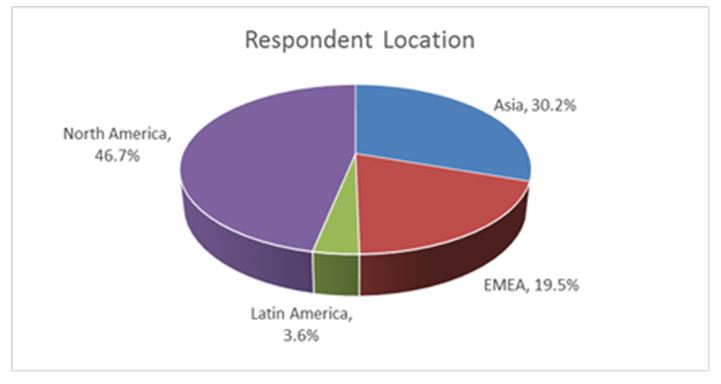
Nearly half of survey respondents were located in North America, and almost a third in Asia, where China and Japan were well represented. A fifth of respondents hailed from the EMEA region, with representation slanted toward Western Europe. The smaller number of respondents were from Latin America, including many from Brazil.
Survey respondents almost universally accept the fundamental aspects that form the underpinnings of the Industrial Internet of Things (IIoT) and can well appreciate the benefits of its implementation in the production environment.
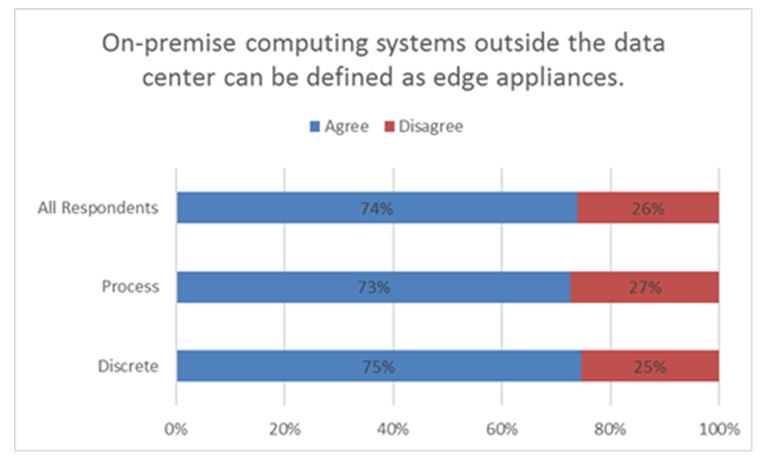
Nearly three-quarters of respondents agree that on-premise computing systems deployed outside the data center can be defined as edge devices - irrespective of how they will be managed. There was only slight variance between process and discrete users and between geographies.
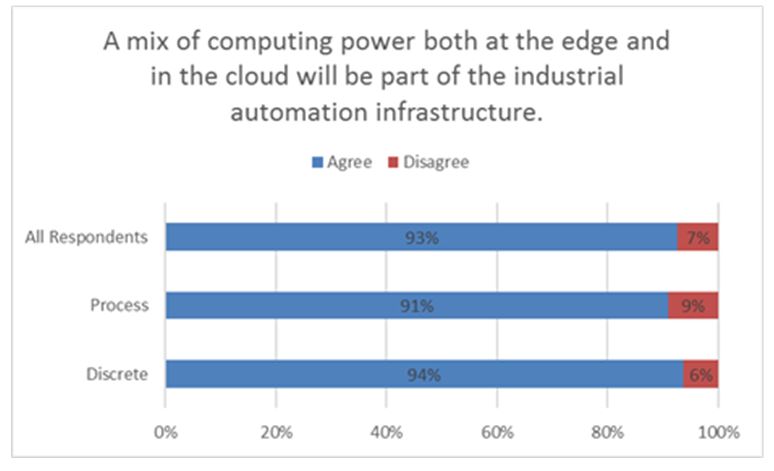
There is an even stronger consensus around distributing computing between edge devices and the cloud to form the basis for the industrial automation infrastructure. A full 93 percent of respondents agree with this.
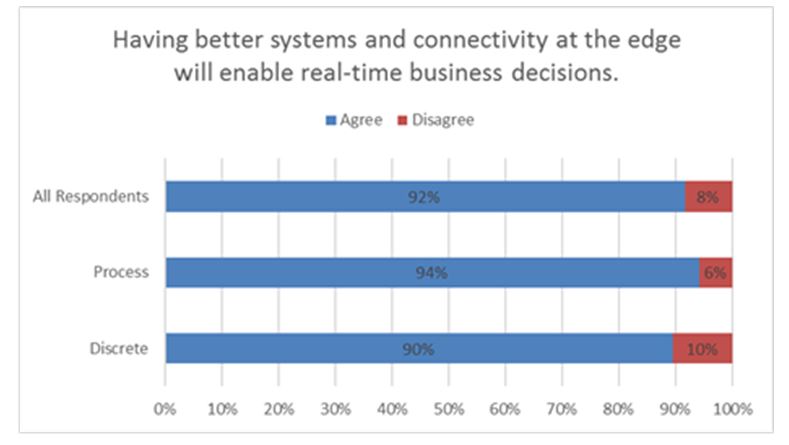
Respondents strongly support the use of robust and capable edge devices to enable real-time decision making, with near-unanimous agreement with the concept. Users have long recognized the value of being able to process data and execute programs as close to the manufacturing process as possible, with the aim of maximizing process efficiency and reducing or virtually eliminating the time between acquiring data and acting on it.
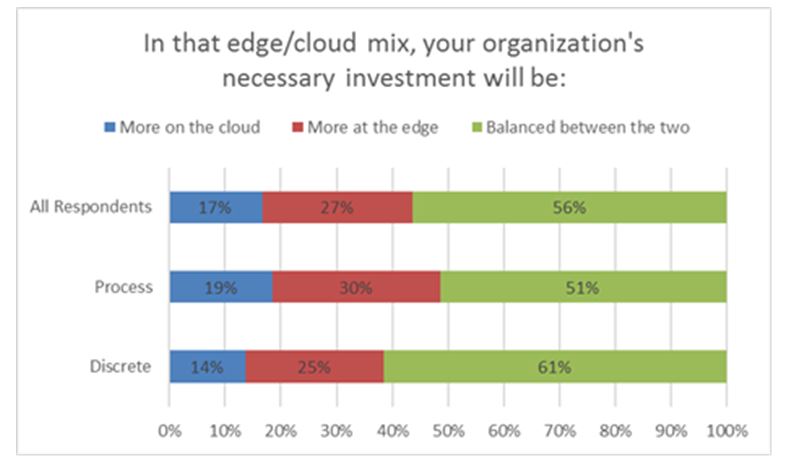
While edge computing presents a compelling opportunity for most, most respondents still plan a hybrid approach when it comes to making future investments in the cloud and edge, with nearly 60 percent taking a balanced approach. About one quarter will invest more heavily in edge computing resources and slightly less will skew towards the cloud. Clearly, users want to harness the inherent benefits offered by both edge devices and cloud computing resources.
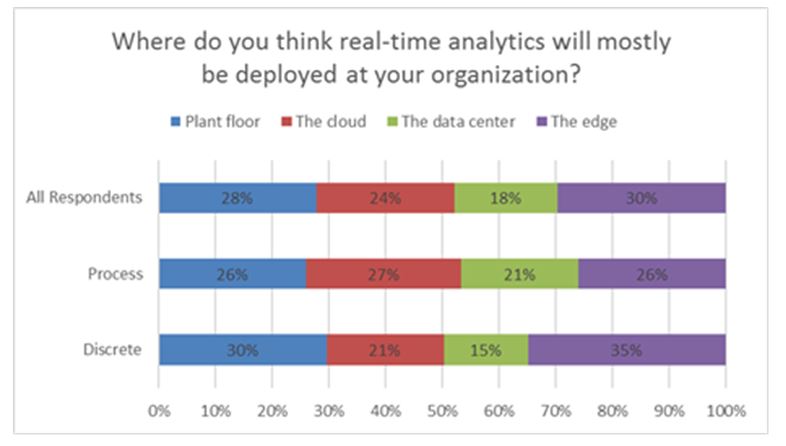
The majority of respondents expect to deploy real-time analytics capabilities on premise and as close to the manufacturing process as possible. Thirty percent expect to perform data analytics at the edge, and slightly fewer at the plant floor level. Fifty-eight percent of users interviewed would not want to use the cloud as an intermediary due to concerns about reliability and response times, nor have it reside in the data center. Only 18 percent of respondents would kick the analytical function up a level to the data center, while about one-quarter would rely on cloud resources.
Asked about which specific operational and infrastructure issues were driving their interest in deploying edge solutions, respondents were more likely to cite operational concerns that centered on process efficiency and asset reliability.
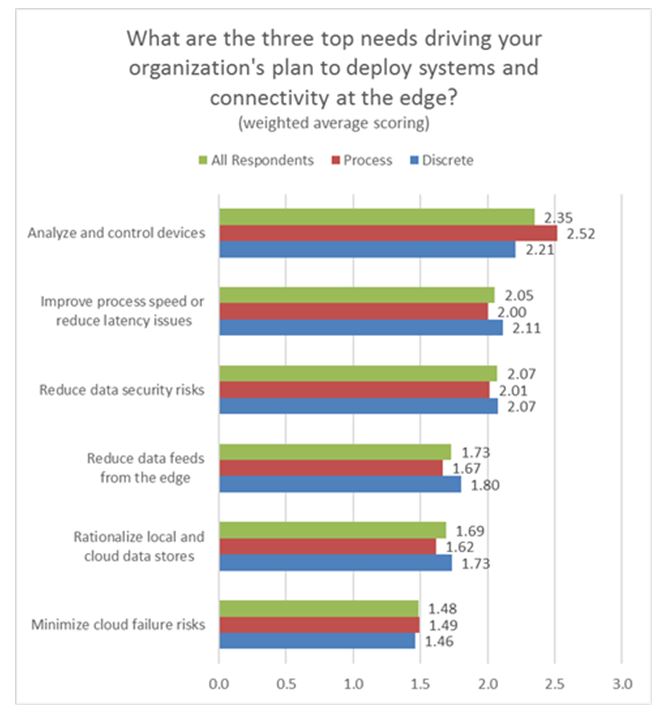
When ranking their top three needs for deploying systems and connectivity at the edge, users emphasized operational issues. Chief among them were analyzing and controlling devices, improving process speed/reducing latency issues, and reducing data security risks. This overlays nicely with user’s perceptions of the benefits of edge computing as enabling faster, better decisions at the production level, and translating that into action on the spot.
Rightly or not, users have concerns about having their data handled and stored in the cloud. They generally accept the reliability and availability of cloud resources, given the relatively low ranking of minimizing cloud failure risks. However, reducing data security risks by keeping data and control at the edge level may indicate that some may have concerns about relying on the cloud fully.
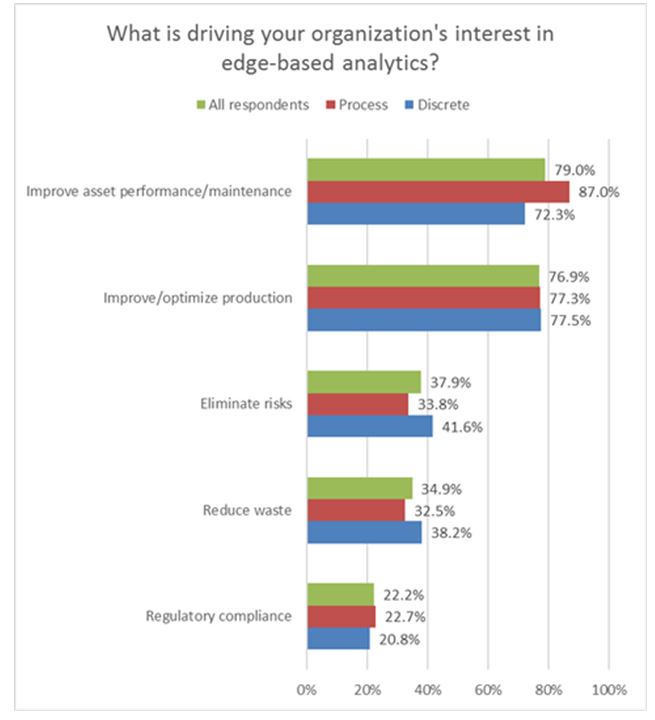
Operational concerns also largely drive user interest in applying edge-based analytics. The primary reasons are to improve asset performance and maintenance (considered by many to be the breakthrough application for the IIoT), particularly among process respondents (especially in North America and EMEA) and the drive to improve and optimize production, i.e. to prevent unplanned downtime. Of significantly lesser importance to respondents were reducing risk and waste and complying with regulations. This is possibly because these are not as immediately tied to production reliability and efficiency or are addressed in other ways.
Survey respondents were asked about their plans for implementing edge computing and analytics, how the program will be administered, and where responsibilities for tending and managing the edge infrastructure will reside. While about a quarter are still investigating the concept, many will be moving forward with implementing an edge infrastructure, using a combination of internal and outside resources to build and maintain it.
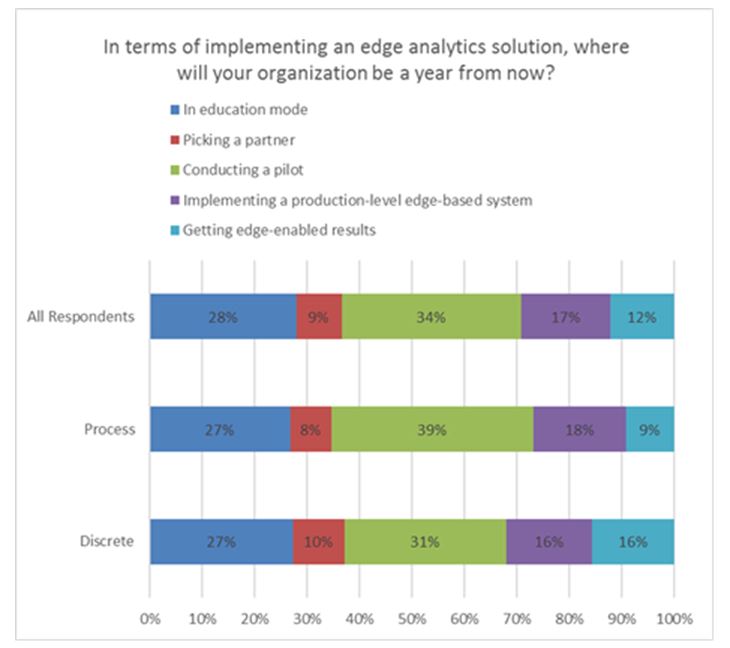
Most respondents expect to either be in fact-finding mode over the next year or just beginning their practical applications of edge technology. Slightly over a third will be investigating the feasibility of the edge for their organization or selecting potential technology providers, and a third expect to be conducting a pilot program during the next year. The remainder will be implementing or already have their edge infrastructure in place. Slightly over 10 percent will be actively collecting and using data from the edge to improve their production operations; among respondents, discrete users appear to be further along on their journey to the edge.
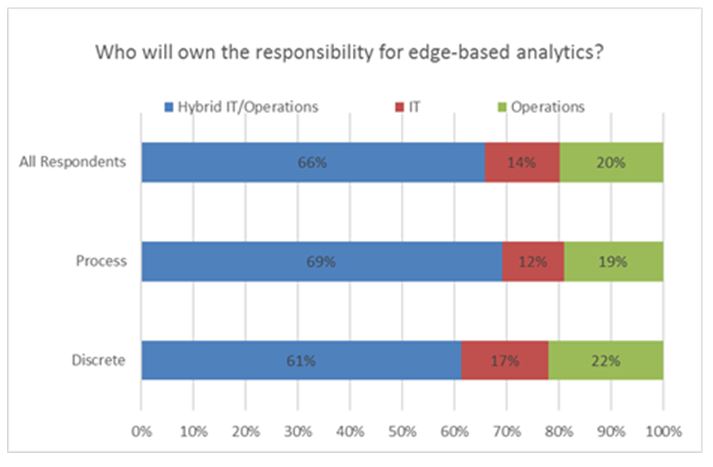
Within their companies, respondents expect that responsibility for the edge will be shared between IT and Operations departments, reflecting an overall trend toward IT/OT convergence. The transition from using proprietary, often disparate, systems on the production line to off-the-shelf, more homogeneous, networked computers and systems, along with increased connectivity rates have led to greater involvement by IT into the traditional domain of operations. Conversely, vast process knowledge that OT teams have will force a further blending of the functional lines between these departments.
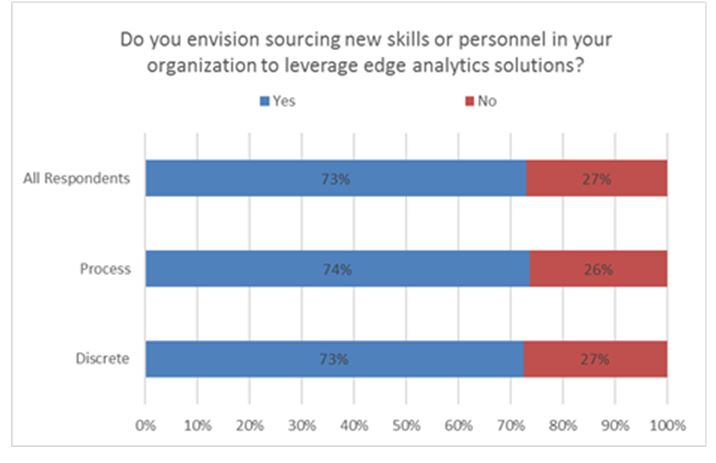
A clear majority of respondents envision sourcing new skills or personnel in their organizations to leverage edge analytics solutions. Respondents expect their companies to be training their personnel to be conversant in edge analytics technology, or to add staff that already is. Having staff members dedicated to the edge will likely free operations people and IT staffers to perform their respective roles, without distracting them unduly from their fields of expertise. This will result in more detail and attention paid to IT and OT, respectively, without adding additional resources.
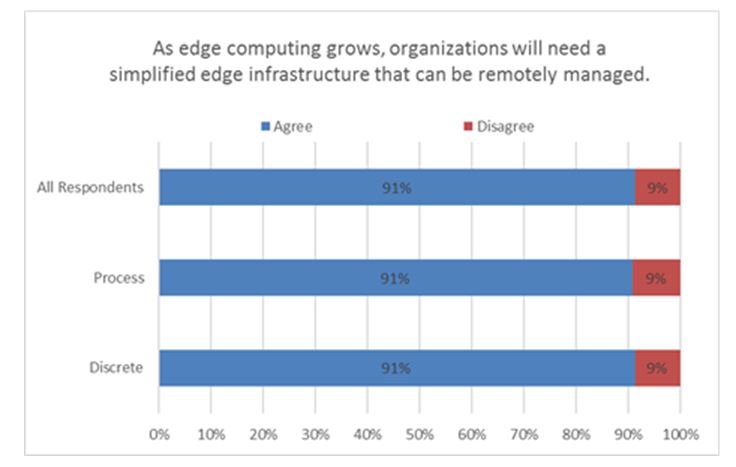
Respondents overwhelmingly want to keep the complexity of their edge infrastructure manageable and expect that management will be done remotely. This reflects an overall trend in industry toward remote, centralized management of production assets and allows organizations to ensure greater availability and efficiency around the clock, enables sharing of best practices across entire organizations, and reduces the need for dedicated resources at individual plants.
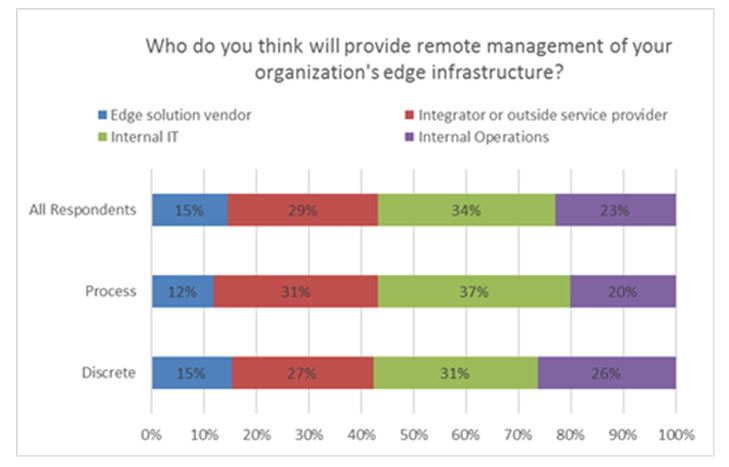
More than half of respondents expect to keep their remote management of the edge in-house, and more expect that their IT departments will take responsibility, particularly among process users. Discrete users assume operations will have a somewhat greater role in comparison. A sizeable portion of respondents feel that outside contractors will be involved in managing their edge infrastructures, perhaps because they are unable to or do not want to cultivate or add this expertise in their organizations or divert resources that could be applied elsewhere.
Operational issues, such as analyzing and controlling devices, improving process speed/reducing latency issues, and reducing data security risks, will drive end users to deploy edge computing, as well as the need to improve asset performance and maintenance to reduce unplanned or unscheduled downtime, and optimize production overall.
 However, for edge computing and devices for machines, equipment, and production systems to continue to proliferate, cybersecurity concerns must be addressed. While IIoT and edge devices afford a way to connect factory ecosystems, products and equipment in the field, and even the manufacturing supply chains; these devices and connections must be made secure and reliable or manufacturers will slow down the deployment of edge and cloud technologies.
Smart manufacturing and edge computing with information-enabled operations offers virtually infinite potential to improve business performance. Companies will be able to use data that has long been stranded inside machines and processes to quickly identify production inefficiencies, compare product quality against manufacturing conditions, and pinpoint potential safety, production, or environmental issues. Remote management of this edge infrastructure will immediately connect operators with off-site experts to be able to avoid or more quickly troubleshoot and resolve downtime events.
Finally, edge and cloud computing architectures will accelerate IT and OT convergence. As a result, IT and OT professionals who previously only oversaw their own individual systems are learning about the counterpart technologies. IT professionals must have the skills to transfer their experience of enterprise network convergence and ubiquitous use of Internet Protocol into manufacturing applications. OT professionals must possess the skills to migrate from yesterday’s islands of automation to today’s plant-wide, information-centric edge and cloud architectures to enable the secure flow of information throughout the manufacturing enterprise and beyond. These skills are critical for end users to source to fully leverage their hybrid edge and cloud infrastructure.
If you haven’t started thinking about your edge strategy, start now. Your peers already are.
As IT and OT continue to converge, think about the potential impact on your own company. How will you merge the two cultures and start assigning responsibilities? Look for simple, remotely manageable edge computing infrastructure to mitigate your resource constraint risks. Make sure it’s continuously available and can connect to both your data center and cloud.
This survey reveals that, moving forward, both process and discrete end users would like to see real-time intelligence “at the edge.” In to-day’s increasingly connected factories and plants, edge computing will provide the foundation for the next generation of smart, connected IIoT devices and the digital enterprise. These intelligent edge devices can aggregate and analyze sensor and other data and stream information to support predictive analytics platforms and even extend the concept to the digital twin, something else that will likely result from the trend toward edge computing.
 Hybrid approaches utilizing edge computing and the cloud will enable process and discrete end users to provide actionable information to support real-time business decisions and support asset monitoring, data analytics, process alarming, and process control, as well as machine learning and the emerging AI ability for machines to make sense of and act on complex data patterns. Increasingly, the computational capabilities from both edge and cloud computing are migrating into the gateways and edge devices for IIoT networks.
It comes as no surprise that many end users expect to perform data analytics at the edge. If industry is to move to ecosystems of smart connected machines and production systems, the first step is to create a digital environment that securely connects factories and plants using intelligent devices that can access, capture, aggregate, and analyze data at the production process level. This would provide actionable information for operations, maintenance, plant and product engineering, and support groups to use to optimize how products are designed, manufactured, and supported.
If you would like to buy this report or obtain information about how to become a client, please Contact Us