Representative End User Clients







Representative Automation Clients







Representative Software Clients








ARC Advisory Group has identified a strong trend for owner-operators to engage with a main automation contractor (MAC) to supply, coordinate, and/or manage all automation-related aspects of a major capital project. This is largely because most owner-operators no longer have large in-house automation departments to manage the extensive network of automation contractors and subcontractors needed for the increasingly more ambitious and complex projects we’ve seen emerge in the recent past. In this environment, MACs can and do provide significant value.
The scope of automation is also expanding. In today’s information-driven manufacturing environment, it’s essential for more information processing to be performed close to the plant floor and for appropriate production and business data to flow smoothly between production and business systems. Plant instrumentation and automation systems play a key role in information-driven manufacturing since, in addition to helping ensure safe and secure operations, they also generate the vast majority of real-time operational and asset data consumed by higher level systems.
Typically, the MAC’s role is not only to design, engineer, and deliver all automation-related equipment and systems (field instrumentation, control systems, safety systems, etc.); but also to ensure that these systems are integrated safely and securely and supported by the appropriate services. Increasingly, MACs are also being asked to integrate the plant automation systems with the plant electrical and other systems.
While this clearly is no small task, new IT-enabled tools and technologies such as virtualization and cloud computing have emerged that serve MACs well, particularly to enable more design and testing to be performed before committing configurations to equipment. The Industrial Internet of Things (IIoT) is also beginning to play an important role as more OEMs provide equipment with intelligence that can be accessed through the internet and more IIoT-enabled applications are implemented at the edge of the network to support new solutions and business models.
Additionally, the recent announcement that ExxonMobil is partnering with Lockheed Martin to develop a next-generation open and secure process automation system is likely to impact how MACs work in the future. The standardized, interoperable modules envisioned by this initiative could make a MACs job much easier by workflow improvements such as, eliminating repetitive tasks and multiple ways to perform the same tasks. So it’s in a MACs best interest to closely follow and/or actively participate in the initiative to best learn how it could maximize value for end users.
The dramatic drop in energy prices in recent years has significantly slowed the number of new mega projects in the upstream oil & gas industry and delayed or cancelled many that were already on the books. At some point though, it’s likely that this activity will pick up again to some degree. What is certain though, is that any new projects that do emerge will be subjected to unprecedented scrutiny. No longer will project delays or cost overruns be acceptable. The handover of a well-engineered and well-integrated automation system on time, on budget, and ready for flawless operation is arguably the single most important factor of a main automation contractor’s value proposition.
Main automation contractors (MACs) typically provide a central point of coordination and responsibility for all aspects of an automation project. Many owner-operators no longer have the considerable automation departments they once had and managing the large network of automation contractors and subcontractors for a given project, particularly the large, complex and groundbreaking projects of the past decade, can be overwhelming.
In earlier days, the large, full-line automation suppliers or major system suppliers often served as MACs. More recently, however, engineering, procurement, and construction (EPC) contractors and some larger systems integrators (SIs) have also found that their clients may be looking for them to also serve as the MAC. Some system integrators and automation engineering firms have even formalized their MAC services offerings. This provides end users with more choices as to how best to implement an automation project.
In addition to a wide range of automation technologies and services, many owner-operators are including electrical systems in the MAC’s scope of work. Integrating the intelligent components of the electrical systems can pay dividends during the operations phase of the plant.
More end users are demanding that the MAC contractor have extensive experience in their specific vertical industry. The talented MAC team that can successfully implement automation for a project in an oil refinery is not the same team that could do so in a pulp or paper mill or a power generating plant.
In addition to demanding specific industry domain knowledge, end users also insist on strong local services content from local service providers that will support the automation system through its operating life. This is especially true in China and other developing countries where business practices vary significantly from the developed regions of the world. End users in developing nations also insist on a significant amount of local project content (usually in the form of project services) in the implementation phase of the project to help ensure strong local support once the implementation is complete. The days in which automation suppliers would “fly in and fly out” the implementation team are ending. For a MAC to be successful, it should form a solid, experienced team that remains in place to support end users during the operating life of their systems.
Typically, the MAC team consists of industry experts and software and control engineers from a global center of excellence. Therefore, end users want local service providers included on the project implementation team right from the very beginning. Project experience ensures deep knowledge in the support people once the project has started up and the personnel from the global center of excellence have moved on to other projects.
While the introduction of information technology (IT) into previously proprietary automation systems has worked to reduce hardware and software costs to a certain degree, the IT has introduced a completely new set of implementation and support issues. Automation has moved from its focus on control and instrumentation to include higher-level applications; increasing the expertise required for configuration, commissioning, integration, and support. Meanwhile, the engineering, procurement, and construction (EPC) contractor firms that had previously established a core competency in automation and handled most, if not all, of the automation and instrumentation-related aspects of a project, have started to refocus to cut costs. Although this trend further emphasizes the move toward large automation suppliers assuming the role of main automation contractor, some EPCs have been improving their own MAC capabilities.
Though economies around the world appear to be improving, economic growth remains soft in many regions. The significant drop in crude oil prices in recent years has significantly slowed the number of mega projects in the oil & gas industry. In addition, because of several major projects running significantly over budget, end users are putting increasing scrutiny on capital expenditures going forward.
Due to the global demand for energy, it is not a matter of if, but when the number of major projects increase again. The size and complexity of mega projects will also continue to increase, particularly in upstream oil & gas, where E&P firms are encountering complex geology, increasing water depths, heavy oil, and harsh conditions. Due to these types of challenges, the cost of several major projects have run significantly over budget while the price of oil has dropped significantly, threatening the profitability of the projects.
The result is that technology users rely on suppliers to provide a continuously expanding scope and depth of automation-related services.
The trend toward larger mega projects — into tens of billions of dollars — brings a new level of complexity to the role of the MAC and increases the overall value that a MAC can provide. Today, the MAC must serve an even larger consulting role to the owner-operator as well as be an integrated partner to one or more EPC contractors to help each organization manage its own schedules and cost risks. As with EPC contractors, MACs must be able to provide global clients with a standardized solution anywhere in the world. This requires dynamic collaboration tools and a flexible workforce.
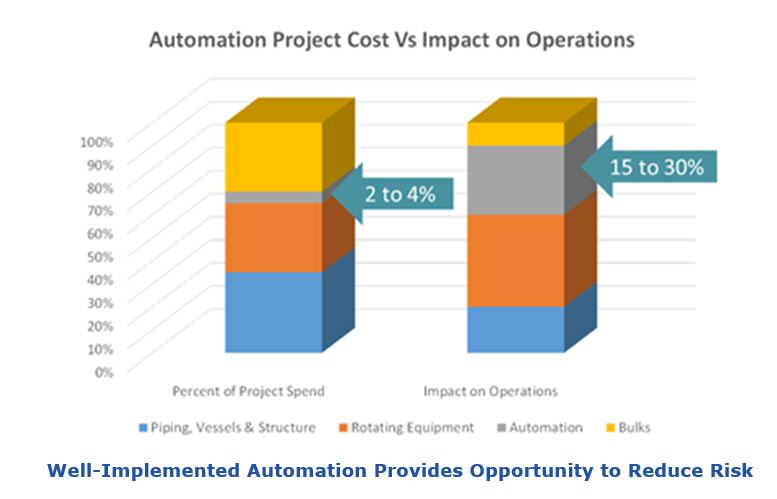
Additional issues include operational costs, lifecycle costs, and plant performance. For the owner-operator, the project phase is only the beginning. Decisions made in the early stages of the project have an impact throughout the plant lifecycle. Data captured during plant construction must be seamlessly transferred through the operational phase. Within the scope of its projects, the MAC often provides maintenance and other after-market services beyond the startup phase, which can also reduce risks and operational costs in the long run.
Relying on a MAC as a single point of responsibility to coordinate efforts among multiple suppliers and subcontractors can reduce risk, cost, and startup times while increasing precision. Using a MAC as a single point of responsibility for integration also increases design reliability and should result in fewer changes in project design during the lifecycle of the project.
Early involvement by a MAC can have a big impact on the project success. The communication channel that a MAC provides between the often-complicated collection of automation suppliers, system integrators, EPCs, and the end user, often results in fewer design changes during the project lifecycle. Changes made in later phases of the project cost the owner-operator far more than those made in the earlier phases. Early MAC involvement means that fewer changes are made during project execution. This is due to a smoother transition between the project’s specification and configuration phases.
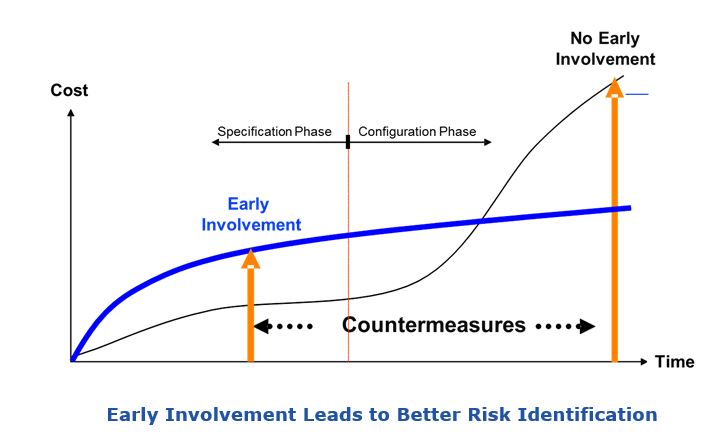
Front-end engineering and design (FEED) is one early involvement area where the MAC can have a big impact and add value. Much of the value is built into the project during the FEED stage. Many MACs view the FEED process, in conjunction with consulting, to be a critical factor in determining project success and derived benefits for the owner-operator. Successful implementation of technologies such as fieldbus, dynamic optimization, and real-time performance management rely on good engineering and design effort, as well as a seamless transition from engineering and design to implementation, operations, maintenance, and the rest of the plant lifecycle. Suppliers can leverage the knowledge gained in their own FEED work with their service activities during the rest of the plant lifecycle to create more successful automation strategies.
The MAC approach provides economic advantage to owner-operators in three key areas: reduced coordination effort, reduced commissioning time, and reduced customization costs, all which help reduce risks. Cumulatively, these result in reduced installed cost and reduced overall cost of ownership. As a single source of responsibility, the MAC removes the associated effort and cost of juggling several different suppliers, EPCs, and/or system integrators from the owner-operator. Single point of ownership for the design effort results in lower engineering costs and helps eliminate another enormous source of cost: custom integration of disparate applications, which adds significant cost and risk to a project.
With improved engineering and reduced custom integration, commissioning and startup are achieved much faster, with smoother handover from the project phase to operations. The accrued knowledge achieved in design and installation drives the plant operational strategy. When a MAC transitions from a project participant to a collaborative lifecycle partner, it can bring all the knowledge it has captured during the project to help the owner-operator achieve operational excellence.
One of the nagging issues surrounding major automation projects is coordinating schedules between all the participants: automation suppliers, the MAC, and EPCs. If the MAC is not the EPC contractor, often the EPC is brought into the loop only after the owner-operator and MAC have agreed upon the scope. This can lead to many problems 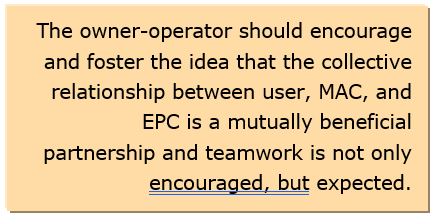 later in the project, especially when the EPCs are unable to provide hardware or software data required in the timeframe set by the MAC. The owner-operator, MAC, EPC contractor and other parties involved must agree upon and understand the objectives, responsibilities, and commitments expected from each party.
A plan must also be in place to account for the inevitable project changes. Many MACs have either developed or acquired change management tools deployed with their EPC packages and integrated into their scheduling functions. Change management tools help mitigate the risk of falling behind schedule, as changes are well documented and incorporated into the schedule and all parties are fully aware of the changes and their impact and implications on the project.
Even though the MAC is the single point of responsibility for all automation-related issues, the owner-operator must maintain oversight, audit the process continuously, and be prepared to intervene if differences should arise between the MAC and an EPC contractor. The owner-operator should encourage and foster the idea that the collective relationship between user, MAC, and EPC is a mutually beneficial partnership and teamwork is not only encouraged but also expected.
The increasing pressures faced by all parties involved also means that projects need to be completed as quickly as possible. The sooner startup and commissioning are completed; the sooner time-to-value and profitability can be attained. MACs with the right capabilities can provide a single point of responsibility for the automation scope of project management – coordinating activities among multiple automation suppliers and subcontractors and freeing the owner-operator and EPC contractor to focus on what they do best.

It still takes take too long to commission many plants. This is often due in part to poor handover to operations, leading to sub-optimal operations. In some cases, the resulting complications can linger for years. Often, this can be avoided by employing a MAC, which has standard procedures and best practices for handover and, in many instances, will remain on the scene to provide aftermarket lifecycle services.
Creating a single engineering and design database for all of the automation scope is necessary for the first step in the automation lifecycle management. Of the massive amount of engineering data generated, the automation information can provide the most value, since the continued health of these assets is important to other business functions. MAC suppliers have the ability to take ownership over a total automation database and ensure its continuity. This can be a very valuable asset in both the project and operational phases.
A main automation contractor’s primary role is to design, engineer, and deliver a well-integrated, automation-based collection of data-intensive technologies to ensure that the operational systems contribute to the successful operation of the plant. The need for tightly integrated process control systems and manufacturing operations management software to provide real-time response to meet the process industry needs is well recognized today. In addition, other systems that previously have not been considered within the MAC scope, such as electrical systems, have recently been included. The primary reason is because these systems provide real-time operational data that is vital to the overall operation of the facility.
Virtual and cloud computing have played a role and will continue to increase in value to project success. For example, more design and testing will be “done in the cloud” prior to actually commissioning hardware to run the final configurations. This will not only reduce the cycle of testing, but improve the cost structure by potentially eliminating incorrect hardware purchases.
The recent ExxonMobil/Lockheed Martin initiative to develop a next-generation open and secure process automation system is likely to impact how MACs work in the future. The goal of the initiative is to make automation less proprietary and more interoperable, while maintaining high reliability and security.
The standardized, interoperable modules envisioned by this initiative could make a MACs job much easier by workflow improvements that could eliminate repetitive tasks and by eliminating much of the need for custom integrations. On the other hand, should it take hold, the initiative would enable a much wider variety of automation and IT components from different technology suppliers to contribute to the overall automation solutions, potentially creating some additional complexity for the MAC.
So it’s in a MACs best interest to closely follow and/or actively participate in the initiative to best learn how it could maximize value for end users.
Another key trend, the Industrial Internet of Things (IIoT), is beginning to take hold as more and more OEMs are providing equipment with intelligence that can be accessed through IIoT. Already, MACs are prepared to integrate wireless transmitters into target systems such as DCSs or PLCs. Rotating equipment such as compressors and pumps can provide valuable data about their operation status. Even mobile equipment such as haul trucks in the mining industry are providing valuable load and location information to the systems awaiting their cargo. IIoT also offers significant potential to help improving worker safety by providing the location of all personnel in the plant and, in some cases, even their current status, such as through “man down” alerts.
The handover of a well-engineered and integrated automation system on time and ready for flawless operation is arguably the single most important factor of a main automation contractor’s value proposition. ARC defines this as having achieved operational readiness when the engineering, sourcing, and construction of the physical assets have  been satisfactorily completed and all tests made to verify compliance with the capital project scope. Operational readiness is also about the readiness of the operations personnel – the “human assets” – through appropriate familiarization and training.
Generally, operational readiness is considered the point when the asset is finally beginning to provide returns at the level expected. Any delays can be extraordinarily expensive. Modern plants can cost billions of dollars; the interest alone on these funds make each day of delay very costly.
Integration is a key factor in achieving operational and business readiness. Often, startup is the first time that all the new systems installed on a project operate together. Validating proper synchronization of all systems from the process automation layer to the operational and business automation layers prior to startup must be a core component of any MAC’s approach.
Asset information exchange provides the process knowledge required for operational readiness. However, organizational and contractual issues can make it difficult to get around all the obstacles. A proper management structure and workflows must be established before attempting to transfer any information across project and operations boundaries. Operational readiness responsibilities must be established for all groups involved, including clearly delineating overall responsibilities and authority. For example, if the operations group is to be made responsible for attaining operational readiness, then groups, such as engineering, design, and construction need to understand that they are expected to support them in this effort by making sure that all information deemed to be necessary is made available on time and in the right format required by operations.
The MAC concept has been utilized for well over a decade. Automation suppliers remain in an excellent position to handle this role, however, the definition and responsibilities of a MAC must be further refined. While the MAC is best equipped to handle the automation, the EPC contractor and owner-operator also play a crucial role in the project and must be afforded the latitude to do what they do best.
Automation suppliers have specialized knowledge of their own products and also often of their competitors’ products. EPCs, system integrators and automation engineering organizations have specific engineering skills and expertise in engineering. Owner-operators have the most intimate knowledge of their processes. These factors, along with the vast pool of resources at the MAC’s disposal, allow the project team to provide services at a cost below what that the individual entities could match on their own. But, to attain the end goal, all three must work in concert.
Owner-operators must form mutually beneficial partnerships with their MAC, EPC contractors, and other project participants. These partnerships will not only drive successful engineering projects, but also successful operations, as the MAC will most likely will be present throughout the plant lifecycle to provide operations services, maintenance and support services, and other after-market services.
If you would like to buy this report or obtain information about how to become a client, please Contact Us