Representative End User Clients







Representative Automation Clients







Representative Software Clients








Keywords: IT/OT Convergence, Digital Transformation, Pandemic, COVID, Ethernet-APL, Process Control Network (PCN), Publisher/Subscriber (Pub/Sub), ARC Advisory Group.
IT/OT convergence as the foundation of digital transformation has been a hot topic for the last few years. At the 2021 ARC Industry Forum two entire sessions were dedicated to this topic and a marquee list of speakers and panelists spoke about imperatives, such as IT/OT convergence and collaborative solutions on their digital transformation journeys. ARC’s Craig Resnick, Vice President, Consulting, gave a broad overview and moderated both sessions.
The first session focused on what drives IT/OT convergence, shifting market demands, and adapting to the pandemic-driven new normal. Previously, the IT and OT domains operated in silos, but now there is a lot more common ground, and from “convergence” it has evolved to “fusion.” This fusion helps companies become more productive, efficient, and facilitates remote operations. Operational and business resilience has become top priority in a volatile business environment. The presentations were followed by a brief but lively panel discussion.
Speakers: Patrick Allen, Director of Network Services, Dairy Farmers of America (DFA); Kai Krüning, Sr. Automation Engineer, Control Systems Technology, BASF; Pete Barrie, Product Management Director, Sani-Matic; and Todd Anslinger, IIoT and Automation Specialist, Chevron Energy Technology
Joining them on the Panel: Andreas Hennecke, Product Marketing Manager, Pepperl+Fuchs; John Vicente, Chief Technology Officer, Stratus Technologies; Wes Sylvester, Director of Business Development, Cisco Systems; Erik Rasmussen, OEM Account Manager, Rockwell Automation; and Travis Cox, Co-director of Sales Engineering, Inductive Automation
Patrick Allen of Dairy Farmers of America (DFA) spoke about the company’s journey from COVID to convergence. Headquartered in Kansas City, KS, DFA is a global dairy cooperative owned by dairy farmers and the world’s largest supplier of raw milk. It has a diversified product portfolio with 87 manufacturing facilities. The COVID challenges included:
Increase worker safety and productivity while maintaining social distancing.
Maintain overall workforce continuity by reducing exposure to COVID - 19.
Maximize equipment uptime with SME support.
 Patrick said that IT/OT convergence typically covers data analytics, cybersecurity, edge computing and so on, but it does not include a process to ensure collaboration across all levels. To overcome these challenges and keep the plants running, DFA used OT collaboration tools (Cisco’s WebEx platform, RealWear HMT-1, and video conferencing hardware) to connect remote experts to frontline workers. This increased employee productivity and visibility, enhanced worker-contractor collaboration, and provided better access for remote employees, contractors, and suppliers. Next, DFA plans to provide headsets across its plants and leverage augmented reality (AR) to provide additional context to equipment operators.
Kai Krüning of BASF’s presentation was on Ethernet-APL (Advanced Physical Layer) for field device integration and covered the 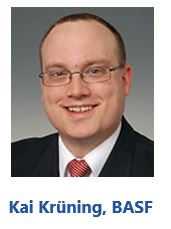 gamut from why it was not used earlier, requirements of the process industry, the ISO/OSI model, the topology, technical specifications, and user advantages. All this was explained via use cases of fleet management instrumentation. Next, Kai highlighted how APL is an enabler for IT/OT convergence as it is based on existing structures, open to new approaches, simple integration, no safety risk etc. In this context, Kai showed the Namur open architecture (NOA) data flows. APL is the missing link to enable digitization in the field. Ethernet-APL is a technology that enables powerful and consistent digital communication in process automation from the sensor to the control level and has all the features required by a modern, future-proof network in process automation.
Giving a brief overview, Sani-Matic’s Pete Barrie discussed how the company automates and improves sanitary cleaning processes for industries, 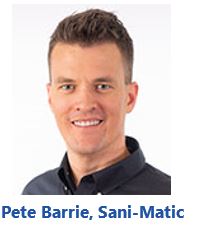 such as bio-pharm, food, and beverages. He spoke about the company’s product: SaniTrend Cloud Online Data Acquisition & Management System, its primary (cleaning cycle report) and secondary (product add-ons) deliverables, and how it helps to collaborate and stay in touch. It is a Software-as-a-Service that is available with any new PLC-controlled, automated cleaning system from Sani-Matic or retrofitted with any existing Sani-Matic automated cleaning system that has an Allen-Bradley CompactLogix or higher PLC processor. The future focus areas will be on services, such as enhanced remote technical support, system optimization through OEE analysis, customized educational videos, and augmented reality integration. In conclusion, Pete said that IT/OT convergence and digital transformation is about knowledge and connectivity.
Todd Anslinger of Chevron began his presentation by highlighting the business problems that the company is trying to solve: reduce integration time in its PCN and update; reduce integration time into enterprise business systems; extend the life of low bandwidth Ethernet radio systems; 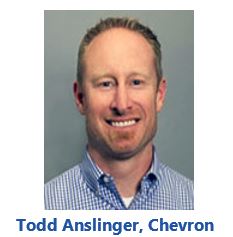 and avoid “running blind” on day one of property swaps or acquisitions. Further, Todd spoke about the integration challenges, the current process, what the process could be with the publisher/subscriber model, and how it can help with low bandwidth. The lean sigma time measurements (to a hypothetical existing system and downloaded to controllers/computers), showed that the pub/sub model took only 4.5 minutes to replicate processes, whereas a competitor PLC/HMI took 22 minutes, and single vertical vendor took 13 minutes. Instead of just Message Queueing Telemetry Transport (MQTT) protocol which is “open,” Chevron focuses on SparkPlug, which adds features including birth certificate and death certificate (session awareness), and hierarchy of facilities. The Eclipse Foundation manages this “open standard” with other companies from varying industrial segments.
“How is your company helping customers on their IT/OT journey?” The panelists’ responses follow.
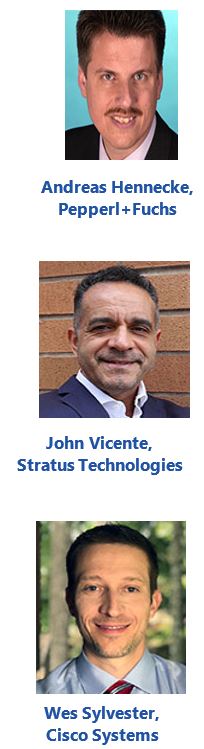 Andreas Hennecke, Pepperl+Fuchs: The company, mostly in the process industries and two business units in the discrete sector, is extremely involved in IT/OT convergence. Pepperl+Fuchs provides the infrastructure and breaks down barriers to make IT/OT convergence happen. Anything that goes on with industrial protocol is supported by infrastructure or instrumentation provided by the company, and this knowledge is paired with systems knowledge and applications expertise.
John Vicente, Stratus Technologies: There are a variety of ways that companies are going after this convergence (communications technologies, cloud, analytics, and AR/VR). Stratus facilitates this transition by bringing technologies such as virtualization to address various concepts, such as workload consolidation. Stratus is known for high availability, fault tolerant technologies, and modernizing software and hardware technologies. Stratus addresses the complexity of combining high availability, avoiding unscheduled downtime, and supporting remote operations.
Wes Sylvester, Cisco Systems: Echoing the aspect of high availability, Wes said that one of the things that the company does with its partners is to simply figure out the priority areas (project and operations) and use technology to manage that.
Erik Rasmussen, Rockwell Automation: The company has a holistic approach - that means not only tying in the downstream equipment suppliers for the OEMs, but also tying the data available from the end users and across the entire spectrum. So, when it comes to partnering technologies with companies, such as PTC, Microsoft Azure etc. Rockwell Automation has a definite advantage of being able to tie in the entire loop of data from beginning to end.
Travis Cox, Inductive Automation: The company provides industrial application platforms to build HMI and SCADA solutions. Rooted on the OT side of the fence, it helps solve customers’ operational challenges by leveraging open standards, modern technologies, and get access to more data. In the pandemic-stricken world it has become even more important to remain connected and bridge the IT/OT gap.
T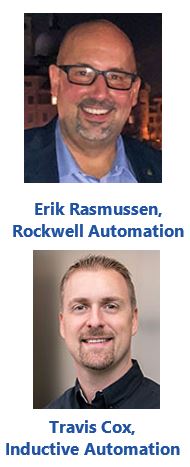 he session speakers responded to the question, “If you could do anything differently based on what you’ve learned, how would you do it?”
Pete, Sani-Matic: Get every aspect of the business on board.
Todd, Chevron: Plug and play standard facilities. Plug it in, the data comes on and automatically populates the dashboard and has a common look and feel for all the operators and engineers to use.
Kai, BASF: I would ensure that we can exchange data between systems.
Patrick, DFA: Shared services across the enterprise, IT/OT fusion.
Conclusion
The presentations and the Q&A made it clear that IT/OT convergence is a key foundation for digital transformation. For businesses to thrive in the pandemic-driven new normal, companies must be flexible and agile. Summing up, Craig said that ultimately, IT/OT convergence is all about taking advantage of the best of both worlds and fusing it all together to accelerate digital transformation.
ARC Advisory Group clients can view the complete report at the ARC Client Portal.
Please Contact Us if you would like to speak with the author.
Obtain more ARC In-depth Research at Market Analysis
Learn more about ARC Events at ARC Industry Leadership Forums