Representative End User Clients







Representative Automation Clients







Representative Software Clients








At the 2025 ARC Industry Leadership Forum in Orlando this February, industry leaders gathered to share their unique perspectives on transformative technologies. Several discussions highlighted virtualized automation—a development poised to disrupt the long-standing reliance on proprietary hardware systems in industrial operations. This year, experts showcased how they plan to leverage virtualized architectures, open standards, and software-defined control to build a more modular and interoperable approach to automation. It’s clear these concepts are moving beyond theory and will soon become a major part of the modern automation landscape.
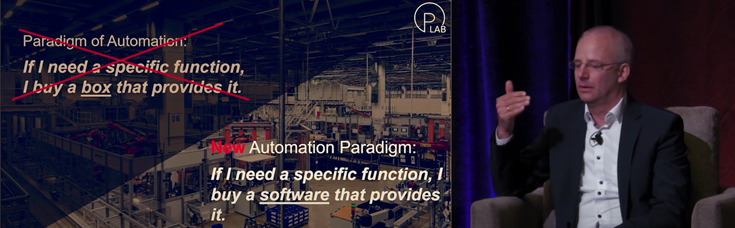
Audi's Edge Cloud for Production (EC4P) initiative is transforming factory automation by virtualizing control systems and consolidating traditional automation tasks into a hyperconverged infrastructure. At the ARC Forum, Dr. Henning Löser, Senior Manager of the Audi Production Lab, explained how their team plans to replace much of the traditional automation hardware with centralized local servers running flexible, virtualized software. Following deployments in two Audi facilities in Germany, Löser reported the elimination of hundreds of IPCs, a significant reduction in maintenance costs, and the rollout of virtualized PLCs in three additional Audi facilities.
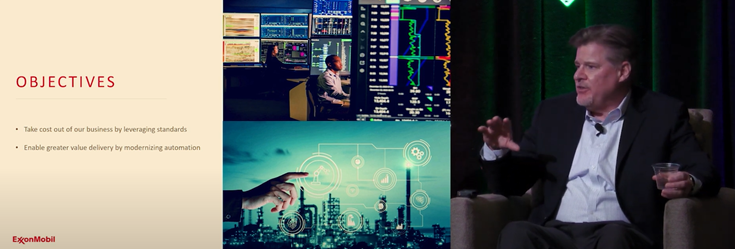
Eleven years after first publicly sharing its vision for Open Process Automation at the 2014 ARC Forum, ExxonMobil presented the success of its OPA Lighthouse Project at a resin finishing plant in Baton Rouge, Louisiana. By replacing the traditional control system with an OPA-compliant architecture, ExxonMobil implemented a modular, plug-and-play system that eliminated the high maintenance costs of proprietary hardware and enabled large-scale deployment of virtualized logic execution and communications. The successful Baton Rouge implementation highlights the viability of open, standards-based automation and sets a precedent for future industry deployments.
CODESYS has long been a pioneer in automation, dating back to its founding in the 1990s. As one of the first platforms to adopt the IEC 61131-3 standard, the company transformed industrial control system development by providing a vendor-independent environment that gave engineers greater flexibility. Over the decades, CODESYS has continued to lead innovation in decoupling automation software from proprietary hardware, positioning itself as a key player in the move toward open, virtualized industrial automation.
Virtual PLCs mark a significant disruption in the traditional automation landscape by shifting control logic from proprietary hardware to standardized industrial PCs, edge devices, or servers using hypervisors or containerized environments. Compared to conventional hardware-based PLCs, virtual PLCs simplify field maintenance and application updates, offer easier workload scaling, and reduce hardware procurement costs. Through open standards and a fully integrated development environment, CODESYS supports users and OEMs in streamlining deployment and advancing toward a software-defined automation future.
CODESYS is also advancing virtualized safety controllers with its Virtual Safe Control SL solution, introducing a new model for functional safety. This system enables dual-channel safety control entirely in software, replacing the need for dedicated dual-channel hardware traditionally used to ensure redundancy and fault tolerance. Virtual Safe Control SL fulfills the same safety requirements through two logical software channels within a virtualized environment, further pushing the boundaries of what's possible in industrial automation.
The success of CODESYS and other software companies targeting the automation market ultimately depends on their ability to overcome the cultural and technological barriers that have long shaped the industry. While the technology is powerful, lasting impact will require not only proving its value over existing solutions but also guiding users through education, integration support, and a clear migration path from legacy systems.