Representative End User Clients







Representative Automation Clients







Representative Software Clients








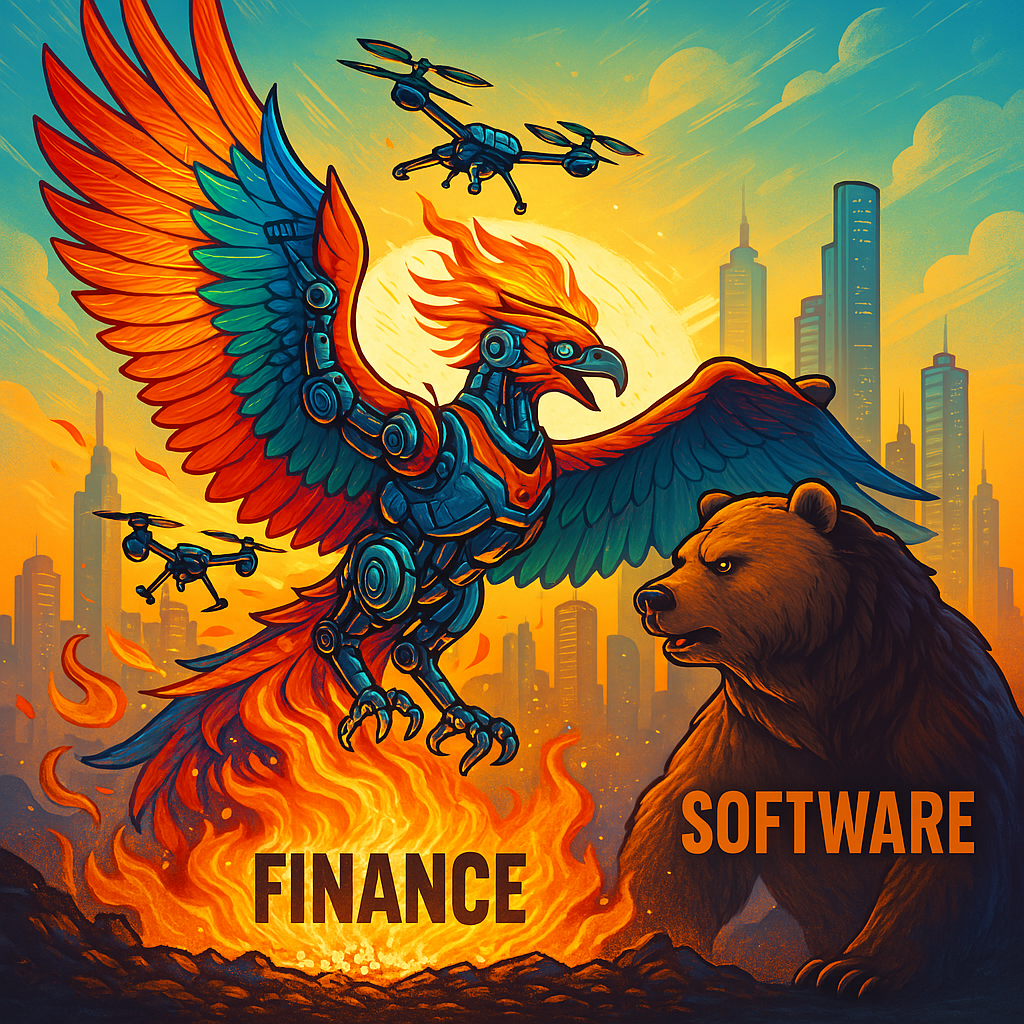
In recent years, an increasing number of global articles have questioned whether countries truly need to invest in manufacturing—especially when nations considered “smaller” in global trade or importance with modest GDPs (as per financial valuations) seem capable of sustaining long-term conflicts. At the heart of this question is a deeper shift: the value of manufacturing is no longer judged purely on trade efficiency or GDP contribution. Instead, the ability to endure conflict, withstand disruptions, and safeguard sovereignty is coming back into focus.
Conflicts across Europe (Ukraine-Russia), the Middle East, and Asia are no longer determined solely by initial technological superiority. Instead, they’re shaped by a country’s ability to sustain prolonged periods of disruption. This reality challenges decades of financial valuation models that prioritized intangible assets—software, intellectual property, and digital services—over physical production capabilities.
Since the end of the Cold War and the dawn of the information age, success has been synonymous with mastering software. The dotcom boom in the early 2000s crowned a new class of digital-first businesses. Venture capital flowed into companies that needed little more than code, scale, and access to the internet. From Wall Street to MBA classrooms, the narrative was clear: software was faster, leaner, and more profitable than hardware-heavy manufacturing.
As Edward Tufte once said, "Only drug dealers and software companies call their customers 'users.'" This pithy observation mirrored the over-enthusiasm for digital products, even when they offered limited long-term resilience.
Entire industries paid the price. Russia’s machine tooling sector was largely shipped off to China. German robotics and other high-end equipment followed. Taiwan, which had quietly built a robust semiconductor manufacturing ecosystem, became the unlikely center of a global revolution in chips and AI. And thanks to the WTO and China’s emergence as the world’s factory, manufacturing elsewhere lost both relevance and pricing power.
The economic model rewarded efficiency and short-term return—largely ignoring employment, self-reliance, or regional resilience. Many countries across Asia and Africa, therefore, focused more on integrating into global supply chains than nurturing local production. This imbalance was acceptable, perhaps, because the world believed it was living in a long, unbroken era of peace.
Meanwhile, IT earned a seat at the executive table. In many enterprises, IT budgets now outweigh those of Operations or Engineering, particularly in sectors where Operational Technology (OT) still competes for attention. Software isn’t just essential—it has been treated as superior.
But then two global crises shattered this illusion: the COVID-19 pandemic and the Ukraine-Russia war.
Suddenly, the fragility of global supply chains became visible. Countries realized that without domestic production capacity—for masks, vaccines, chips, or munitions—they were vulnerable. Software couldn’t fill empty warehouses or restock supermarket shelves. War logistics could not be managed by cloud platforms alone.
("How many supply chain managers does it take to screw in a lightbulb? None—the lightbulbs are late.") Jokes aside, it became clear that manufacturing wasn’t obsolete. It was underappreciated.
This is not an argument against software. The future belongs to those who can combine software and hardware effectively—whether in autonomous operations, robotics, drones, or AI-enhanced engineering. True manufacturing today merges AI, mechanical design, and material science. It’s not old-world assembly lines—it’s advanced, adaptive, and intelligent.
And yet, hardware is still undervalued. Outsourcing may look efficient on paper, but when crisis hits, can a nation really afford to rely on suppliers across borders? Can trade treaties be trusted during times of war?
Efficiency may not always equal resilience.
It’s time to rethink how we value manufacturing. The new wave of industrial technology integrates physical production with digital intelligence—making it more usable, secure, and strategically important than ever before.
Financial institutions, multilateral organizations like the World Bank and IMF, and global alliances such as the EU must ask harder questions:
How do we assess the strength of a nation not just by GDP, but by its ability to endure conflict?
What is the long-term value of manufacturing that ensures national survival in prolonged crises?
As the world grapples with unstable supply chains and shifting power dynamics, manufacturing has re-emerged as a cornerstone of security and self-sufficiency. Governments and National Security advisors are already realigning their priorities. It may not be long before global financial systems—and the valuations they assign—catch up too.