Representative End User Clients







Representative Automation Clients







Representative Software Clients








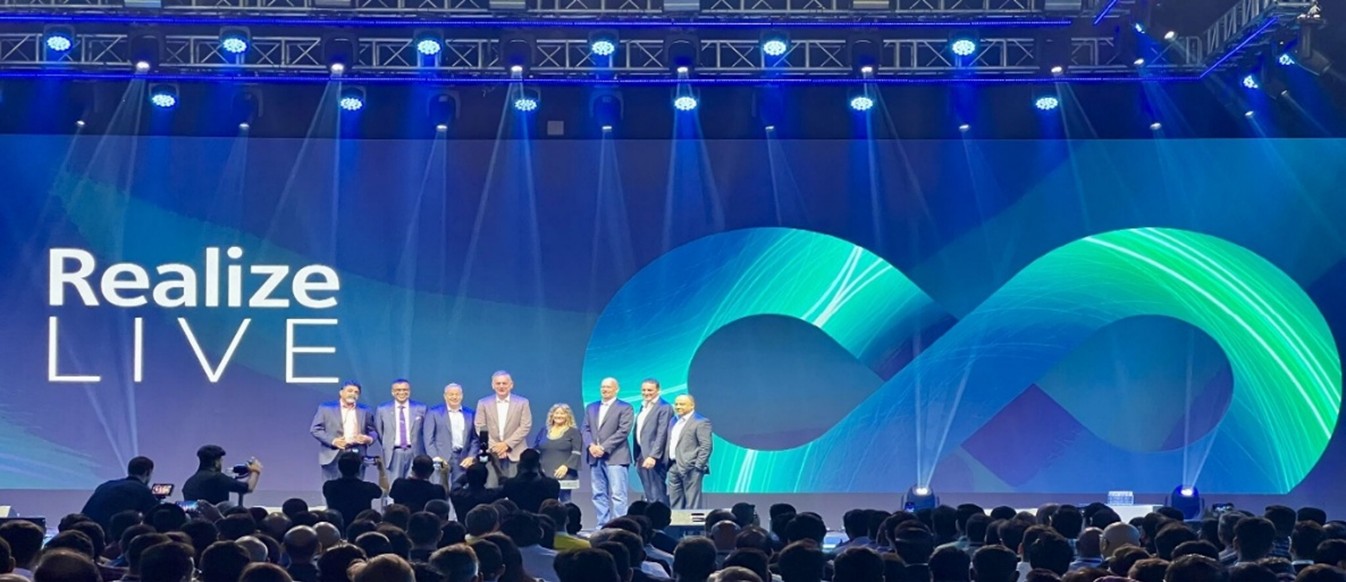
The Sheraton Grand Hotel in Bangalore was alive with ideas, conversations, and innovation on the 5th and 6th of August 2025, as Realize LIVE Asia Pacific welcomed more than 1,300 attendees from across the region. The gathering brought together suppliers, partners, and customers, along with professionals from design, manufacturing, PLM, and IT, all united by a shared focus on the future of industry. Over two days, the program featured more than 95 sessions across four major tracks, exploring digital manufacturing, product lifecycle management, simulation, AI, sustainability, and the broader vision of Industry 4.0 and industrial digital transformation.
Day one opened with an address from Tony Hemmelgarn, President and CEO of Siemens Digital Industries Software, who reminded the audience that while people often overestimate the potential of technology in the short term, they tend to underestimate its true impact in the long term. His keynote outlined Siemens’ approach to digital transformation, weaving together advancements in AI, industrial digitalization, and interconnected system architectures. He spoke about the power of integrated platforms and comprehensive digital twin technology in enabling data-driven decision-making, lifecycle analytics, and adaptive manufacturing, sharing real-world examples of how AI-driven insights, lifecycle management tools, and flexible production systems are transforming efficiency and responsiveness on the shop floor.
The discussion moved from strategic vision to tangible innovation with Sangeet Kumar, CEO and Co-Founder of Addverb Technologies, who showcased the company’s omni-channel distribution ecosystem built on more than 300 types of robots. His presentation revealed how autonomous mobile robots, advanced picking and sorting systems, and integrated automation platforms are reshaping warehousing and manufacturing. Powered by Mendix low-code applications, these solutions seamlessly connect robotics to enterprise workflows, enabling real-time monitoring, predictive maintenance, and dynamic task allocation that bridge the gap between shop floor operations and management control rooms.
A panel of industry leaders added depth to the day’s conversations. Dr. Amit Ray, CMDE, Indian Navy talked about Model Based Systems Engineering in submarine design which relies on tools to support, not solve, design challenges. The process should embrace early-stage uncertainty, frequent revisions, and personnel turnover. Bridging gaps requires a systems mindset focused on holistic outcomes rather than strict roles. Manish Sharma, Founder & CEO, SEDEMAC Mechatronics spoke about embedding innovation into engineering processes, leveraging digital twins and simulation to accelerate development. Vinay Khanolkar, Chief of Manufacturing Operations (CMO)-Automotive, Mahindra & Mahindra highlighted the central role of data in modern manufacturing, describing how predictive maintenance and real-time quality control are making their factories more responsive. Alok Jaitley, Executive VP, Maruti Suzuki discussed the digitization of compliance workflows in the homologation process, using simulation to speed validation while maintaining safety and sustainability standards. In the pharmaceutical space, Dr. Braj Panda, Head Global Digital Org. Dr. Reddy’s Laboratories shared how the company is building a global digital backbone to connect R&D, manufacturing, and supply chain operations, with Siemens’ digital manufacturing tools enhancing traceability, reducing downtime, and accelerating the delivery of critical therapies.
This session with Siemens’ executive leadership provided an insider’s view into the company’s strategic priorities. Tony Hemmelgarn, President and Chief Executive Officer, emphasized the convergence of AI, digital twins, and sustainability as core pillars of industrial innovation, while Brenda Discher, SVP Business Strategy and Marketing, outlined Siemens’ customer engagement strategy built on storytelling and success-driven trust. Bob Jones, EVP Global Customer Sales and Services, discussed a customer-centric go-to-market approach aimed at delivering faster ROI through integrated solutions, and Joe Bohman, EVP PLM Products, shared the future roadmap of Siemens’ PLM portfolio, balancing long-term innovation with near-term execution. Mathew Thomas, VP & MD for India, spoke about India’s growing role in Siemens’ global strategy, celebrating local talent, customer success stories, and partnerships that are helping drive growth. The conversations also touched between ARC Advisory Group and the panelists on Siemens’ acquisition of Altair Engineering, updates to Teamcenter 2506 and NX X, and the company’s collaboration with Accenture in bringing Opcenter, Simcenter, and Tecnomatix to emerging markets.
Among the most compelling breakout moments was Dr. Bobby Mitra of Tata Electronics, who explored the concept of software-defined manufacturing. His vision placed AI at the core of the product lifecycle, from design to execution, connecting data across every stage through digital threads. These connected ecosystems, he explained, ensure traceability, quality control, and collaborative workflows across suppliers and production teams. He also shared updates on Tata’s semiconductor fabrication plant in Dholera, Gujarat, and its assembly and test facility in Jagiroad, Assam—both significant steps in advancing India’s Atmanirbhar Bharat mission for self-reliance in electronics and semiconductor manufacturing.
Day two began with a keynote from Joe Bohman, who spoke about how Siemens software turns business complexity into competitive advantage, emphasizing the role of integrated BOM management in accelerating product development and enabling cross-team coordination. Dr. Bobby Mitra, CIO, TEPL returned to discuss Tata Electronics’ journey toward agility, efficiency, and sustainability through simulation-driven validation, virtual testing, and data-led decision-making. Swapnil Jain, Founder and CTO of Ather Energy brought the conversation into the electric mobility space, describing how Ather integrates product design, manufacturing, and operations into a unified framework that enables rapid development, high-quality testing, and continuous improvement. He also shared how connected scooters are generating usage data to inform design, predictive maintenance, and over-the-air updates, supported by infrastructure like the Ather Grid.
Mathew Thomas, announced a new partnership between Siemens and CreditAccess Grameen, one of India’s largest microfinance institutions, focused on operational agility through digitization. Using the Mendix low-code platform, they developed a custom cloud-based branch auditing application that has already reduced the audit cycle from 45 days to 38, streamlining decision-making and boosting productivity. Vasi Philomin, head of AI strategy at Siemens, discussed integrating AI into physical systems—machines, factories, and infrastructure—while ensuring safety, security, and reliability at industrial scale. Manoj Tiwari showcased Siemens’ capabilities in enabling multi-discipline 3D-aware electrical design and orchestrating complex software development lifecycles with platforms like Polarion, Teamcenter, and NX.
Away from the keynote halls, the networking sessions and Solutions Center offered a chance to see the technologies in action and engage directly with experts. Attendees visited booths from companies including TeamViewer, TCS, Tata Technologies, L&T, Bosch, 3D Engineering, Prolim, and Mendix, exchanging ideas, learning about products, and exploring potential collaborations. At the Solutions Center, visitors interacted with Siemens product experts, explored customer success stories, and experienced hands-on demonstrations of tools like NX, Opcenter, Teamcenter, Simcenter, and Mendix, while also discovering spaces dedicated to immersive engineering, the future workforce, and software-defined products.
By the time the event drew to a close, Realize LIVE Asia Pacific 2025 had done more than simply present the latest in digital manufacturing—it had offered a living example of how innovation, collaboration, and technology integration can turn ambitious concepts into operational realities. It was a clear signal that the future of manufacturing is not just being imagined; it is already being built.